How to Hire a Tree Removal Company You Can Trust
You've got a tree that needs to come down, and now you're staring at a list of companies with a truck and a chainsaw, all promising the lowest price. Hiring a company to take down a hazardous tree isn't like hiring a lawn crew. One bad cut, one uninsured worker on a ladder over your roof, and a simple job turns into a lawsuit or a hole in your budget you didn't plan for. In Southwest Florida, where storms can leave a tree leaning on your fence line overnight, that decision often gets rushed, and rushed decisions are where homeowners get burned.
The good news is you don't need to guess. There's a short list of things that separate a trustworthy tree company from a guy with a chipper and a Facebook page, and once you know what they are, the comparison shopping gets fast. Certification, insurance paperwork, and how a company actually talks about your tree before they quote a price tell you almost everything.
In this article, we'll walk through exactly what to check before you sign anything, from verifying credentials to reading between the lines of a quote, so you can hire with confidence instead of crossing your fingers and hoping for the best.
1. Confirm licensing, insurance, and arborist certification
Before you let anyone near your trees with a chainsaw, ask for proof that they're legally allowed to do the work and covered if something goes wrong. This is the single biggest filter for weeding out unreliable operators, and it takes about five minutes to check.
What to look for
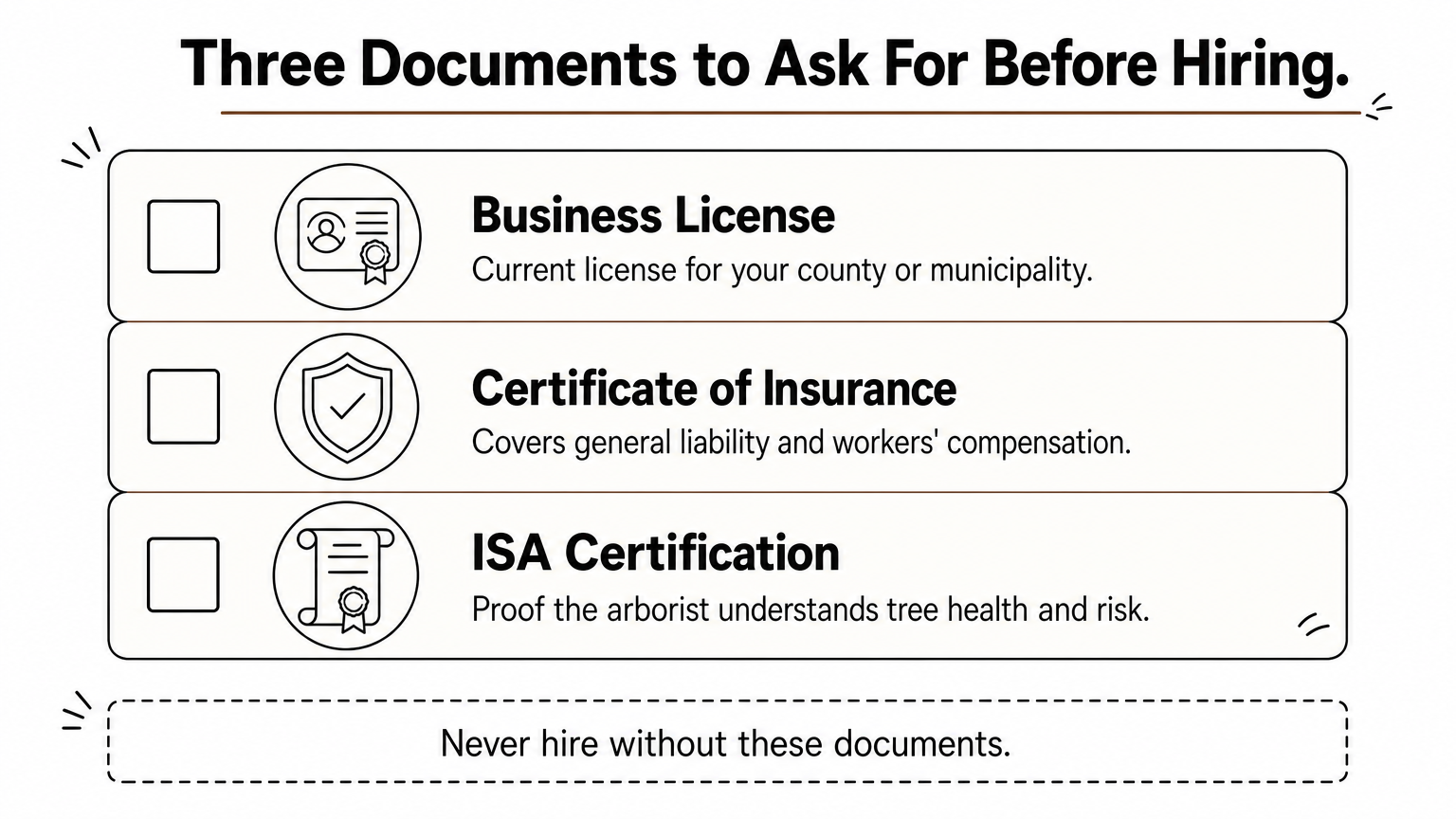
Start with three documents, not promises. You want a current business license for the county you're in, a certificate of insurance showing both general liability and workers' compensation, and proof of ISA (International Society of Arboriculture) certification for whoever is diagnosing or directing the work. In Florida, ISA certification numbers look like this: FL-295224A, and you can verify them directly on the ISA website. A real company hands this paperwork over without hesitation. Someone who gets vague or says "don't worry about it" is telling you exactly what you need to know.
Why it matters
Uninsured tree work is one of the most common ways homeowners end up in small claims court. If an uninsured worker falls off your roofline or a limb crushes your neighbor's fence, you can be held financially responsible for the damage, even though you didn't swing the chainsaw. Certification matters for a different reason: it means the person assessing your tree actually understands root structure, decay patterns, and species-specific risks, not just how to cut a trunk into rounds.
A company that hesitates to show you insurance and certification isn't one you want fifty feet off the ground with a saw over your house.
Questions to ask before hiring
Run through this list on the phone before anyone shows up:
- Can you email me your certificate of insurance today, not after the job?
- Is your ISA certification current, and what's the certification number?
- Are you licensed to operate in this specific county or municipality?
- Does your insurance cover damage to my property, not just injury to your crew?
- Who on your crew is the certified arborist making the tree health call?
If the answers come fast and specific, that's a good sign. If you're getting "we've been doing this for years, don't worry," keep calling around. Ten years of experience means nothing if the paperwork behind it doesn't exist.
2. Look for proven local experience and reputation
Anyone can buy a chainsaw and print business cards this week. What you're really hiring is judgment, the kind that only comes from years of cutting trees in your specific climate and soil conditions. Southwest Florida's sandy soil, hurricane exposure, and species mix (live oaks, slash pines, laurel oaks) create risks a crew from out of state simply hasn't seen before.
What to look for
Search for a company with a track record in your area , not just a wide service radius on their website. Look at Google reviews with specific details about the job, not generic five-star praise. Ask how long they've worked in North Port, Port Charlotte, or Venice tree care specifically, and whether they belong to local organizations like a chamber of commerce or the ISA Florida Chapter. A company embedded in the community has a reputation to protect and neighbors who'll vouch for them.
Why it matters
Local experience means the crew already knows how root systems behave in your soil and how storm season stresses certain species. That knowledge shows up in safer decisions and fewer surprises mid-job.
A company with ten years in your zip code has already made the mistakes you don't want to pay for.
Questions to ask before hiring
- How many years have you worked in this county specifically?
- Can you give me two references from recent local jobs?
- Are you active in any local business or arborist associations?
- What's the most common issue you see with trees in this area?
3. Get a detailed written estimate and contract
A verbal quote and a handshake might feel friendly, but it leaves you with nothing to point to if the job goes sideways. Before any crew touches your property, you should have a written estimate that spells out exactly what you're paying for and what happens if the scope changes, so it helps to know how a removal estimate is put together.
What to look for
Demand a document that names the specific trees, the removal method, cleanup and stump grinding details, and a firm price, not a range that can balloon once the work starts. It should also list start and completion dates, payment terms, and who's responsible for permits if your municipality requires one. A vague one-line estimate scribbled on a business card is a red flag, not a bargain.
Why it matters
Without a signed contract , disputes over scope, price, or damage become he-said-she-said arguments with no paper trail. A detailed estimate protects you from surprise upcharges after the crew has already cut the first branch, when you have little leverage to negotiate.
If it's not in writing before the saw starts, it's not a promise you can enforce.
Questions to ask before hiring
- Will you put the full scope of work and price in writing before starting?
- Does the estimate include debris removal and stump grinding, or are those extra?
- What happens if you discover additional hazards once the job begins?
- Is there a deposit required, and what are the full payment terms?
4. Evaluate their safety practices and equipment
Tree removal ranks among the most dangerous jobs in the country, right up there with logging and roofing, according to the U.S. Bureau of Labor Statistics. The crew's safety habits and equipment condition tell you more about a company than any sales pitch ever will.
What to look for
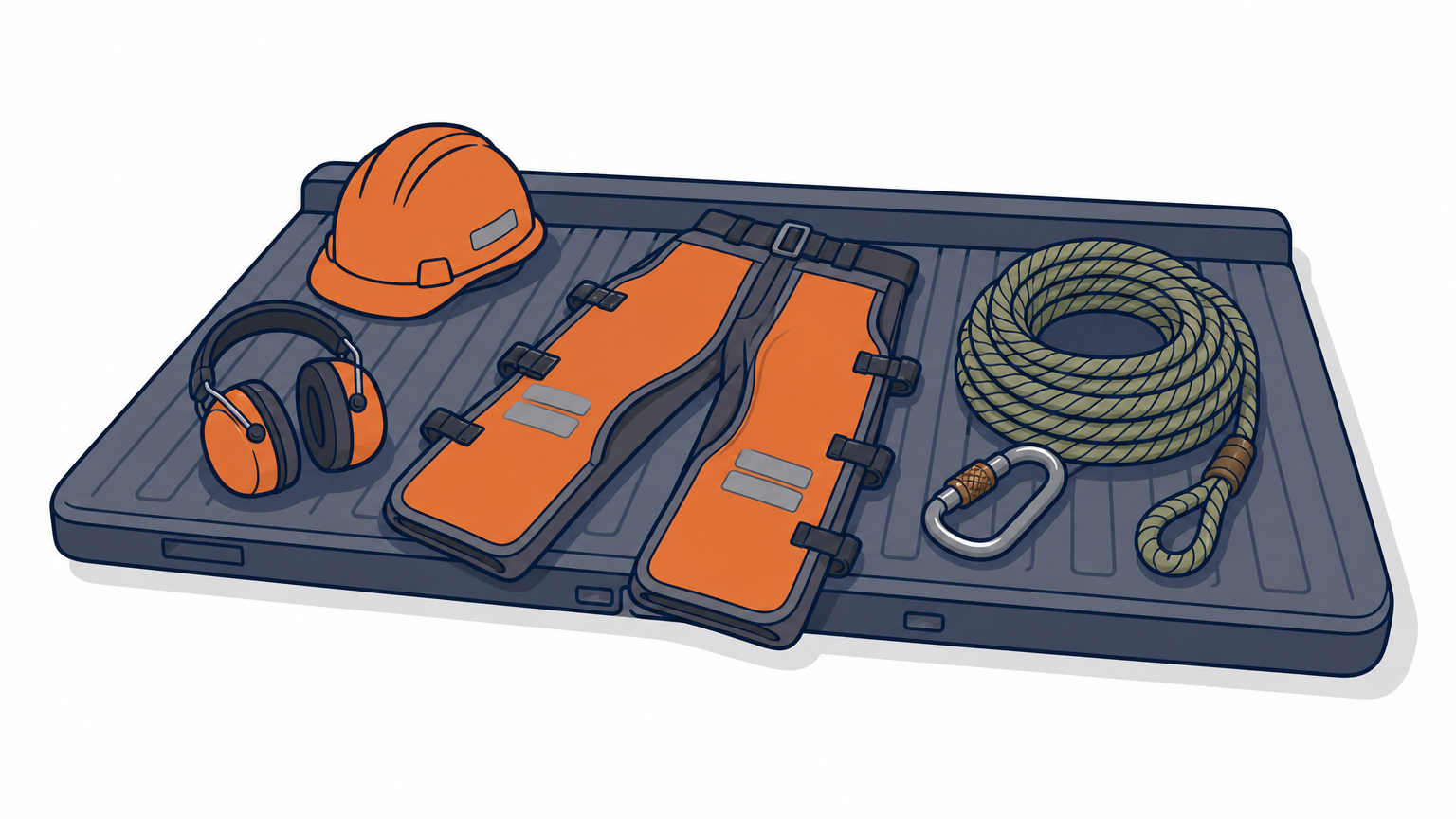
Watch how the crew gears up before you even discuss price. Hard hats, chainsaw chaps, eye and ear protection, and proper rigging ropes should already be on the truck, not something they scramble to find. Ask about their fall protection systems for climbers and whether they use a bucket truck or crane for larger removals near structures. Older, poorly maintained chippers and saws aren't just inefficient, they're accident-prone.
Why it matters
A company that cuts corners on safety gear is far more likely to cut corners on your property line, your fence, or your roof too. Proper equipment and training reduce the odds of a limb dropping where it shouldn't or a rigging failure sending a trunk section through your window.
The crew that shows up in proper gear is the crew that leaves your property the way they found it.
Questions to ask before hiring
- What personal protective equipment does your crew wear on every job?
- Do you use cranes or bucket trucks for large or hard-to-reach removals?
- How often is your equipment inspected or replaced?
- Has your crew had a serious injury on a job site, and how was it handled?
5. Ask about their approach to tree health and preservation
Not every tree that looks risky needs to come down, and a company that jumps straight to removal without asking questions is leaving money on the table, yours. The best crews treat cutting as a last resort, not a default answer.
What to look for
Listen for a company that talks about a tree health and structure diagnosis before quoting a removal price. A good arborist checks for root stress, disease, and structural issues, then explains whether pruning or cabling, or targeted plant health care treatment, could save the tree instead of taking it out. If every conversation starts and ends with "we'll take it down Tuesday," that's a company selling labor, not judgment.
Why it matters
Preserving a healthy, mature tree protects your property value and shade coverage in ways a stump never will. Removal is sometimes genuinely necessary, but it's also the most expensive service a tree company offers, which creates an incentive to recommend it even when it isn't warranted.
A company that only knows how to say yes to removal isn't giving you an honest diagnosis, it's giving you a sales pitch.
Questions to ask before hiring
- Do you offer a tree health evaluation before recommending removal?
- What symptoms would make you recommend saving the tree instead?
- Do you offer tree fertilization and pest treatment as an alternative to removal?
- Can you explain your reasoning in plain terms, not just "it has to go"?
6. Check their emergency and storm response capability
Hurricane season doesn't wait for a convenient time, and neither does a split trunk hanging over your driveway at 2 a.m. Before you need it, find out whether a company actually answers the phone during a storm or just advertises "24/7 service" on their homepage.
What to look for
Call and ask directly how fast they can respond to a fallen tree or hanging limb after severe weather. A company that handles real urgent help with fallen trees and hanging limbs will have a dedicated line, a crew on rotation during storm season, and priority protocols for hazards blocking driveways, power lines, or roofs. Ask whether they also handle cleanup of broken limbs and storm debris, since a tree removal often leaves a yard full of limbs that still need hauling.
Why it matters
During an active hurricane, response times separate the companies that show up from the ones still returning calls a week later. Delayed removal of a leaning tree or cracked limb raises the risk of it falling on a structure, a car, or a person before help arrives.
When the storm passes, the company that answers the phone first is the one worth keeping on speed dial.
Questions to ask before hiring
- Do you offer true 24/7 emergency response during storm season?
- What's your typical response time for a hazardous, fallen tree?
- Do you handle storm debris removal, or only the tree itself?
- Are you fully staffed during major weather events, or do you subcontract?
What to remember before you hire
Hiring a tree removal company comes down to six checks: credentials, local reputation, a written contract, safety practices, an honest health evaluation, and real storm response. Skip any one of them and you're gambling with your property, your budget, or both. The companies worth calling won't flinch at your questions, they'll answer them before you even ask.
Gathering quotes takes an afternoon, but the paperwork and questions above take that guesswork out of the decision. You're not just picking the lowest bid, you're picking who's responsible if a limb drops the wrong way or a stump grinder chews up your irrigation line.
If you're in North Port, Port Charlotte, Venice, or anywhere nearby in Southwest Florida, put this checklist to work and schedule a free on-site tree evaluation with ArboBella Tree Service before you commit to anyone. A certified arborist should be the one telling you what your tree actually needs, not just what a crew wants to cut.