Stump Grinding: What It Is, How It Works, and What It Costs
That stump sitting in your yard isn't just an eyesore. It's a tripping hazard, a mower obstacle, and a magnet for termites and fungus once it starts to rot. Stump grinding is the fastest, most practical way to deal with it, and if you're weighing your options right now, you probably want straight answers before you spend a dime.
At its core, stump grinding uses a specialized grinding machine to chew the stump down below ground level, turning wood into mulch instead of hauling out the entire root system. It's quicker and cheaper than full stump removal, and for most Southwest Florida properties, it's the smarter call. Cost depends on stump diameter, root spread, and accessibility, and we'll break down real price ranges further down.
In this guide, you'll learn exactly how the grinding process works, what separates it from full-blown stump removal, and whether renting equipment yourself makes sense compared to calling in a certified crew. We've handled enough North Port and Venice yards to know where DIY jobs go wrong, and we'll show you how to avoid those mistakes.
Why stump grinding matters for your property
Leaving a stump in place feels like a small compromise, but it creates real problems fast. Tripping hazards multiply once grass grows around the wood and hides the uneven edges, and that's a liability nightmare if you're a homeowner with kids running around or a commercial property manager with foot traffic across the lot. Mowers hit stumps constantly, chipping blades and sometimes sending chunks of wood flying. Insurance adjusters see stump-related injuries often enough that most HOAs and municipalities now flag exposed stumps during routine inspections.
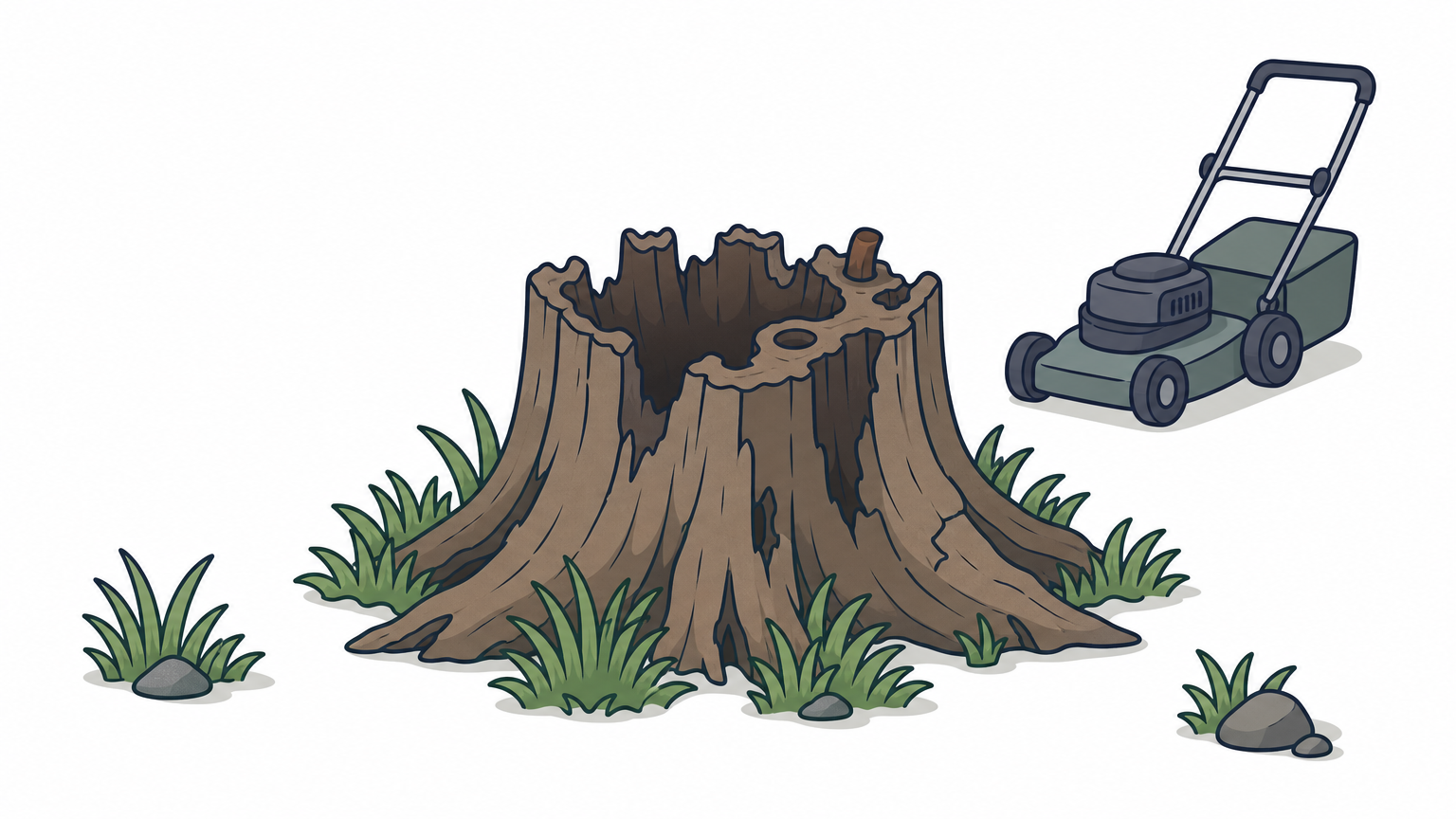
Rotting wood also invites problems you can't see until they've spread. A decaying stump becomes a breeding ground for termites and carpenter ants , and Florida's humidity speeds that process along. Fungus takes hold next, and root rot can travel underground to nearby healthy trees before you notice anything above the surface, which is when an arborist evaluation of a declining tree earns its keep. We've pulled up stumps in North Port yards where the infestation had already reached a live oak fifteen feet away.
A stump left in the ground doesn't just sit there. It actively invites the pests and rot that threaten everything else growing near it.
Beyond safety and pest control, there's the simple matter of usable space. A ground-level stump blocks landscaping plans, limits where you can install a patio or garden bed, and drags down curb appeal for anyone trying to sell or rent a property. Commercial clients in Port Charlotte and Venice who need stump grinding for commercial properties tell us the same thing: prospective tenants and buyers notice unfinished grounds, and a cluster of old stumps reads as neglect even when the rest of the property is well kept.
Here's a quick rundown of what an ungrounded stump costs you over time:
- Physical risk : trip-and-fall incidents, mower damage, and liability exposure
- Pest attraction : termites, carpenter ants, and wood-boring beetles move in within months
- Disease spread : root rot and fungal infections can reach nearby trees underground
- Lost usable space : blocks mowing, planting, hardscaping, and general yard access
- Reduced property value : buyers and tenants read stumps as deferred maintenance
Fixing this early is cheaper than fixing it after the damage spreads. If you're comparing options, our stump grinding services page breaks down what we typically find on Southwest Florida properties before we ever bring out the grinder.
How stump grinding works, step by step
A professional job starts with a site assessment , not the grinder. We check for buried utility lines, irrigation heads, sprinkler valves, and any underground cables before the machine ever touches the stump. Skipping this step is how DIY jobs end up with a severed cable line or a cracked sprinkler head, and repairs cost more than the grinding job itself.
The grinding process itself
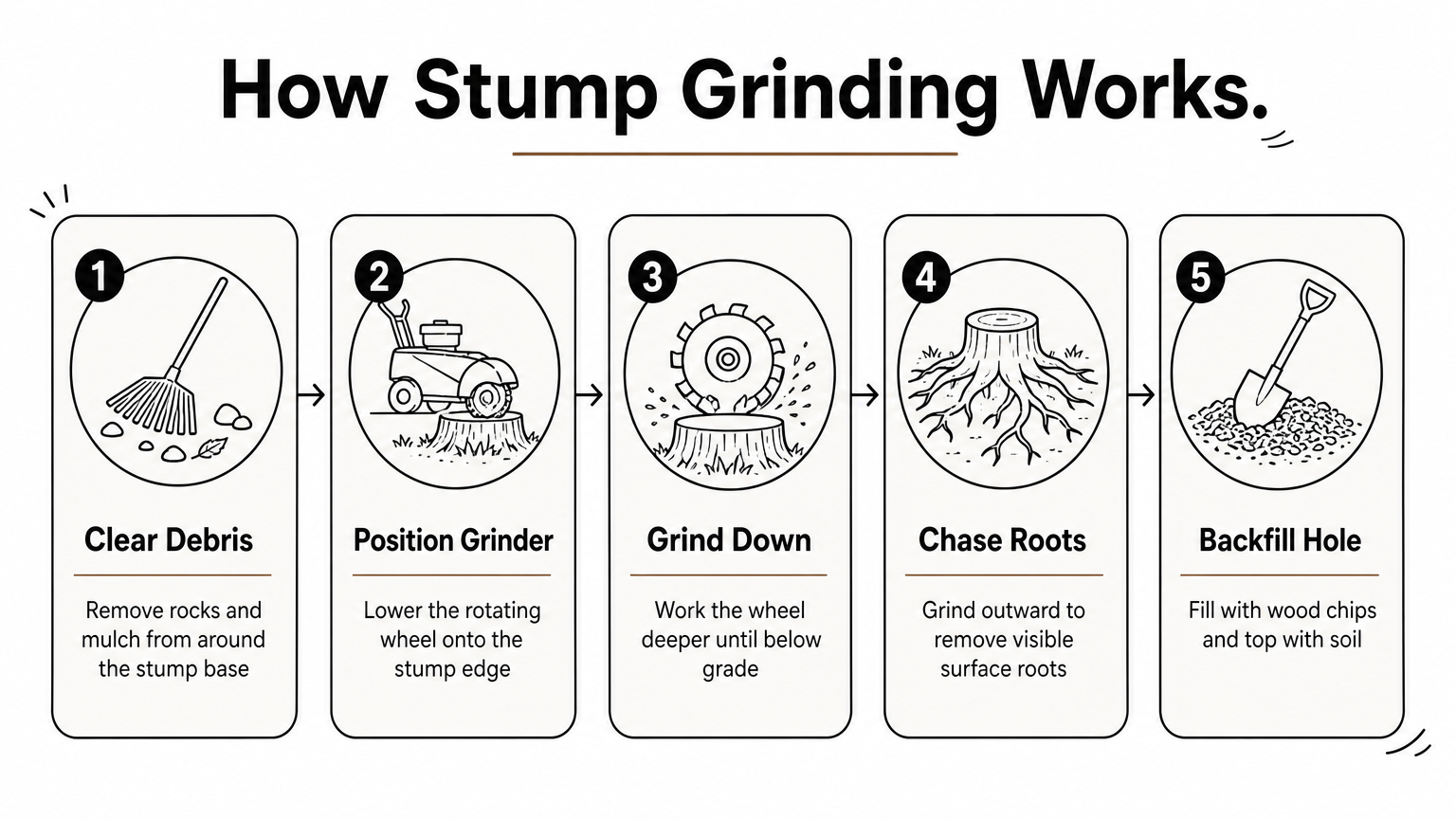
Once the site is clear, the actual stump removal process follows a predictable sequence:
- Clear rocks, mulch, and debris from around the base so the cutting wheel doesn't hit anything unexpected.
- Position the grinder and lower the rotating wheel onto the stump's edge.
- Grind side to side, working the wheel deeper with each pass until the stump sits 4 to 6 inches below grade.
- Grind outward to chase visible surface roots, especially on species like oak and ficus that spread wide.
- Backfill the hole with the wood chips produced during grinding, then top with soil.
Grinding below grade matters more than grinding fast. A stump left too shallow will resurface as the wood settles.
What's left behind
Grinding doesn't pull the entire root system out of the ground, and that surprises a lot of homeowners. Roots stay buried and decompose naturally over a few years, which is fine for lawns and light landscaping but not ideal if you're planning to build a foundation or pool deck on that exact spot. Most residential jobs finish in under an hour per stump. Larger commercial jobs with multiple stumps or thick root flares take longer, which is where accessibility starts driving the price up.
What stump grinding costs in Florida
Pricing for stump grinding cost in North Port, Port Charlotte, and Venice typically runs by stump diameter, since a wider stump means more wood to chew through and more time on the machine. Most companies, including ours, measure across the top of the stump at its widest point and quote from there. A small stump in an easy-to-reach front yard costs far less than a wide oak stump wedged between a fence and a pool cage.
The number on your invoice depends less on the tree species and more on how wide the stump is and how hard it is to reach.
Beyond diameter, three other factors swing the price: root spread , site accessibility, and how many stumps you're grinding at once. A single stump job usually carries a higher per-stump rate than a multi-stump cleanup after storm damage, since we're already on site with the equipment set up.
| Stump Diameter | Typical Price Range |
|---|---|
| Under 12 inches | $75 - $150 |
| 12 to 24 inches | $150 - $300 |
| 24 to 36 inches | $300 - $500 |
| Over 36 inches | $500+ |
Site conditions push those numbers around too. Tight access behind a shed, stumps near septic lines, or root flares that have cracked a nearby patio all add labor time. Multiple stumps on one property, common with commercial clients clearing a lot line, usually bring the per-stump cost down since the crew avoids repeated mobilization fees. We walk every Southwest Florida property before quoting, because a phone estimate on stump grinding rarely matches what's actually in the ground, and the same factors that determine your price apply to tree work too.
DIY vs. hiring a professional for stump grinding
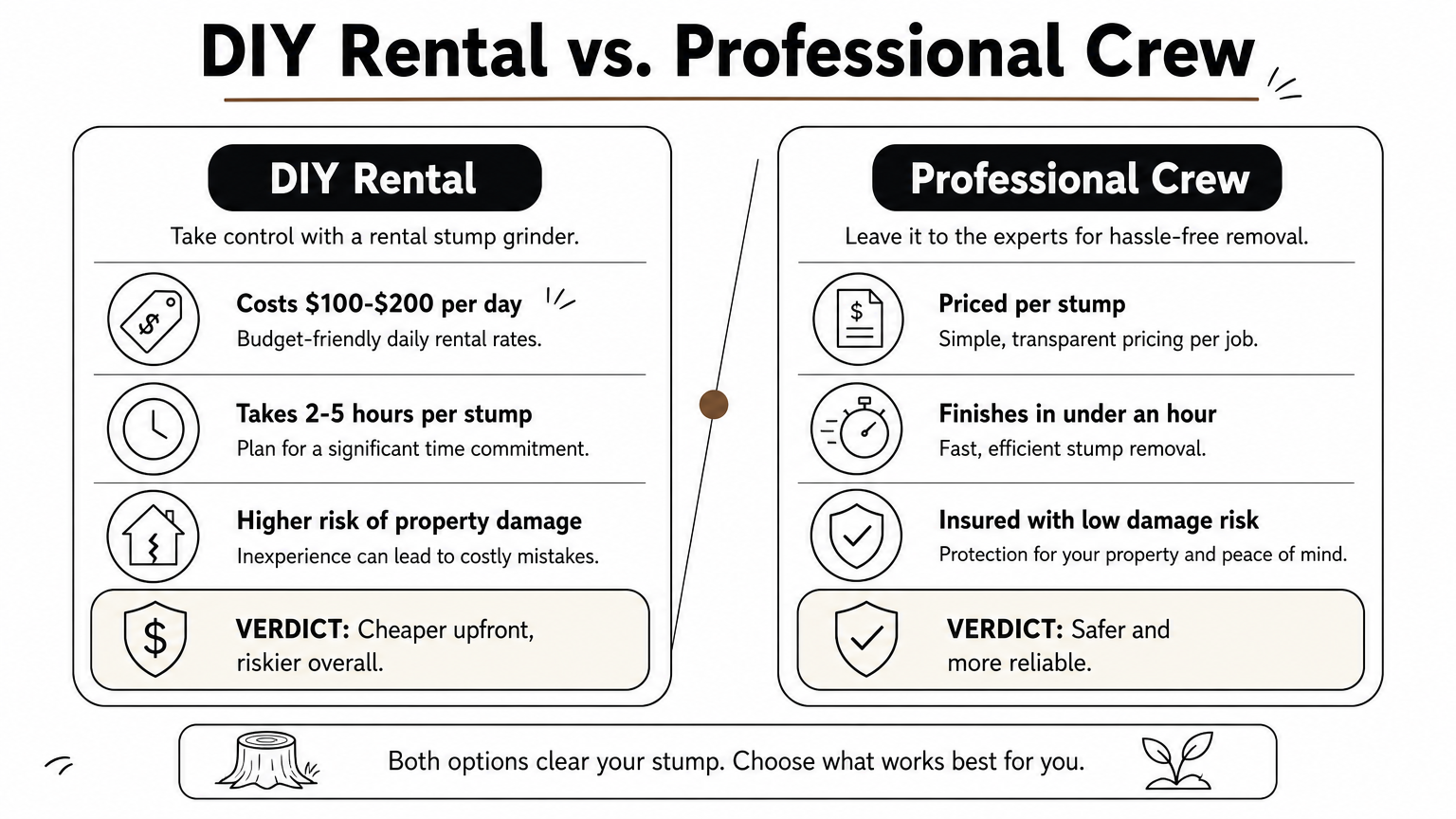
Renting a stump grinder from a home improvement store looks cheap on paper, usually $100 to $200 for a day, but the math changes fast once you factor in everything else. These machines weigh several hundred pounds, spin a cutting wheel that can throw wood chips and debris at high speed, and take real practice to control on uneven Florida terrain. Homeowners without hands-on experience often gouge lawns, damage roots on nearby trees, or leave the stump too shallow, which means it resurfaces within a year.
Safety gear alone adds to the rental cost: eye protection, hearing protection, steel-toe boots, and heavy gloves aren't optional with a machine this powerful. Add fuel, a truck capable of hauling the equipment, and the hours spent hauling and cleaning up wood chips, and the total often lands close to what a professional crew charges.
Renting the machine is the easy part. Knowing where the roots, cables, and irrigation lines run underground is what actually protects your property.
A professional stump removal service brings insurance coverage, proper equipment maintenance, and the experience to grind below grade correctly on the first pass, so it pays to know how to find a reliable stump grinding company. That matters most when a stump sits near a foundation, septic line, or another tree you want to keep healthy.
| Factor | DIY Rental | Professional Crew |
|---|---|---|
| Upfront cost | $100-$200/day | Priced per stump |
| Time investment | 2-5 hours per stump | Under 1 hour typical |
| Risk of property damage | Higher | Low, insured |
| Root flare handling | Often incomplete | Ground to spec |
For anything beyond a small, isolated stump in open ground, hiring out saves you the headache and the hospital visit.
Getting rid of that stump for good
A stump doesn't fix itself, and every month you leave it in the ground raises the odds of termites, root rot, or a mower accident. Stump grinding clears the hazard fast, reclaims your yard space, and costs far less than most homeowners expect once you compare it against a weekend of rental fees and hospital-worthy risk. Renting equipment might sound like the budget move, but the real savings come from doing the job right the first time, at the correct depth, without cracking a sprinkler line or a patio slab in the process.
Southwest Florida's heat and humidity don't give rotting wood any reason to slow down, so the sooner that stump goes, the better off your property is. If you've got a stump sitting in your yard right now, request a stump grinding estimate from ArboBella Tree Service and let a certified arborist walk your property before the damage spreads any further.