Tree Removal Tree Service: 5 Choices and How to Pick One
The best tree removal tree service for most homeowners in Southwest Florida is a licensed, insured company with an ISA Certified Arborist who inspects the tree before quoting and puts the full price in writing. Then match the type of crew to the job. A certified arborist company suits most homes and HOAs. Crane crews suit big trees on tight lots. Small crews fit simple, low-risk trees. Storm crews fit emergencies, and stump specialists finish the job.
Comparing providers is the hard part. In North Port, Port Charlotte, and Venice, two quotes for the same tree can look far apart, and the gap is rarely the tree itself. It comes down to the equipment, the insurance behind the crew, and whether cleanup and the stump are included. Demand during hurricane season makes the comparison even harder.
This article walks through five types of providers, each judged on the same three checks: how the work runs, who it suits, and what drives the price. ArboBella Tree Service comes first. It is a family-owned arborist company based in North Port. Hold it to the same checks as the other four.
1. ArboBella Tree Service, a certified arborist company
How it works
An arborist evaluates the tree's health, structure, location, and surroundings before recommending pruning, treatment, or removal. Removal is for trees that are dead, declining, damaged, or hazardous, when saving them is no longer practical. ArboBella aims to preserve healthy trees whenever it can. You may hear "this one can stay," which a removal-only crew has little reason to say.
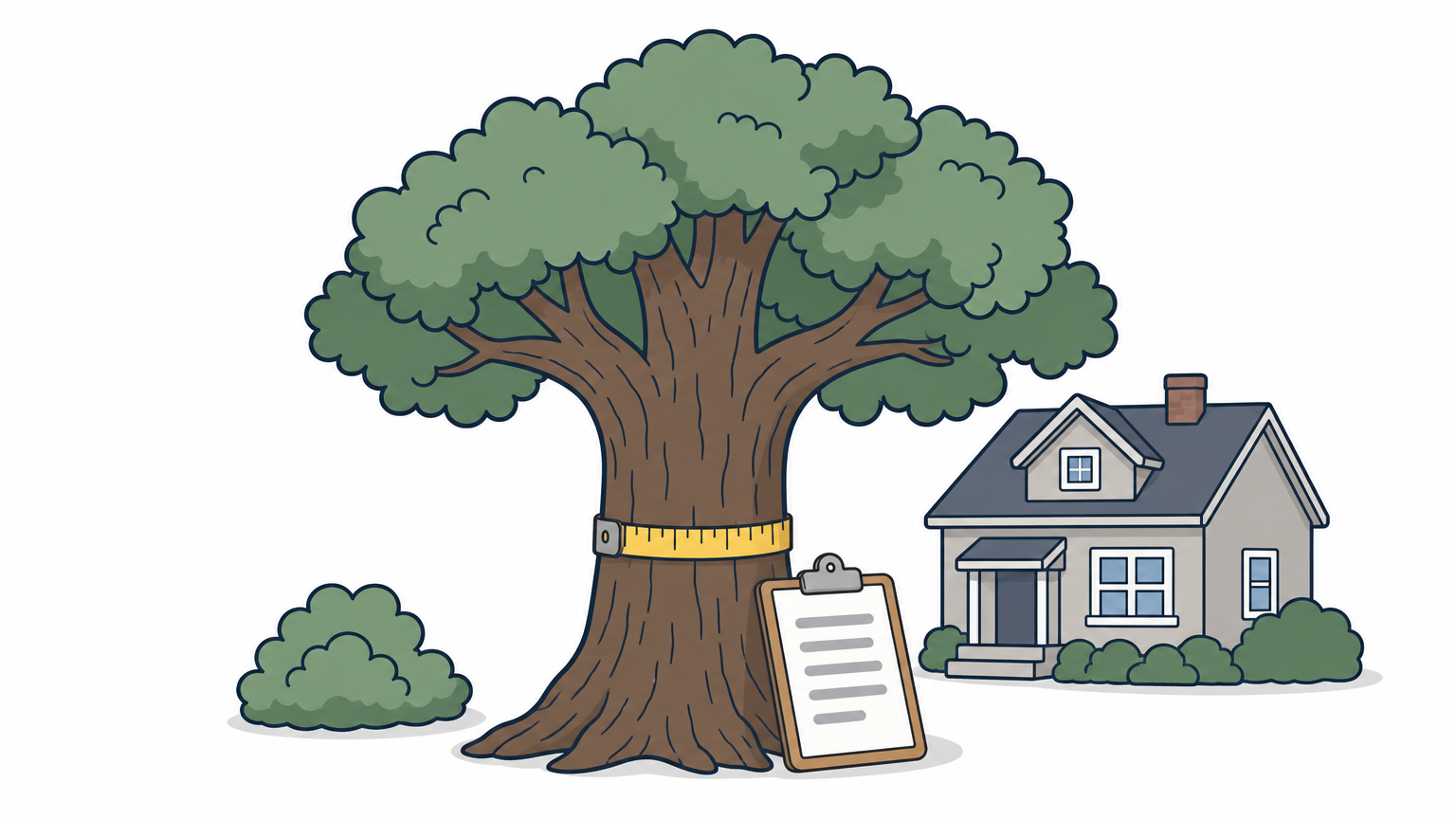
The work is planned around nearby homes, fences, and landscaping. The company is led by an ISA Certified Arborist (FL-295224A) and is licensed and insured . It has more than 10 years of experience and belongs to the ISA Florida Chapter and the North Port Chamber of Commerce. It also handles stump grinding, emergency calls, and storm cleanup, so one company can cover the whole job.
Who it suits
This type suits homeowners who are not sure the tree must go . It also suits commercial clients such as HOAs, municipalities, and property managers, who have their own service line for removals and stump grinding.
Homeowners who worry about insurance can look at the Homeowner Tree Risk Mitigation Program . It identifies potentially hazardous trees, carries out the recommended work, and ends with a final inspection by an ISA Certified Arborist. You get documentation to show your insurance agent. It does not guarantee a discount, a lower premium, or coverage approval, so ask your agent what they accept.
What affects the price
Price follows the tree and the site, not height alone. Anyone who quotes a 30-foot or 40-foot tree over the phone is guessing. The real drivers are trunk size and condition , how close the tree stands to structures and wires, access for equipment , and whether you want the wood hauled and the stump ground. To set up an evaluation, call 941-932-1768 or email info@arbobellatreeservice.com.
Whichever company you call, the written quote should show these lines:
| Line item | What to confirm |
|---|---|
| Removal | Which trees, and how the crew will handle the work near structures |
| Cleanup and hauling | Whether branches, logs, and debris leave the property |
| Stump grinding | Included or separate, and the roots generally stay in the ground |
| Insurance | A certificate of insurance on request |
| Permits | Who checks the rules for your city or county |
A quote you can compare shows removal, cleanup, stump, and insurance on separate lines.
2. Crane and large-tree removal crews
How it works
Crane and grapple-saw crews lift trunk and limb sections out in pieces instead of dropping them or climbing every cut. A truck-mounted crane or boom holds each piece while it is cut, then sets it clear. That limits impact on lawns, roofs, and pools below.
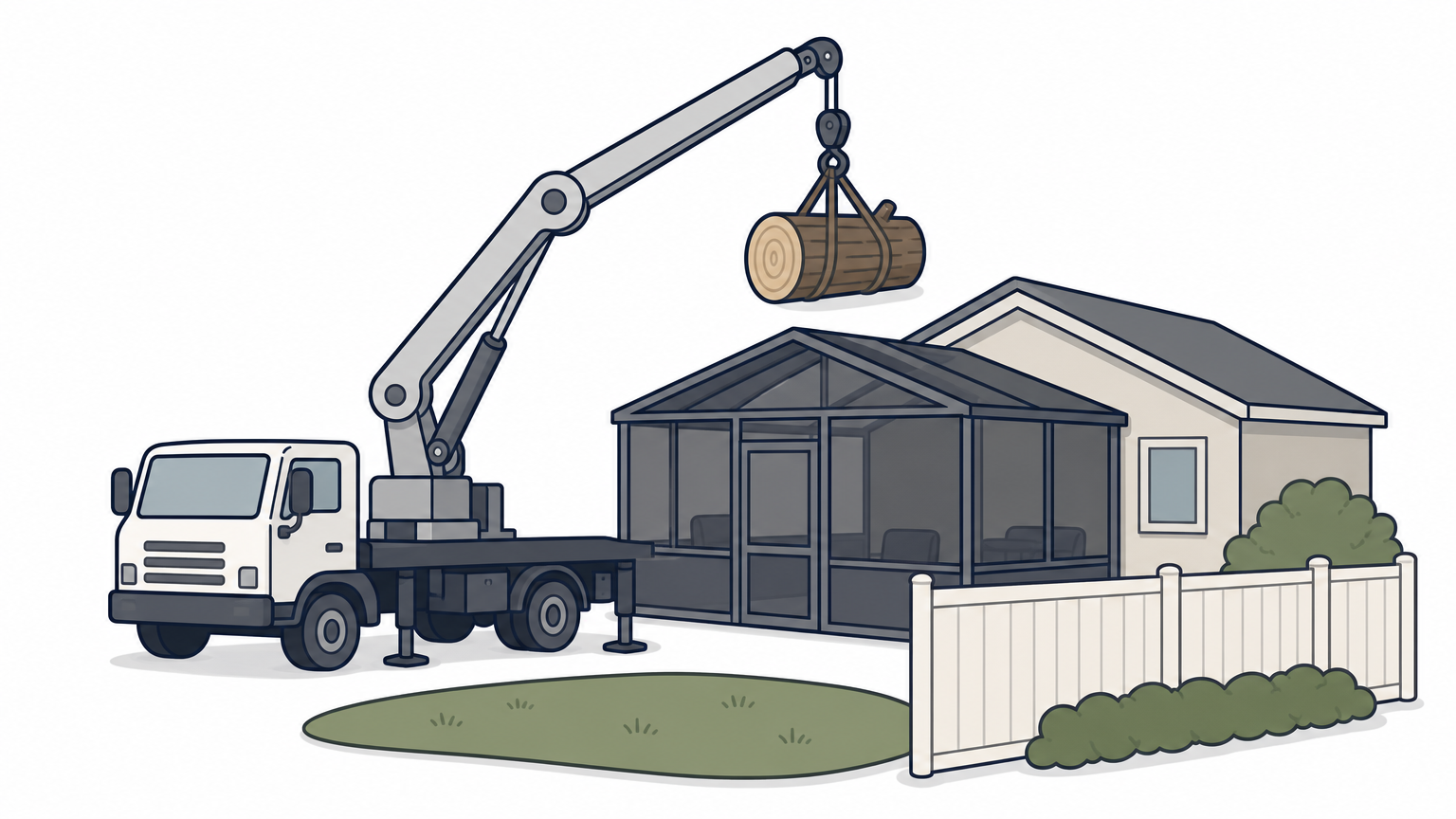
This equipment is the right call for a large tree with a house, screen enclosure, or fence in the fall zone. A crane needs truck access and firm ground, so confirm the crew can reach the tree before you book.
Who it suits
Choose this type when the tree is tall, dead, or leaning over something expensive and a climber cannot safely drop it. It also helps on narrow lots where there is no room to lay a trunk down.
If branches touch a power line, do not hire anyone yet. Call your electric utility first, because only qualified line-clearance crews work near energized lines.
What affects the price
Expect this type to price by the hour, half day, or full day , because the machine and operator are costly. Ask for the hourly rate, the minimum charge, and whether cleanup is billed separately. A faster job can still cost less than a slow climbing job. Compare the total, not the rate .
A crane raises the hourly rate but can shorten the job, so compare totals, not rates.
3. Small owner-operator crews
How it works
A small crew is usually one to three people with a truck, chainsaws, ropes, and a chipper. Low overhead keeps their prices down, and the owner often quotes and works the job personally. You deal with one person from estimate to invoice.
Who it suits
This type fits small, accessible trees in open yards, such as a dead ornamental, a leaning sapling, or a palm with nothing underneath it. It does not fit a large oak over your roof or anything near wires. Equipment and crew size set the limit on what these crews can do safely.
What affects the price
Small crews often give the lowest quote, but the savings vanish if something goes wrong . Ask for a certificate of insurance showing liability and workers' compensation, sent by the insurer rather than a photo the crew texts you. Confirm they hold a local business license.
Then read reviews for patterns. Look for on-time arrival , an invoice that matches the quote, and cleanup. Three detailed reviews that mention the yard was left clean tell you more than fifty one-line five-star ratings.
The lowest quote is only cheap if the crew carries insurance that covers your property.
4. Storm and emergency response crews
How it works
Emergency crews handle fallen trees, hanging limbs, and split trunks . The first job is making the site safe. Full removal and debris hauling follow once the danger is gone. Hurricane season runs June 1 to November 30, and demand spikes after any strong storm, so good crews book up fast.
Who it suits
Call an emergency crew when a tree is on your roof or house , blocking your driveway, or hanging over a structure. If anyone is at risk or a tree is touching a line, call 911 or your utility first.
If the tree is stable and nothing is threatened, a scheduled removal usually costs less than an emergency visit. Many established local companies cover both.
What affects the price
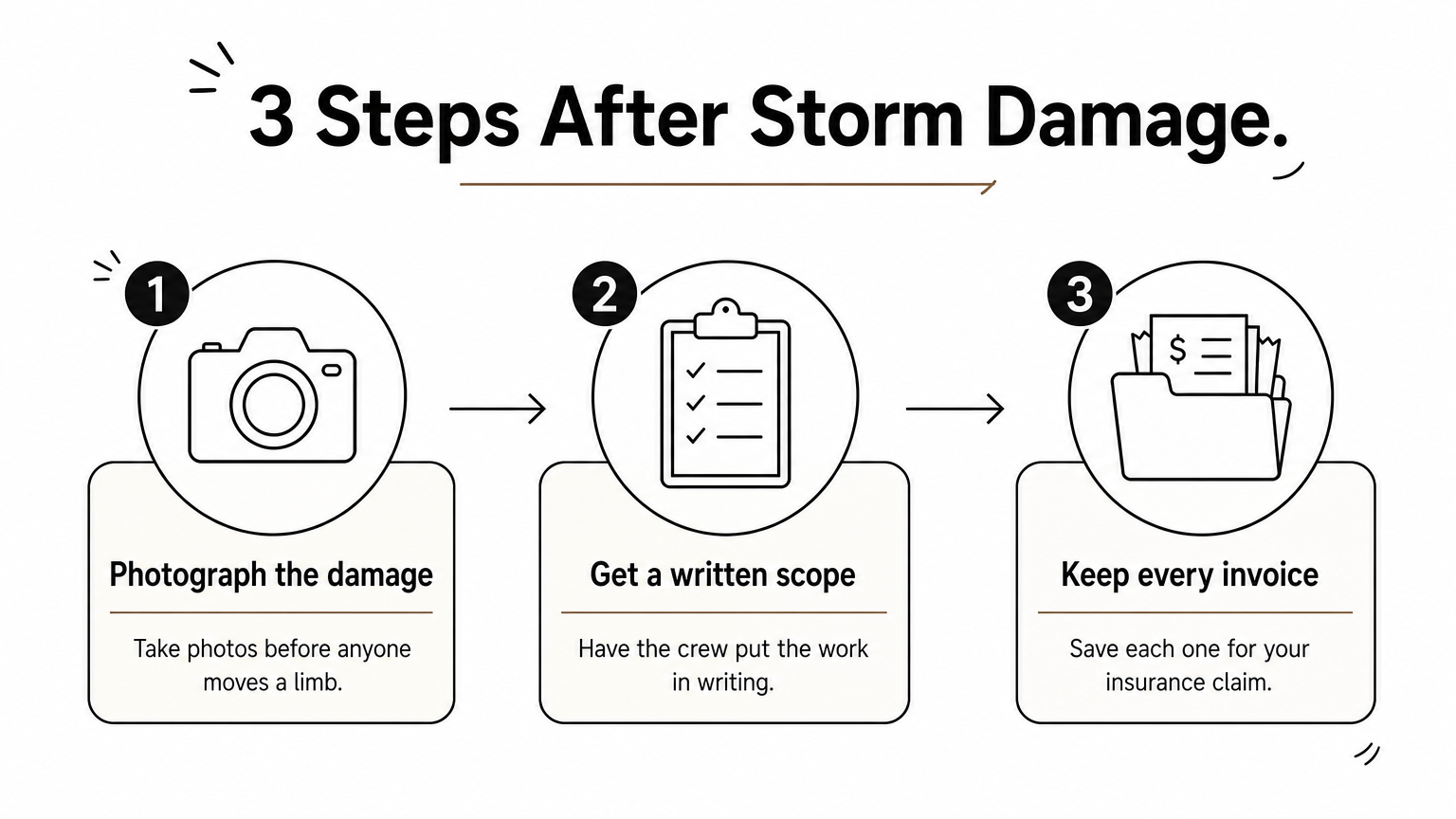
Emergency work usually costs more per hour than scheduled work. It jumps the queue and may happen after hours or in bad conditions. Photograph the damage before anything is moved, get a written scope, and keep every invoice for your insurance claim.
Be wary of crews who knock on doors after a storm and ask for payment up front.
Photograph the damage before anyone moves a limb, because your insurer will ask for it.
5. Stump and lot-clearing specialists
How it works
A stump grinder chews the stump down below the surface into wood chips. The root system generally stays in the ground and decays over time. Lot-clearing crews remove many trees and brush at once for building, a lake view, or overgrown land.
Who it suits
Hire a stump specialist when a tree is already down and the stump blocks mowing or landscaping. Lot clearing suits new construction, a view, or neglected acreage .
Florida's Sunshine 811 locates buried utility lines, and a careful crew calls 811 before grinding. Ask who makes the call.
What affects the price
Stumps are often priced by diameter and by the number of stumps . Lot clearing is usually priced by the acre or by the day. Ask for one quote that covers removal and grinding so you can compare line items. Ask what happens to the chips and whether you want them left on site.
Ask who calls 811 before the grinder starts, because the answer shows how careful the crew is.
Choose the crew before the chainsaw
Match the type of crew to the tree, then verify the basics. Ask for proof of insurance, check the arborist credential if the company claims one, and ask who handles local permits. Get an itemized written quote. A certified arborist company fits most homes and commercial properties, while crane, small-crew, storm, and stump specialists each fit a narrower job.
If you want an arborist to look at your tree before you decide anything, contact ArboBella Tree Service and ask for an evaluation. You will get a clear answer on whether the tree can stay or has to go.