Cost of Tree Removal: What Determines Your Price
You've got a tree that needs to come down, and now you're staring at quotes that seem to vary by hundreds or even thousands of dollars. The cost of tree removal in Southwest Florida typically runs between $400 and $2,500 per tree, but that range hides a lot of important details that determine where your specific job falls.
The short answer: price depends on tree height, trunk diameter, location on your property, and how much risk is involved in getting it down safely. A 30 foot oak in an open backyard costs far less to remove than a leaning pine tangled in power lines near your roof. Stump grinding, debris hauling, and emergency access after a storm all add to the estimated cost of tree removal as well.
In this article, we'll break down exactly what drives pricing for removal of tree cost in North Port, Port Charlotte, and Venice, walk through real cost ranges by tree size and condition, and explain when a certified arborist's evaluation can actually save you money by avoiding an unnecessary removal altogether.
Why tree removal costs vary so much
Ask five tree companies for a quote on the same tree and you might get five different numbers. That's not because someone's padding the bill. Tree removal pricing depends on a stack of variables that all shift the labor, equipment, and time a crew needs to safely bring a tree down. Once you understand these factors, the wide range you see in online estimates starts to make a lot more sense.
Height and trunk diameter
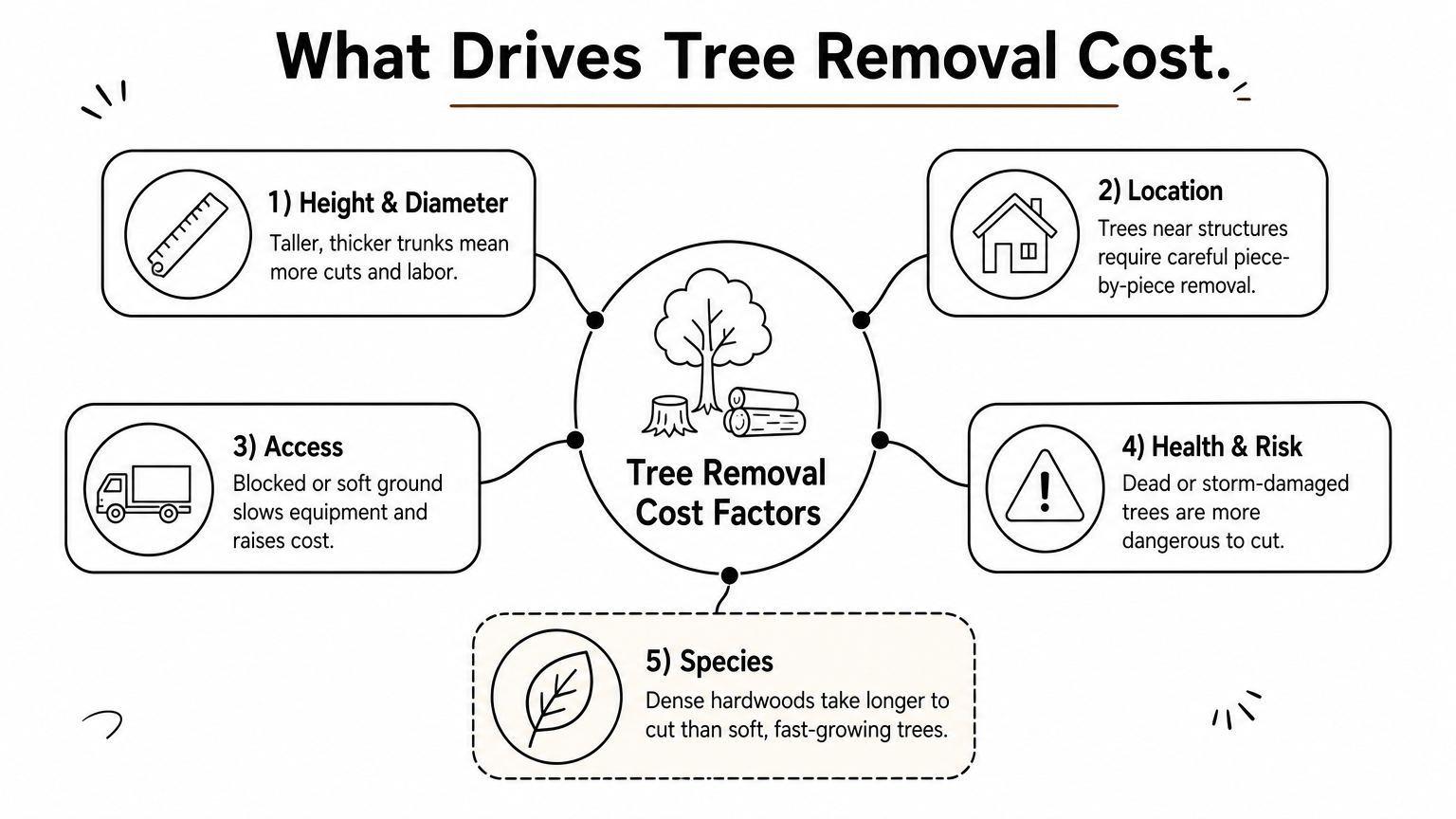
Size is the biggest single driver of cost, and it's not just about how tall a tree looks from your driveway. Crews measure both height and diameter at breast height (DBH) because a short, thick-trunked tree can actually take longer to cut and remove than a tall, slender one. More wood means more cuts, more weight to manage, and more debris to hspread apart and haul away.
Bigger trees don't just cost more, they cost more per foot, because every added section multiplies the labor and rigging involved.
Location on your property
Where the tree stands changes everything about how a crew approaches the job. A tree in an open field can often be felled in one piece and cut up on the ground, which is the fastest and cheapest method. A tree wedged between a house, a fence, a pool cage, and a neighbor's shed has to be taken down piece by piece, with each section lowered by rope instead of dropped. That slower, more careful process adds hours to the job.
Access for equipment
Crews rely on bucket trucks, chippers, and stump grinders to keep costs down. When a truck can pull right up to the tree, the job moves fast. When the tree sits behind a locked gate, across soft ground, or down a narrow side yard, everything has to be done by hand or with smaller equipment, and that shows up in your quote.
Tree health and structural risk
A dead or diseased tree isn't just sadder to look at, it's genuinely more dangerous to remove. Brittle limbs can snap unpredictably, hollow trunks change how a tree falls, and storm-damaged trees may already be leaning on structures or power lines. This is where a professional arborist's hazard evaluation matters most, because it identifies hazards before the crew ever picks up a chainsaw, and it sometimes reveals that the tree can be saved with pruning instead of removed entirely.
Species and wood density
Some species are simply harder to cut through and heavier to move. Southern live oak and slash pine, both common across North Port and Venice, have dense wood and wide canopies that take longer to process than a fast-growing species like a Brazilian pepper.
| Factor | Lower cost scenario | Higher cost scenario |
|---|---|---|
| Height/diameter | Small to medium tree, thin trunk | Tall tree, wide trunk |
| Location | Open yard, no obstacles | Near house, power lines, or fence |
| Access | Clear driveway access | Locked gate, soft or sloped ground |
| Health | Healthy, stable structure | Dead, diseased, or storm-damaged |
| Species | Fast-growing, softer wood | Dense hardwood, heavy canopy |
Emergency versus scheduled work
Finally, timing plays a role. Removing a tree that's already down after a storm, or one that's actively leaning on your roof, requires an emergency response, often outside normal business hours. Emergency tree services after a storm cost more than a routine removal you can schedule two weeks out, simply because crews are prioritizing safety and speed over efficiency. Booking non-urgent removals during calmer weather, rather than waiting until hurricane season stress hits, is one of the simplest ways to control what you pay.
How to get an accurate tree removal estimate
Getting a reliable number for the price on a tree removal quote on your property means skipping the phone quotes and insisting on an in-person visit. Any company willing to name a firm price without seeing the tree, the yard, and the surrounding obstacles is guessing, and that guess usually turns into a change order once the crew shows up. A proper estimate starts with someone walking your property, measuring the trunk, checking for nearby structures, and looking up into the canopy for dead wood or lean.
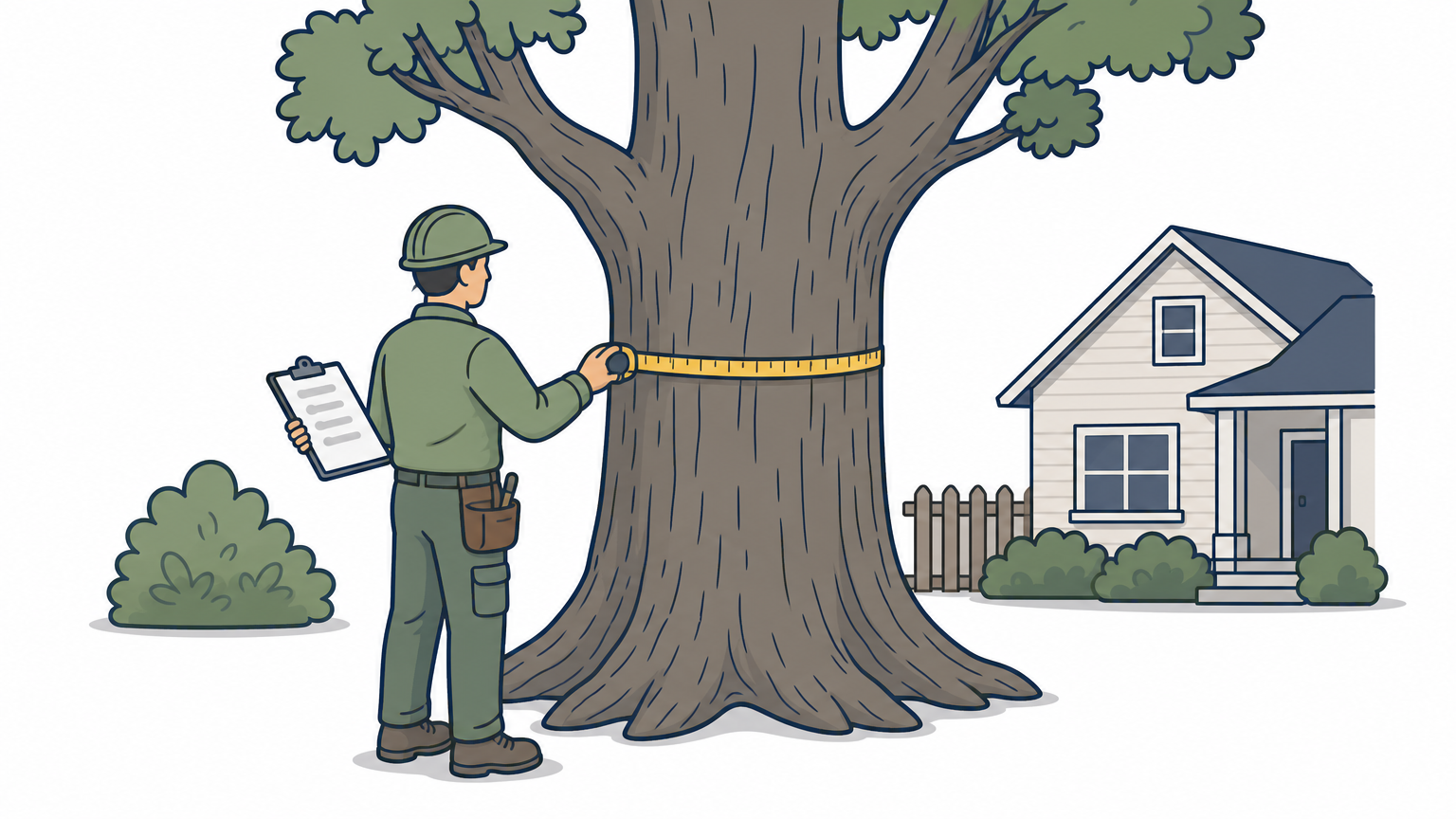
A quote given without a site visit isn't an estimate, it's a placeholder that will change once the crew actually sees the tree.
What a solid estimate should cover
Requesting an itemized breakdown protects you from surprise charges after the work is done. A written quote should spell out exactly what's included and what costs extra, since stump grinding and debris hauling are often billed separately from the felling and cutting work itself.
- Tree height, trunk diameter, and species identified
- Whether stump grinding is included or quoted separately
- Debris removal and hauling fees, or a discount if you keep the wood
- Permit needs, if your municipality requires one for removal
- Proof of licensing and insurance, so you're not liable if something goes wrong
- A start date and expected completion window
Insist on this level of detail even for a routine backyard removal. Skipping it is how homeowners end up with a low headline number that balloons once hauling and cleanup get tacked on afterward.
Why an arborist evaluation changes the estimate
Sometimes the most accurate estimate isn't for removal at all. Bringing in a certified arborist before you commit to cutting a tree down can reveal that the tree is structurally sound and just needs corrective pruning and canopy work, or that a perceived hazard is actually manageable with cabling or bracing. That evaluation costs far less than a full removal, and it keeps a healthy, mature tree on your property instead of turning it into a stump. An arborist diagnosis also documents the tree's condition, which matters if your HOA, insurer, or municipality requires justification for removing a living tree.
Get a walk-through quote, not a phone number
Once you've confirmed a company will actually walk your property, ask for the estimate in writing before any work starts. ArboBella Tree Service provides on-site evaluations across North Port, Port Charlotte, and Venice, and you can request a free estimate that spells out every cost up front, from felling to stump grinding to cleanup, so nothing catches you off guard on invoice day.
Typical costs by tree size and type
Numbers help more than ranges when you're trying to budget, so here's what homeowners pay to remove a tree across North Port, Port Charlotte, and Venice once you sort trees by size. These figures assume standard access and a healthy tree with no major complications. Add complexity from location, health, or species, and you'll land toward the higher end or beyond it.
Price ranges by height and diameter
Generally speaking, cost climbs steadily as a tree gets taller and its trunk gets thicker, since both factors add more cutting, rigging, and hauling work. A small ornamental tree under 30 feet is the cheapest category, while a mature oak or pine over 60 feet with a trunk over 24 inches in diameter sits at the top of the range.
| Tree size | Height | Typical cost |
|---|---|---|
| Small | Under 30 ft | $150 to $500 |
| Medium | 30 to 60 ft | $500 to $1,200 |
| Large | 60 to 80 ft | $1,200 to $2,000 |
| Very large | Over 80 ft | $2,000 to $3,000+ |
A tree's price tag usually tracks its height and trunk width more closely than any other single factor.
These figures reflect felling and basic cleanup. Stump grinding, hauling large debris piles, or removing a tree wedged against a structure will push you past these baseline numbers, sometimes significantly.
How species changes the math
Beyond height, wood density and canopy shape matter just as much. Southern live oaks are common across Southwest Florida yards and tend to cost more than their height alone would suggest, because their wide, heavy limb structure requires careful piece-by-piece rigging rather than a quick, one-piece drop. Slash pines, another regional staple, grow tall and straight, which can make felling simpler in open yards but riskier near homes since a leaning pine can split unpredictably.
Fast-growing, softer-wood species like Brazilian pepper or melaleuca, both considered invasive in Florida, typically cost less to remove per foot of height. Their wood cuts faster and their canopies are usually less dense, which shaves time off the job. If you're comparing an estimated cost of tree removal across different trees on the same property, expect the oak to run higher than a similarly sized pepper tree every time, even with identical access and health conditions.
Knowing where your tree falls on both the size table and the species list gives you a realistic starting point before a crew ever sets foot on your property, and it helps you spot a quote that seems out of line with what similar jobs in the area actually cost.
Extra costs to budget for beyond removal
Getting the tree on the ground is only part of the job. Several add-on services routinely surprise homeowners because they weren't spelled out clearly in the original quote. Budgeting for these extras up front keeps your final invoice from drifting far past the number you were originally quoted for felling alone.
Stump grinding
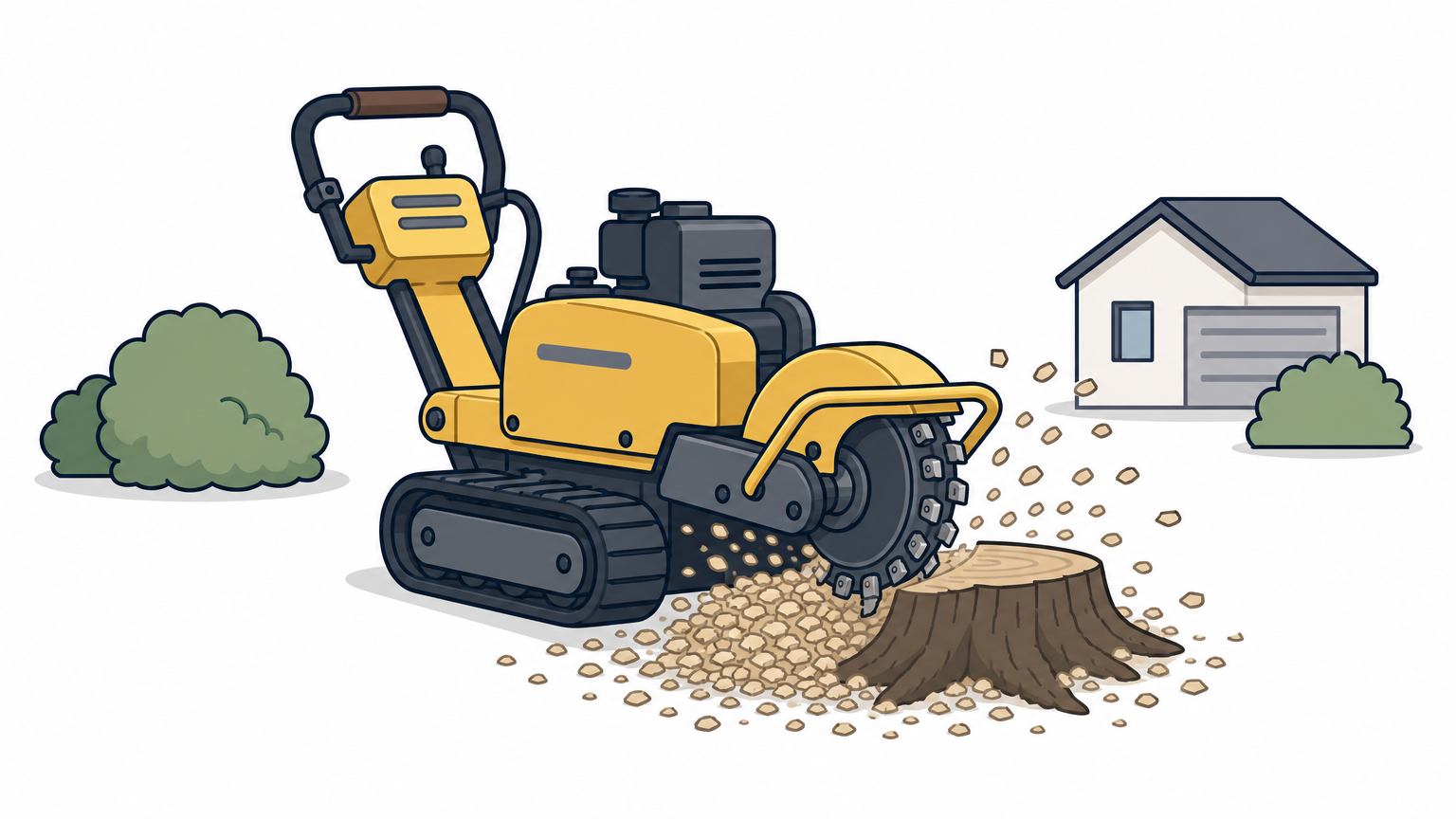
Most companies quote stump grinding as its own service as a separate line item, and it typically adds $75 to $400 depending on the stump's diameter and how deep you want it ground. Leaving a stump in place might seem like a way to save money, but it can attract termites, sprout suckers, and become a tripping hazard in a lawn, so most homeowners end up paying for it eventually anyway.
Skipping stump grinding rarely saves money long term, it just delays a cost you'll likely pay anyway once the stump starts causing problems.
Debris removal and hauling
Hauling matters just as much as cutting when it comes to your final bill. Some crews chip smaller branches on site and haul the mulch away for you, while others leave the wood stacked in your yard unless you specifically request full removal, so ask which applies before work begins. Homeowners who want to keep firewood can sometimes negotiate a discount, since less material means less time and fewer dump fees for the crew.
Permits and municipal requirements
Certain municipalities in Southwest Florida require a permit before you can remove a living tree, especially for protected species or trees above a certain trunk diameter. Permit fees usually run modest, but the paperwork and inspection can add days to your timeline, so factor that into your planning if you're on a deadline.
Additional labor for hazard trees
Dead limbs, split trunks, or a tree already leaning against your house often require extra rigging, cabling, or crane support for safe removal of a hazardous tree, and that specialized labor adds to your total. A certified arborist evaluation before removal can flag these hazards early, so your quote reflects the real complexity instead of a baseline estimate that gets revised once the crew arrives.
Storm cleanup and debris hauling
After a hurricane or major storm, cleanup often extends beyond a single fallen tree to include broken limbs scattered across your yard, damaged fencing, and blocked driveways. Cleanup after a hurricane or high winds typically bills separately from routine removal because the volume of debris and the urgency involved change the scope of the job significantly.
What affects tree removal costs in Southwest Florida
Local conditions in North Port, tree services in Port Charlotte, and Venice shape pricing in ways that don't show up in a national cost calculator. Sandy soil, hurricane season, and a mix of native and invasive species all play into what you'll actually pay here compared to a quote you might find online for a different climate.
Sandy soil and root stability
Southwest Florida's sandy soil drains fast, but it also gives tree roots less to grip onto than clay or loam. That means more mature trees develop shallow, wide-spreading root systems instead of deep taproots, which affects both stability and removal difficulty. Sandy soil also makes grinding out a leftover stump faster in some cases, since there's less compacted material to chew through, but it can complicate felling if a leaning tree has already loosened its root plate.
Hurricane season demand
June through November brings a predictable spike in tree work across the region, and pricing shifts with it. Crews get booked out weeks in advance for routine jobs, while emergency calls for leaning or split trees jump to the front of the line at a premium. Scheduling a non-urgent removal in the spring, before storm season ramps up demand, typically gets you a better rate and a faster appointment than waiting until August.
Booking tree removal before hurricane season starts almost always costs less than waiting until a storm forces your hand.
Local species and canopy density
Southern live oaks, slash pines, and Sabal palms make up a large share of the tree canopy across North Port and Venice, and each brings its own cost profile. Palms, despite their height, are often cheaper to remove than oaks of similar size because their trunks lack branching limbs that require separate rigging. Live oaks, by contrast, spread wide and heavy, which means more careful piece-by-piece work near homes and fences.
Municipal rules that vary by city
North Port, Port Charlotte, and Venice each set their own rules on protected trees, permit thresholds, and setback requirements near canals or wetlands, so a job that needs no paperwork in one city might require a permit in another. Checking your specific municipality before scheduling work avoids delays and keeps your budget accurate from the start.
Insurance and liability considerations
Hiring a licensed and insured tree crew matters more in a region prone to storm damage, since liability for a tree that falls on a neighbor's property or a power line can get expensive fast. Confirming coverage before work begins protects you from being on the hook for damage that has nothing to do with your original quote.
Planning your tree removal budget
At this point, you've got a realistic framework for what the cost of tree removal actually depends on: size, species, access, health, and timing all shift the number up or down. Budgeting well means building in room for stump grinding, debris hauling, and possible permit fees rather than fixating on the felling price alone. Comparing quotes matters too, but only when each one covers the same scope, since a cheap number that skips cleanup isn't actually cheaper.
Before you commit to removal, remember that a professional evaluation sometimes changes the whole equation. A tree you assumed was a hazard might just need pruning, saving you the cost entirely. When removal is the right call, working with a certified arborist gets you an accurate, itemized quote instead of a guess that grows once the crew arrives. Ready for a real number on your tree? Request a free on-site tree removal quote from ArboBella Tree Service and get a straight answer for your property.