Tree Removal Services Cost: What to Expect in 2026
You've got a tree that needs to come down, and the first question is always the same: what's this going to cost? Tree removal services cost anywhere from a couple hundred dollars for a small dead tree to several thousand for a large oak leaning over a roof, and the range depends on more than just height.
If you want an estimated tree removal cost before an arborist ever sets foot on your property, the honest answer is that size, trunk diameter, location, and accessibility all move the number up or down. A tree tangled in power lines or wedged between two houses in Venice, where we handle tree removal and arborist services, or Port Charlotte costs more to remove than the same tree standing alone in an open yard, no matter what a quick online calculator tells you.
We've priced out removals across North Port and the surrounding Southwest Florida area for over a decade, and this article breaks down what actually drives your quote in 2026. You'll see typical price ranges by tree size, the factors that push costs higher, and how stump grinding, permits, and storm cleanup fit into the total bill.
Why tree removal costs vary so much
Size sits at the top of every arborist's pricing sheet, but it's not the only variable that swings your tree removal services cost from a few hundred dollars to well over three thousand. Height, trunk diameter, wood density, how close the tree stands to your house, and whether it's already dead or storm-damaged all stack together to form the final number. Two identical-looking oaks on the same street can carry very different quotes once you factor in what a removal fee covers and what affects the price, including what's underneath and around them.
Height and trunk diameter set the baseline
Generally speaking, taller trees take longer to dismantle safely, and thicker trunks mean more cuts, more chainsaw wear, and more wood to haul away. A 30-foot tree with an 18-inch trunk might run $300 to $700, while a 60-foot tree with a trunk over 30 inches can climb past $2,000 before you add anything else. Crews price by the hour and by the equipment required, so every extra ten feet of height or few inches of girth adds real time to the job.
Wood density and species change the labor
Dense hardwoods like live oak or hickory dull chainsaw blades faster and take longer to buck into manageable pieces than softer species like pine or melaleuca. In Southwest Florida, we see this constantly with the sprawling live oaks so common in North Port and Venice yards. Their weight and branch structure demand more rigging, more cuts, and often a bigger crew than a slash pine of similar height, which pushes labor costs up even when the trees look comparable from the curb.
Access and obstacles can double the price
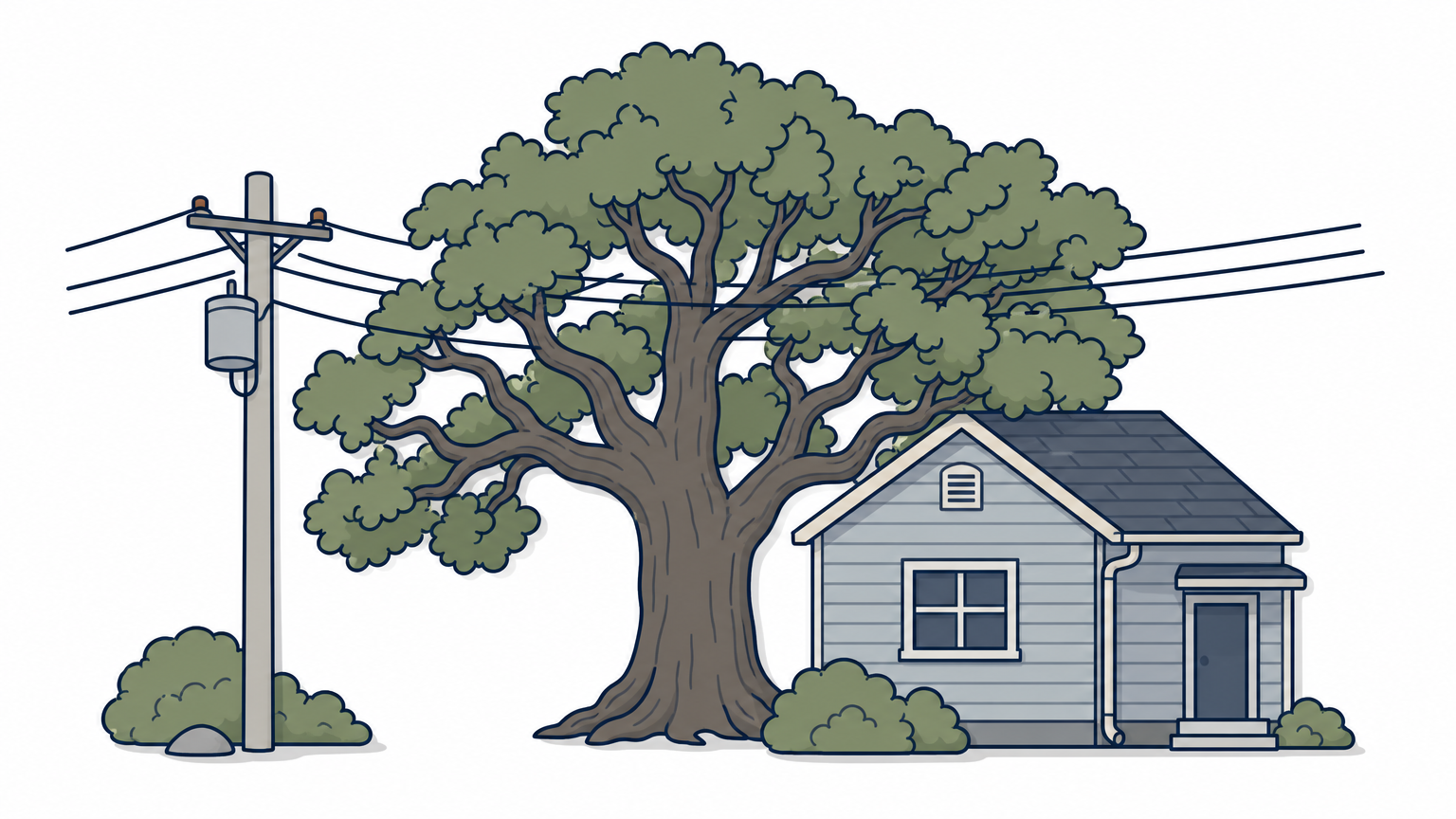
Accessibility often matters more than size alone. A tree standing in an open backyard with truck access is straightforward. A tree wedged between a fence and a house, tangled in power lines, or hanging over a pool changes the entire approach. Crews may need to remove branches by hand, use a crane instead of dropping sections, or coordinate with the utility company before touching anything near a line.
A tree's price tag depends less on how tall it looks and more on how hard it is to bring down safely.
| Access condition | Typical impact on cost |
|---|---|
| Open yard, easy truck access | Baseline price |
| Near power lines or utility easement | +20% to +50%, may require utility coordination |
| Wedged between structures | +25% to +60% for hand-cutting and rigging |
| Requires crane rental | +$500 to $1,500 flat |
Condition and hazard level add urgency
Condition changes the risk profile, and risk changes the price. A dead, hollow, or leaning tree can shift or drop limbs mid-cut, so crews take extra precautions that add time. Trees damaged in a recent storm, with split trunks or hanging limbs, often fall into emergency territory, where response speed and hazard mitigation matter more than a standard scheduled removal. If you're dealing with a tree that came down or cracked during a storm, our emergency tree service team in North Port prioritizes those calls differently than routine trims.
Ultimately, no two removals price out identically, even on the same street. That's why a phone estimate based on "it's a big oak in my backyard" only gets you a rough range. The real number comes from an arborist looking at the trunk, the canopy, the surrounding structures, and the tree's overall health before quoting a firm price.
How to get an accurate tree removal estimate
Getting a number you can trust starts with skipping the phone-only quote. Photos and a rough description tell an arborist almost nothing about root health, lean angle, or what's underneath the canopy. On-site inspections let a certified arborist look the tree over, measure trunk diameter, check for decay, and map out the safest drop zone before naming a price, which is why our team always walks the property before quoting a firm number for tree removal.
Requesting written estimates protects you from surprise add-ons once the crew shows up, and it helps to know everything that goes into a removal quote before you compare them. A detailed quote should spell out labor, equipment, debris hauling, and whether stump grinding is included or billed separately. Ask for this in writing, even if it's just an email, so you have something to compare against the final invoice.
An estimate you can trust comes from someone standing under the tree, not someone guessing from a photo.
What a solid quote should include
Homeowners often assume every quote covers the same scope, but that's rarely true. Before you sign anything, confirm the estimate answers these points:
- Full removal of trunk and branches, or just the parts visible from the ground
- Debris hauling and disposal, or a fee for you to arrange it yourself
- Stump grinding as a separate line item or bundled in
- Timeline for the job, especially if utility coordination is needed
- Proof of licensing and insurance, current and specific to tree work
Getting multiple quotes without wasting time
Insurance matters just as much as the price itself. A crew without proper coverage can leave you liable if a limb damages a fence or a worker gets hurt on your property, so run through the checks that separate a qualified crew from a risky one before comparing dollar figures. The Occupational Safety and Health Administration lists tree care among the more hazardous trades, which is exactly why licensed and insured crews charge what they charge.
Three quotes is usually enough to spot outliers in either direction. If one bid comes in far below the others, ask what's missing, whether that's stump removal, cleanup, or insurance. Comparing apples to apples, not just bottom-line numbers, is what actually protects your budget.
Typical tree removal costs by size and species
Numbers help more than percentages when you're trying to picture your own tree removal services cost , so here's what we typically quote by tree size across North Port, Port Charlotte, and Venice properties. These ranges assume standard access and average condition; add the adjustments from the section above if your tree sits near power lines or a structure.
Small trees under 30 feet
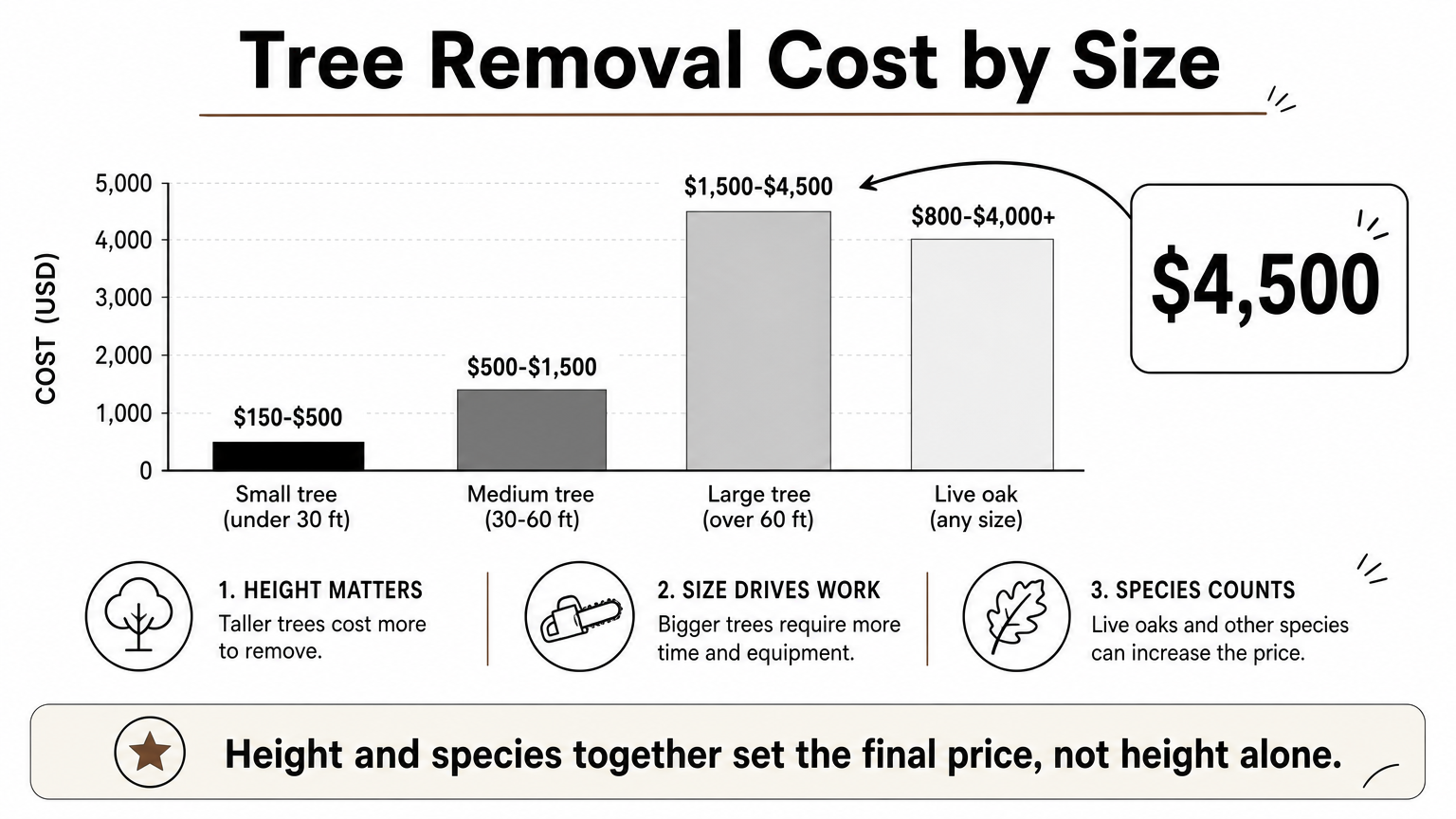
Granted, small trees are the easiest category to price. A tree under 30 feet, with a trunk under 15 inches, usually falls between $150 and $500. This covers most ornamental trees, young palms, and smaller citrus or fruit trees that homeowners want cleared for a new landscape plan or a failing root system.
Medium trees between 30 and 60 feet
Medium-height trees make up the bulk of residential removals we handle. Expect $500 to $1,500 for a tree in this range, depending on trunk width and canopy spread. This bracket includes many mature oaks, pines, and palms that have outgrown a small yard or developed structural issues after years of storms.
Large trees over 60 feet
Once a tree passes 60 feet, the job shifts from a one-day crew task to something requiring cranes, more workers, and longer cleanup. Costs commonly land between $1,500 and $4,500, with the high end reserved for oversized live oaks or trees requiring specialized rigging near a home.
Size sets the starting price, but species and structure decide how far above that baseline you land.
Species-specific pricing patterns
Softwood species like pine and melaleuca generally cost less to remove than dense hardwoods, since crews cut through them faster with less blade wear. Live oaks, given their weight, wide canopy, and heavy limb structure common throughout Southwest Florida, sit at the higher end of every size bracket.
| Tree type | Typical height range | Estimated cost range |
|---|---|---|
| Palm | 20-40 ft | $200-$900 |
| Pine | 40-70 ft | $400-$1,800 |
| Melaleuca | 30-60 ft | $350-$1,500 |
| Live oak | 40-80 ft | $800-$4,000+ |
Even within a single species, condition and site layout shift where you land in the range, which is why our team walks every property before finalizing a number for professional removal of a declining or dangerous tree rather than quoting off species alone.
Extra costs to budget for beyond removal
Most homeowners budget for the removal itself and forget everything that comes after the trunk hits the ground. Stump grinding , permit fees, and debris hauling routinely add hundreds of dollars to a project, so building these into your budget upfront keeps the final invoice from feeling like a surprise.
Stump grinding and stump removal
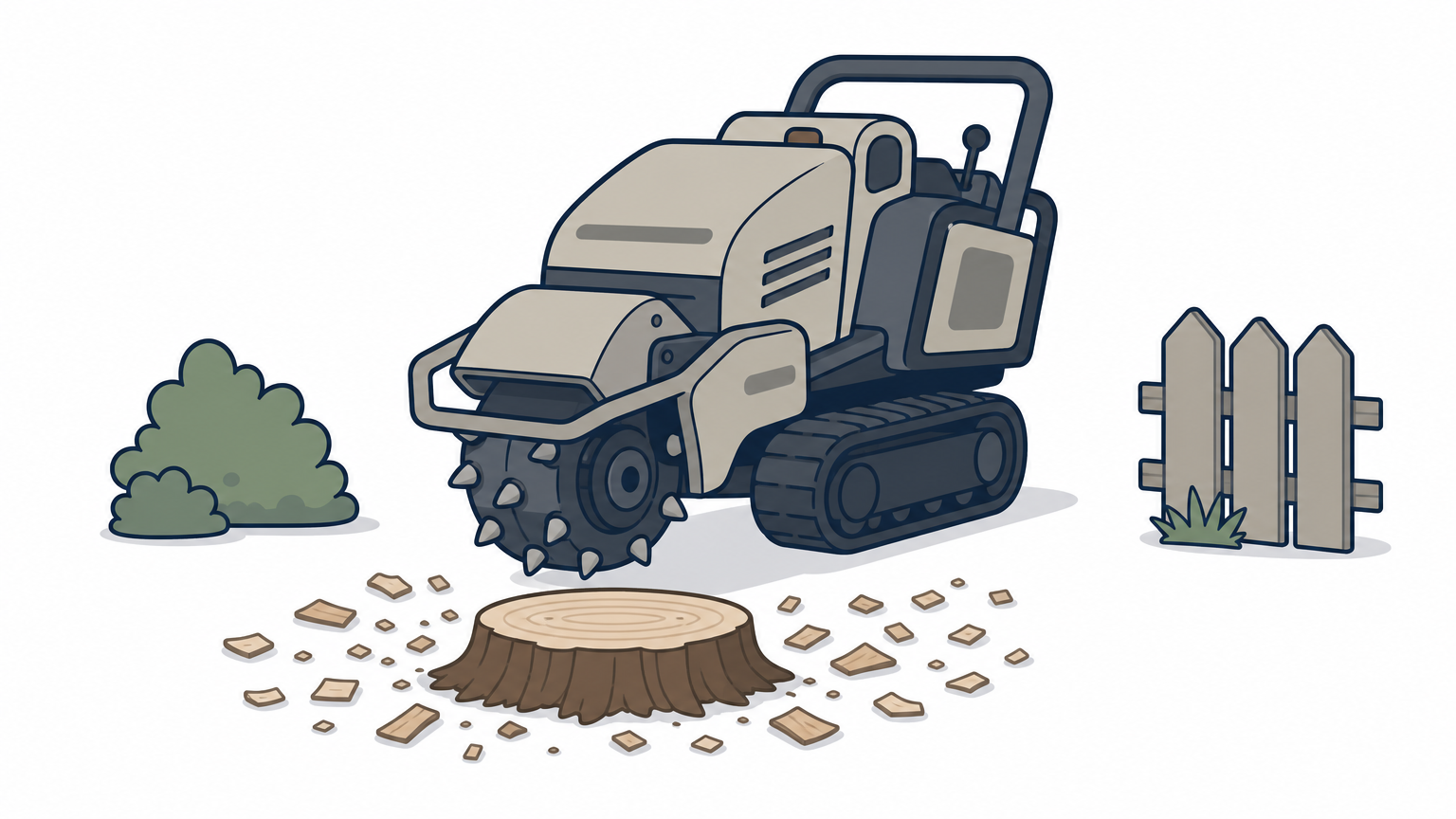
Grinding a stump flat below grade typically runs $75 to $300 for a small tree and $300 to $600 for a large one, priced separately from the removal itself in most quotes, and it helps to understand what goes into grinding a stump and what you'll pay. Full stump and root removal, which pulls the entire root ball out of the ground, costs more and disturbs a wider area of your yard, so it's worth asking whether grinding alone solves your problem before paying for full extraction. Our North Port stump grinding and stump removal crews usually knock this out the same visit as the removal, which saves you a second trip charge.
The stump is rarely included in the number you first hear, so ask before you assume it is.
Permits and local regulations
Certain municipalities in Southwest Florida require a permit before removing protected or specimen trees, especially in HOA communities or near wetlands. Fees vary by county, and skipping this step can mean fines that dwarf the removal cost itself. Check with your local building department, such as Sarasota County's development services division, before scheduling work on a large or protected tree.
Storm cleanup and debris removal
Hauling away branches, chipping brush, and clearing a yard after a hurricane or tropical storm often gets billed separately from a routine removal. Debris volume, not just tree size, drives this cost, since a canopy that shattered across your lawn takes longer to bag and load than a tree felled in one clean drop. Our crews that clear fallen trees and storm debris price this by volume and access, not by a flat per-tree rate.
Plant health follow-up for remaining trees
Removing one hazardous tree sometimes signals stress in the trees left standing nearby, especially if root competition or disease was the original cause. A short-term plant health care evaluation after removal can catch problems in neighboring trees before they turn into another costly removal down the road.
How to save money without cutting corners
Everyone wants a lower number on the invoice, but the wrong kind of savings costs you more later, whether that's a damaged fence, a half-finished job, or a stump you end up paying someone else to grind. Cutting costs safely means changing when and how you schedule work, not skipping insurance or hiring the lowest bidder without asking why they're cheap.
Bundle services into one visit
Grouping tasks into a single appointment is the easiest way to trim your bill. Ask your crew to grind the stump, haul debris, and handle a nearby prune during the same trip instead of scheduling three separate visits, since bundled scheduling cuts down on repeat mobilization fees that add up fast. Property managers with several trees on one site often see the biggest savings here, since one crew and one truck can knock out multiple jobs in a single day.
Time your removal around the season
Demand shifts throughout the year in Southwest Florida, and pricing shifts with it. Hurricane season backlogs mean emergency pricing during and right after a storm, while scheduling routine removals in the quieter winter months often gets you a better rate and faster availability. If a tree isn't an immediate hazard, waiting a few weeks for a slower stretch on the crew's calendar can save real money.
The cheapest bid rarely stays the cheapest once the missing line items show up on your final invoice.
Do the prep work yourself
Homeowners can shave labor hours off a quote by handling a few tasks ahead of time:
- Clear furniture, vehicles, and toys from the drop zone
- Mow and rake the area so debris is easier to spot and load
- Confirm gate access and remove locks that might slow the crew down
- Move sprinkler heads or decorations near the base of the tree
None of this replaces professional cutting or rigging, but it trims the time a crew spends prepping the site instead of working.
Skip the rock-bottom bid
Finally, resist the urge to hire whoever quotes the lowest number without asking why. A price far below the other bids usually means missing insurance, no cleanup included, or an inexperienced crew cutting corners on safety. Verifying credentials before you sign protects your property and your wallet more than a discount ever will.
Planning your tree removal budget with confidence
Getting a fair number for your tree removal services cost comes down to knowing what actually drives price, not just guessing at height and hoping for the best. Size, species, access, and condition all shift the range, and the extras like stump grinding, permits, and storm cleanup deserve a spot in your budget from the start, not a surprise on the final invoice.
Armed with the ranges and factors covered here, you're in a much stronger position to spot a fair quote versus one that's missing pieces or padded with fees. Trust an on-site evaluation over a phone guess, ask for everything in writing, and don't let the lowest bid talk you out of asking hard questions.
Budgeting gets a lot easier once you're working with a crew that walks the property, explains the number, and stands behind the work. If you've got a tree on your mind, get a straightforward, honest tree removal estimate from ArboBella Tree Service before you make any decisions.