Stump and Tree Removal: Costs and How to Hire the Best Pros
That dead oak leaning toward your roof, or the stump left behind after last hurricane season, isn't just an eyesore. It's a liability sitting in your yard, and getting quotes for stump and tree removal can feel like a guessing game when every company gives you a different number for what looks like the same job. Prices swing from a couple hundred dollars to several thousand, and without knowing what drives that range, you're stuck either overpaying or hiring someone underqualified for the risk involved.
Here's the short answer: what determines your tree removal estimate comes down to tree size, stump diameter, accessibility, and whether the job is routine or an emergency after storm damage. This guide breaks down real pricing ranges for Southwest Florida properties, so you know what's fair before a single truck shows up.
Below, you'll find what to expect for average costs , the red flags that separate a licensed, insured arborist from a guy with a chainsaw and a truck, and the specific questions to ask before signing any contract. Whether you're a homeowner in North Port dealing with a split trunk or a property manager fielding removal requests for an HOA, you'll leave knowing exactly how to hire the right pro for the job.
1. ArboBella Tree Service
When you need stump and tree removal done right the first time, ArboBella Tree Service is built for exactly that job, from routine takedowns to removing a dangerous tree in North Port. Based in North Port and serving Port Charlotte, Venice, and the surrounding Southwest Florida coast, the company is led by an ISA Certified Arborist (FL-295224A) who provides a professional tree diagnosis before recommending anything. That matters because a rushed removal call sometimes turns out to be a canopy and branch pruning job that saves you thousands and keeps a healthy tree standing.
How it works
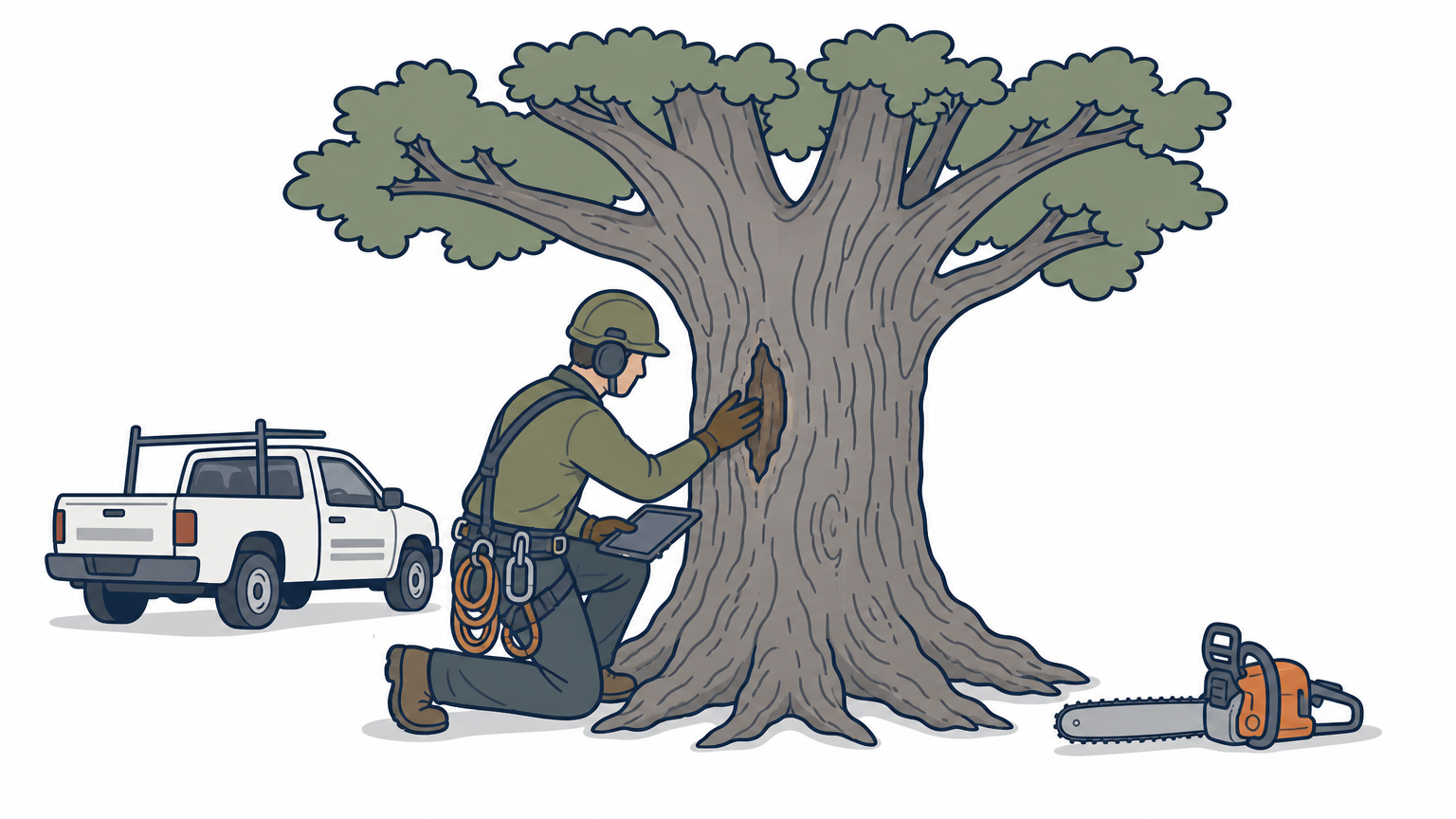
Starting with an on-site visit, ArboBella inspects the tree's structure, root health, and proximity to structures or power lines before quoting a price. You get a written estimate that separates removal, grinding the leftover stump below grade, and debris haul-away, so there's no confusion about what's included. Crews handle everything from technical rigging on tight residential lots to full-scale removals for commercial properties and HOAs, and every job includes cleanup so you're not left staring at a pile of branches.
Who it's best for
Because the company splits its service lines, it fits homeowners dealing with a single hazardous oak just as well as HOAs and property managers coordinating removals across dozens of units. If you're a budget-conscious homeowner who wants an honest opinion on whether a tree can be saved, or a facilities manager who needs a licensed vendor on file for liability reasons, ArboBella covers both ends.
A certified arborist's diagnosis, not a quick guess, is what separates a fair tree removal quote from an inflated one.
Typical cost
Tree removal prices depend on tree height, trunk diameter, and how close the tree sits to a structure or fence line, but Southwest Florida homeowners typically see the following ranges for standard jobs:
| Service | Typical Cost Range |
|---|---|
| Small tree removal (under 30 ft) | $200-$700 |
| Medium to large tree removal (30-60 ft) | $700-$1,800 |
| Stump grinding (per stump) | $150-$450 |
| Emergency removal (storm damage) | $500-$3,000+ |
Commercial and HOA contracts are quoted separately based on the number of trees and site access, since larger properties often qualify for volume pricing.
What to look for before hiring
Before you sign anything, confirm the company can produce proof of licensing and insurance , since Florida homeowners are on the hook for injuries if an uninsured crew gets hurt on their property. Ask specifically whether an ISA Certified Arborist will inspect the tree, not just a sales rep, and get the stump grinding and debris removal itemized in writing. ArboBella meets all of these standards as a member of the ISA Florida Chapter and the North Port Chamber of Commerce, and you can request a free, no-obligation quote directly through the ArboBella Tree Service site to compare against any other bid you're holding.
2. Local independent tree removal companies
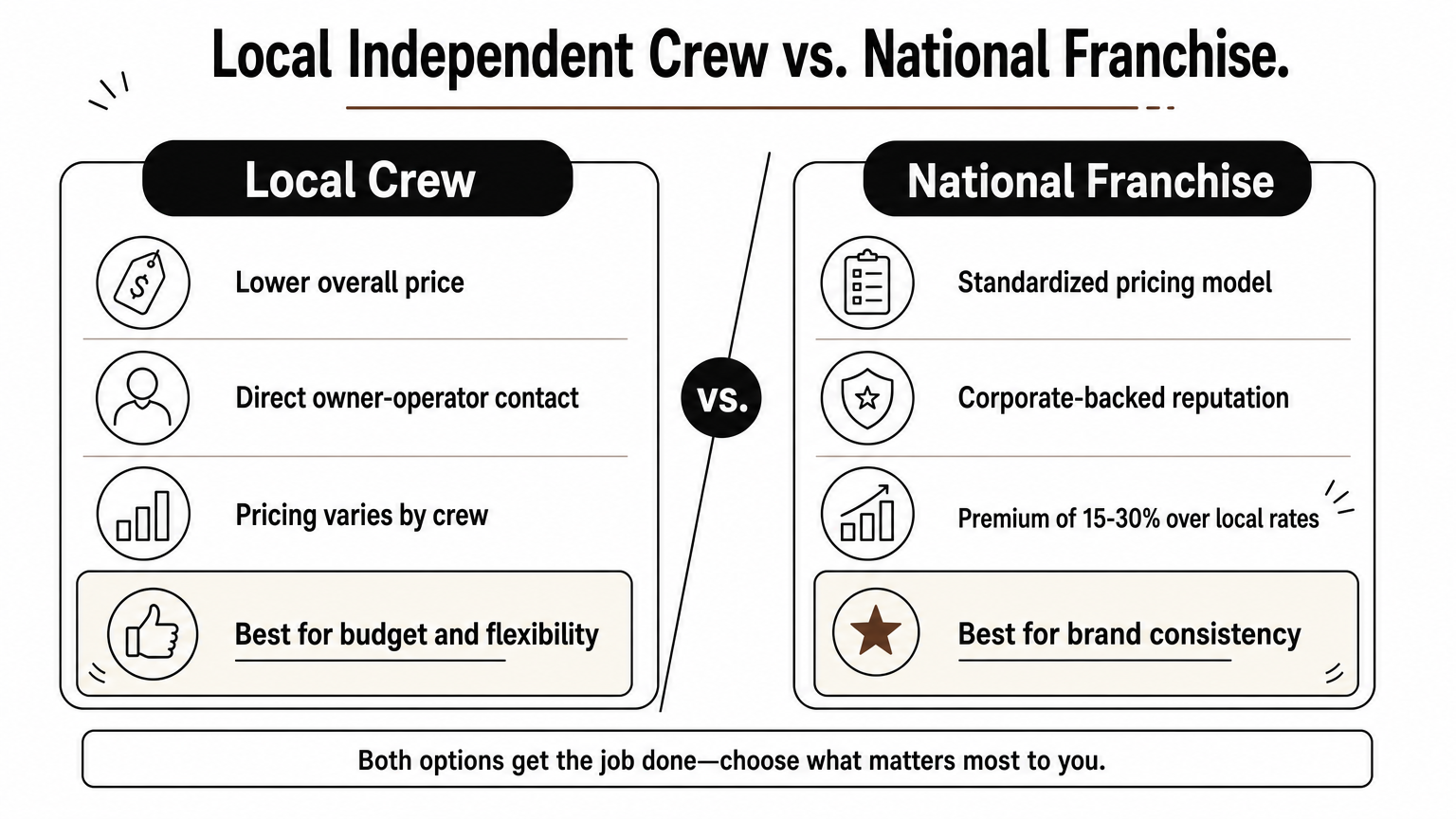
Outside of specialized arborist outfits like ArboBella, most Southwest Florida neighborhoods have a handful of local independent tree removal companies that have been cutting trees for years without any franchise branding. These are typically small crews, sometimes a single owner-operator with two or three helpers, who built their business on word of mouth and repeat customers rather than marketing budgets.
How it works
You usually find these companies through a neighbor's recommendation, a truck parked outside a job site, or a quick search on a local classifieds page. Most will come out for a free estimate , eyeball the tree, and give you a verbal price on the spot. Some are excellent and have decades of hands-on experience felling trees in tight residential lots; others are running a side hustle with minimal training and no formal arborist credentials.
Who it's best for
This route suits homeowners with a straightforward removal, a single tree with no power lines nearby, who already have a trusted referral from someone in the area. It's a weaker fit if you need a diagnosis on tree health or you're managing a commercial property where liability documentation matters.
A referral from a neighbor tells you the crew shows up, not that they're insured.
Typical cost
Independent crews often undercut certified competitors, with small tree removals ranging $150-$600 and stump grinding running $100-$350 per stump depending on diameter. The savings can be real, but so can the risk if something goes wrong mid-job.
What to look for before hiring
Always ask for a certificate of insurance before work begins, since Florida law doesn't require a special license for tree removal the way it does for electrical or plumbing work, and it's worth knowing the checks that separate a qualified tree crew from a risky one. Confirm whether the crew carries workers' compensation coverage, because you could be liable for medical costs if an uninsured worker is injured on your property. Get the estimate in writing, and ask how debris and stump material will be hauled away so you're not left negotiating cleanup after the trunk is already down.
3. National tree service franchises
Brands like Davey Tree or The Tree Doctor operate under a national umbrella but run through locally licensed branches, so you get corporate-level marketing paired with a crew that may or may not know the specific soil and storm patterns of Southwest Florida. These franchises have been around long enough to build standardized processes, uniformed trucks, and call centers that schedule your estimate within a day or two of calling.
How it works
Calling the corporate number routes you to a regional dispatcher who schedules a local branch representative to visit your property. That rep quotes the job using a standardized pricing model built for the whole franchise network, then a separate crew, sometimes contracted, sometimes in-house, handles the actual tree removal service . The process is consistent from state to state, which some customers find reassuring and others find impersonal.
Who it's best for
Franchises suit homeowners who want name recognition and a paper trail from a company with a national reputation to protect. They also work for customers who've moved from out of state and don't yet have a local referral network to lean on.
National branding buys you consistency, not necessarily a better price or a faster response.
Typical cost
Expect to pay a premium of 15% to 30% over local independent pricing for the same size tree, since franchise fees and corporate overhead get baked into every quote. A medium tree removal that runs $700-$1,800 locally often lands closer to $900-$2,400 through a franchise.
What to look for before hiring
Ask directly whether the crew doing the physical work is a franchise employee or a subcontractor, since accountability gets murky when something goes wrong. Verify the local branch carries its own insurance rather than relying on corporate coverage that may not apply to your specific job, and compare the written estimate against at least one independent quote before committing.
4. Landscaping companies with tree removal add-ons
Many Southwest Florida homeowners already have a landscaping company mowing their lawn or trimming shrubs, and it's tempting to just ask that same crew to knock out a tree removal too. Plenty of landscapers advertise tree work as a side offering, especially smaller trees and light pruning, since they already own trucks, chainsaws, and chippers for yard debris.
How it works
Usually you'll ask your regular landscaping contact whether they handle removals, and they'll either quote it themselves or bring in a subcontractor for anything beyond basic trimming. Smaller jobs, like a dead shrub-sized tree or a low stump, often get folded into your existing service contract without much fuss. Bigger trees, especially anything near a structure, frequently get passed off to a third party the landscaper trusts, which adds a layer you don't always see upfront.
Who it's best for
This option fits homeowners with small, low-risk trees who already trust their landscaper and want one less vendor to manage. It's a poor match for anything involving power lines, structural damage, or trees over 30 feet, since arborist-level expertise rarely exists in-house at a lawn care company.
A landscaper who mows your lawn well isn't automatically qualified to fell a 40-foot tree near your roof.
Typical cost
Landscaping companies often price small removals between $200 and $650 , competitive with independent crews, but stump grinding sometimes runs higher, $200-$500 , since it's not their core equipment specialty. Larger jobs subcontracted out add a markup, often 10-20% on top of what the actual tree crew would charge directly.
What to look for before hiring
Ask directly whether your landscaper performs the removal themselves or subcontracts it, and get the subcontractor's insurance information if that's the case. Confirm stump grinding depth and debris disposal in writing, since landscaping-focused crews sometimes leave larger root systems behind that resprout within a season.
5. Online contractor marketplaces like Thumbtack and Angi
Platforms like Thumbtack and Angi connect homeowners with local contractors through an online bidding system rather than a single company you call directly. For stump and tree removal , these marketplaces pull from a pool of vetted (in theory) local pros who compete for your job by submitting quotes through the app.
How it works
You answer a few questions about the tree, its size, and your location, and the platform matches you with three to five contractors who send competing bids within hours. Some of these listed pros are certified arborists running their own crews, while others are general handymen who added tree removal to their service list to capture more leads. Reviews and star ratings are the main signal you get before ever speaking to anyone, so the vetting depends heavily on how honestly past customers rated the work.
Who it's best for
Homeowners who want to compare multiple prices fast, without calling five companies individually, tend to like this route. It also suits people relocating to Southwest Florida who don't have a local network yet and need a starting point for finding a tree removal service .
A five-star rating on an app tells you nothing about whether the crew carries insurance.
Typical cost
Pricing on these platforms mirrors independent contractor rates, roughly $200-$1,500 for standard removals, since the pros bidding are often the same local crews you'd find elsewhere. The marketplace itself doesn't add a fee to your quote, but some contractors pad bids slightly to cover the lead-generation cost they paid the platform.
What to look for before hiring
Before accepting any bid, click through to the contractor's profile and verify licensing, insurance, and how long they've operated locally, not just their star count. Message at least two bidders directly and ask for a certificate of insurance, since a missing document at this stage is a clear warning sign.
6. DIY tree and stump removal
Some Southwest Florida homeowners skip hiring anyone and handle stump and tree removal themselves, renting a chainsaw or stump grinder for a weekend project. It's the cheapest option on paper, but it's also the one most likely to end in an emergency room visit or a damaged fence if you underestimate the tree's weight and lean.
How it works
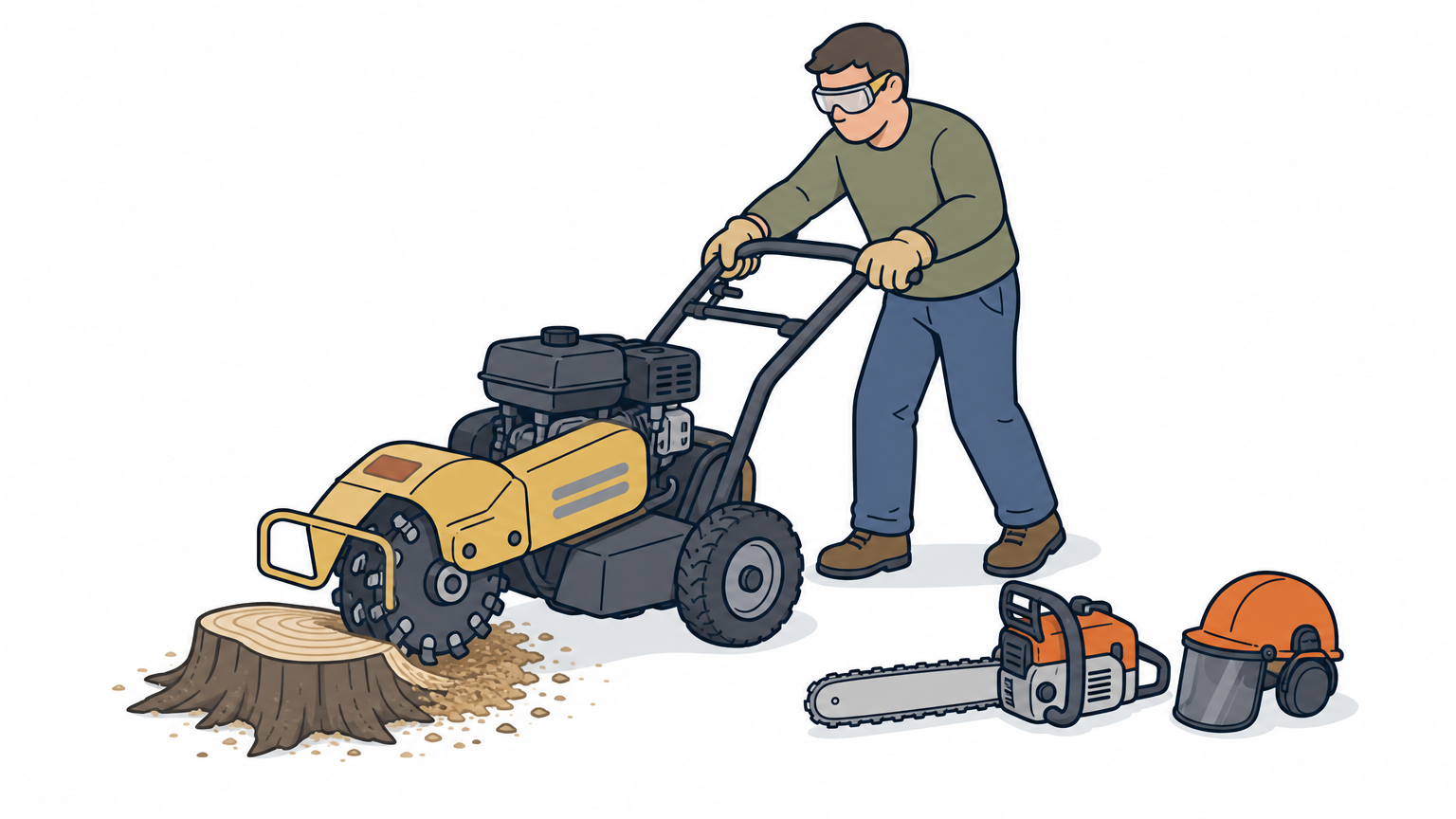
Renting equipment from a local hardware store or tool rental yard, you handle the felling, cutting, and hauling yourself, often over a weekend. Stump removal usually means renting a gas-powered stump grinder for a few hours, grinding the wood down below grade, then filling the hole with soil, so it helps to understand how stump grinding actually works and what it costs before you commit a weekend to it. Anything involving a tree over 20 feet or near a structure quickly outpaces what one or two people can safely manage without rigging equipment and training.
Who it's best for
This route fits homeowners removing a small, isolated tree or a single stump in an open yard with no power lines, fences, or structures nearby. It's a bad fit for anyone without chainsaw experience, since Florida's dense hardwoods and frequent storm-weakened trunks make DIY felling riskier than it looks on a video tutorial.
Saving a few hundred dollars isn't worth a trip to the ER or a lawsuit from your neighbor's damaged roof.
Typical cost
Equipment rental alone typically runs $75-$150 per day for a chainsaw and $100-$200 per day for a stump grinder, plus fuel, safety gear, and disposal fees for hauling debris to a landfill. Factor in your own time, and the total savings versus hiring a local crew often shrink to a couple hundred dollars for anything beyond a small tree.
What to look for before hiring
If you're renting equipment, check that the rental company includes safety gear like chaps, a hard hat, and eye protection, and review OSHA's guidance on chainsaw safety before starting. Confirm your homeowner's insurance covers injuries or property damage from DIY tree work, since many policies exclude it entirely.
7. Emergency storm damage tree removal specialists
Hurricane season in Southwest Florida turns routine tree care into a crisis overnight, and emergency storm damage tree removal specialists exist specifically for the calls that come in at 2 a.m. after a limb crashes through a carport or a trunk splits across a driveway. These crews focus almost entirely on rapid response rather than scheduled maintenance work, and many operate around the clock during active storm seasons.
How it works
Dispatch for after-hours help with a fallen or hanging tree usually starts with a phone call describing the hazard, a hanging limb, a leaning trunk, or a tree already resting on a structure, and crews prioritize jobs by risk level rather than call order. Once on-site, the priority is stabilizing the immediate danger , which sometimes means a partial cut to remove weight before a full removal happens later. Full hurricane cleanup and fallen tree debris removal often follows in a second visit once the property is safe and permitting or insurance documentation is sorted out.
Who it's best for
This service fits homeowners and property managers facing an active hazard, including urgent tree work at businesses, HOAs and managed sites, not a tree that's simply overdue for pruning. It's the right call when a limb threatens a roof, a trunk blocks a driveway, or storm damage puts a structure at immediate risk.
When a tree is actively threatening a structure or a person, price shopping takes a back seat to getting a licensed crew on-site fast.
Typical cost
Emergency pricing runs higher than scheduled work, typically $500 to $3,000+ depending on tree size, hazard level, and whether crews arrive after hours. Storm surges in demand can push prices up further when dozens of properties need help at once.
What to look for before hiring
Confirm licensing and insurance even under pressure, since storm chasers from out of state sometimes show up after major hurricanes without proper credentials. Ask whether the crew documents damage with photos for insurance claims , since that paperwork often determines whether your policy covers the cost.
Choosing the right option for your property
Matching the job to the right pro matters more than chasing the lowest bid. A small stump in an open yard might be a fair DIY project, while a leaning oak over your carport after a storm needs a licensed crew on-site the same day. Stump and tree removal pricing swings widely because the risk swings widely, and the cheapest quote often skips insurance, proper stump depth, or an honest look at whether the tree even needs to come down.
Property owners in North Port, Port Charlotte, and Venice who want that honest evaluation, not just a fast estimate, get the best results from a certified arborist who checks structure and health before recommending removal. That's the difference between a one-time fix and a long-term solution for your property. Skip the guesswork on your next quote and book a free on-site estimate with our certified arborist to see what a real evaluation looks like.