Tree Trimming and Removal Service: 5 Types in North Port
The best tree trimming and removal service for your property is led by a certified arborist, carries liability insurance, inspects the tree before recommending a cut, and puts a written scope with the estimate. Five services cover almost every call you will make in North Port, Port Charlotte, and Venice. Trimming suits healthy trees, removal suits dead or hazardous ones, stump grinding handles what is left, emergency service covers storm damage, and a risk mitigation program gives homeowners documentation for their insurance agent.
Most searches for this service return directory pages and phone numbers. None of them tell you which service you need or what should drive the price. That is how homeowners end up paying for a removal that a trim would have solved, or the reverse. This guide covers each service in the same order: what the job includes, who it suits, and what affects the price and what to ask before you hire.
ArboBella Tree Service is a family-owned company based in North Port and led by an ISA Certified Arborist (FL-295224A). The examples below come from the kind of work we do on Southwest Florida properties. The questions work with any company you are comparing, us included.
1. Tree trimming and pruning
Pruning and trimming is the right call when the tree is healthy but carries dead, crossing, or badly placed branches, or when limbs crowd your roof or driveway. A good tree trimming service works with the tree's natural structure instead of just cutting it back to size.
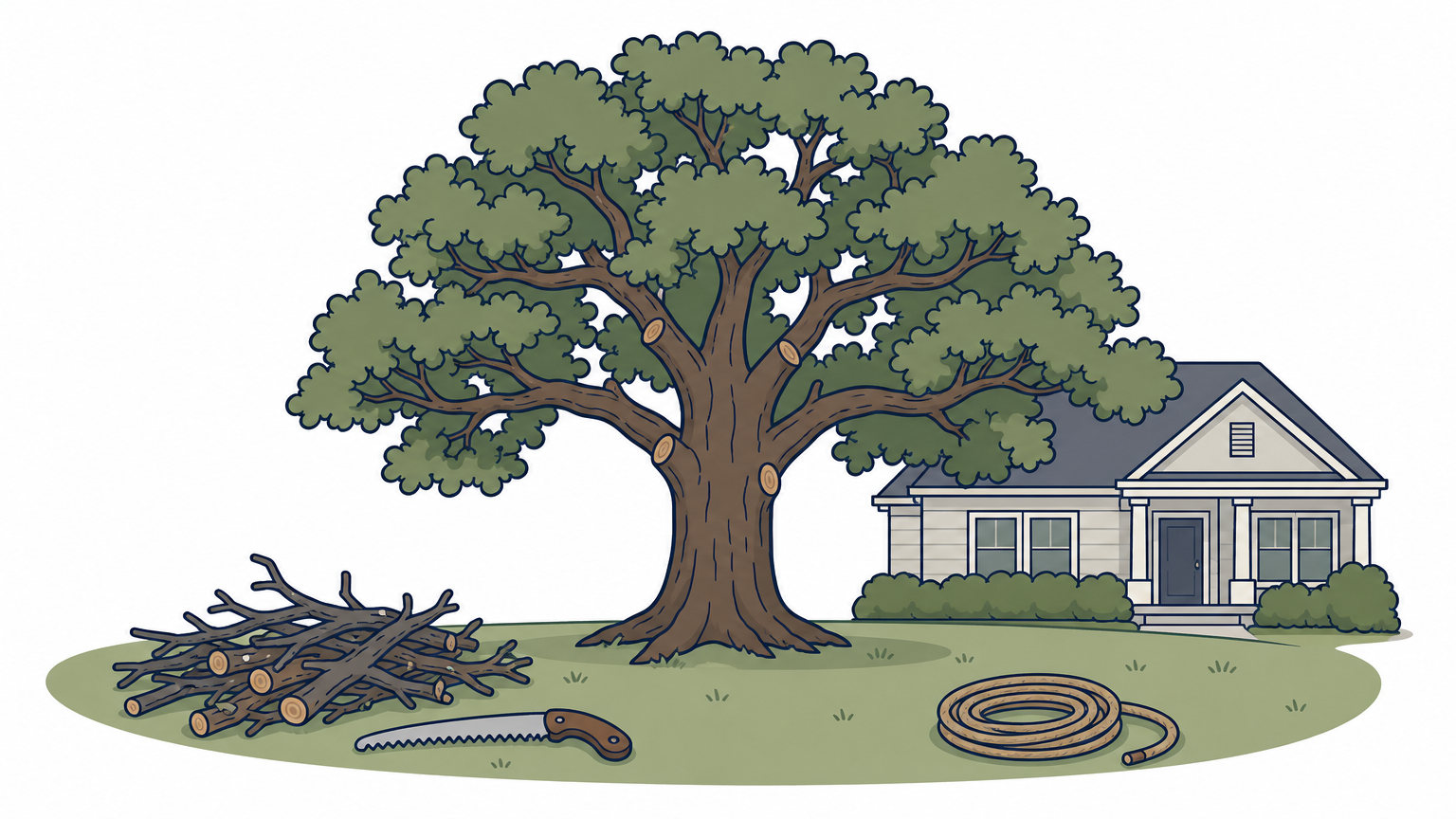
A trim should leave the tree safer and healthier, not just smaller.
What the job covers
Expect the crew to remove dead, damaged, and crossing branches and to open up clearance where the tree meets your property. Typical jobs include:
- Clearing limbs over roofs, driveways, and walkways
- Lightening heavy limbs on structurally sound trees
- Shaping the canopy without stripping it
- For commercial tree trimming, clearance around buildings, parking areas, signage, and high-traffic walkways
Who it suits
Homeowners with mature, healthy trees get the most from regular trimming. HOAs and property managers benefit too, because overhanging limbs create liability near parking and entrances. Trimming before hurricane season, which runs June 1 to November 30, usually costs less than cleaning up after a storm.
Price and what to ask
Price follows tree height, the number of trees, how much material comes out , how hard the crown is to reach, and whether the crew hauls the debris. Ask directly whether the company tops trees. Topping, which means cutting large limbs back to stubs, damages a tree and arborist standards advise against it. Also ask how much of the canopy comes off in one visit. Removing more than about a quarter of the live canopy stresses most trees.
2. Tree removal
Professional tree removal is the right call when a tree is dead, declining, split, leaning toward a structure, or damaged beyond saving. A reputable tree removal service confirms that the tree cannot be saved before it cuts, because removal is permanent.
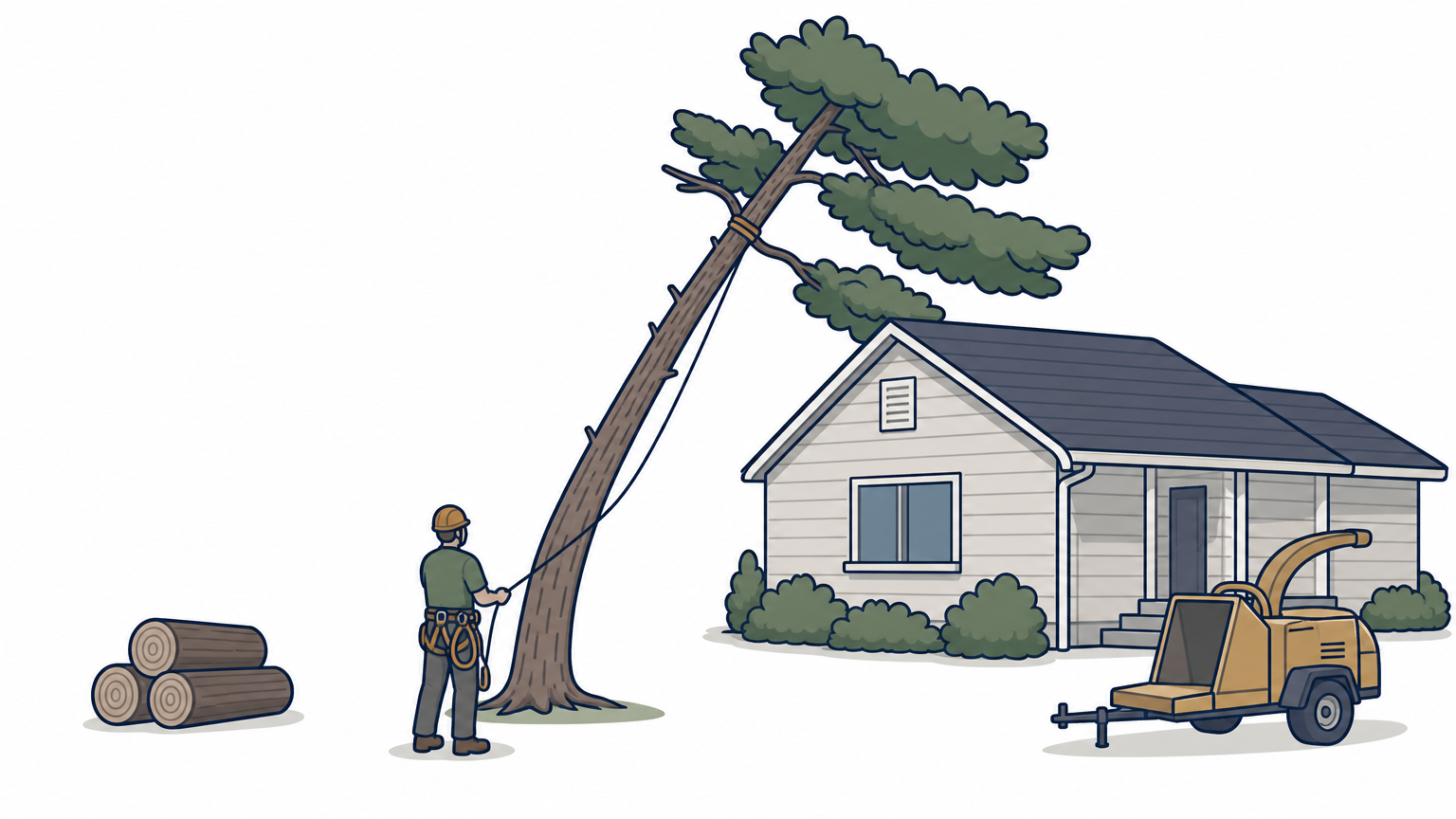
Removal should be the last option an arborist recommends, not the first.
What the job covers
On residential lots, the crew usually takes the tree down in sections so nothing lands on your house, fence, or landscaping. The plan accounts for nearby structures and access . Commercial tree removal follows the same logic, with extra planning for businesses, HOAs, municipalities, and managed properties where people and vehicles move through the work area.
Who it suits
You need removal when a tree is dead, hollow, or heavily decayed, or when it threatens a roof, a fence, or a power line. In Southwest Florida, oaks, pines, and palms all show up in these calls. Check whether your city, county, or HOA requires a permit or approval before a tree comes down, and ask the company whether it handles that paperwork or leaves it to you.
Price and what to ask
A tree removal estimate is built from a handful of factors, and the same-height tree can price very differently. A 30-foot tree in an open front yard is a very different job from a 30-foot tree leaning over a roof. Across the industry, small, easy removals can run a few hundred dollars, while large trees near structures can run into the thousands, so only an on-site look gives you a real number.
| Factor | Lower cost | Higher cost |
|---|---|---|
| Size | Small trunk, modest height | Tall tree, wide trunk |
| Location | Open lawn | Over a roof, fence, or power line |
| Access | Truck reaches the tree | Backyard behind a fence, rigging needed |
| Condition | Healthy, predictable wood | Dead, split, or storm-damaged |
| Cleanup | Wood left on site | Full haul-off, stump ground |
Before you sign, confirm liability insurance and workers' compensation , get the scope in writing, and read recent reviews for mentions of cleanup and arrival times, not just star ratings. If you are not in a hurry, scheduling outside the post-storm rush gives you more room to compare quotes.
3. Stump grinding
Grinding the stump is the right follow-up whenever a tree comes down and the stump stays behind. A grinder chips the stump below ground level so you can mow, plant, or build over the spot. It is the cleanest way to finish a tree and stump removal job.
Grinding removes the stump, not the root system.
What the job covers
The crew uses a machine to grind the stump mechanically from lawns and landscaped areas. The underground roots are generally not dug out, and they decay slowly over time. Grinding leaves a pile of chips, so decide beforehand whether you want them hauled away or kept as mulch.
Who it suits
It suits homeowners who are replanting, laying sod, or tired of tripping over a stump. It also suits anyone who wants a safer, easier-to-maintain yard without paying for excavation. If you already know a tree is coming down, ask for removal and grinding in one quote so the crew handles both in a single visit.
Price and what to ask
Cost depends on stump diameter, the number of stumps, and access for the machine. Ask how deep below grade the crew grinds and whether the chips are hauled off. Before any digging or grinding, make sure irrigation lines and utilities are marked. Florida's 811 line handles utility locates.
4. Emergency tree service
Emergency tree care is for fallen trees, hanging limbs, split trunks, and any tree that is blocking access or threatening your home right now. If a tree is touching a power line, stay clear and call your utility first. A tree trimming and removal service with emergency capacity can then make the site safe.
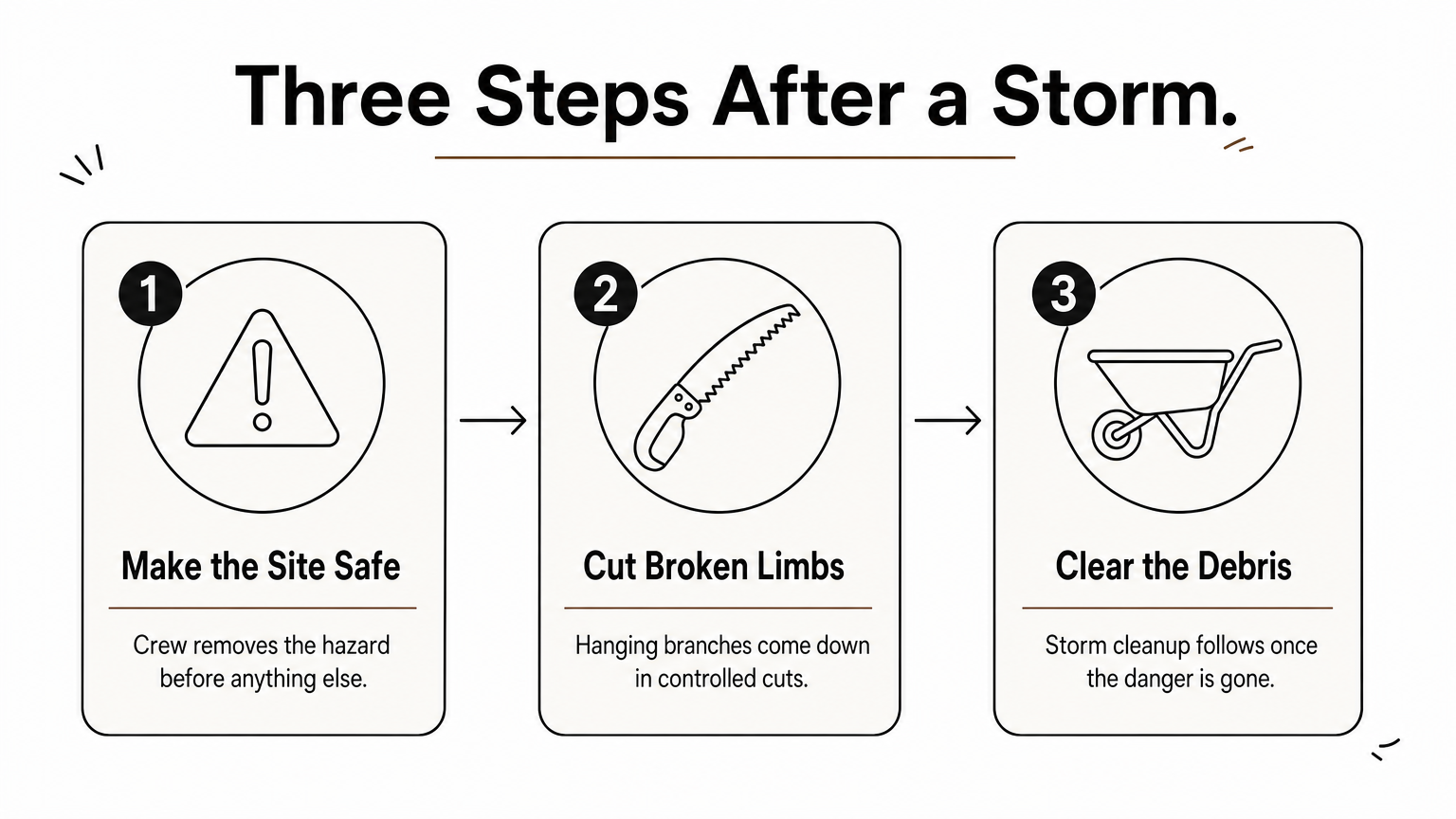
If a tree touches a power line, stay away and call the utility before anyone else.
What the job covers
The first goal is safety. The crew removes the hazard, cuts broken or hanging branches , and clears the debris. Storm cleanup and debris removal usually follow once the immediate danger is gone, and the crew can return for stump work or a full removal later.
Who it suits
Homeowners who find a split trunk after a storm or a limb hung up over a bedroom need this service. So do commercial properties where a fallen tree blocks a driveway or parking area. Speed and judgment matter more here than a long list of extras.
Price and what to ask
Emergency work usually costs more than scheduled work because of the urgency, the equipment, and the hours involved. Ask for the scope and price before the saw starts , and photograph the damage for your insurance claim. After big storms, be wary of crews that knock on doors and ask for large upfront payments. Verify license and insurance first.
5. Homeowner tree risk mitigation
The risk mitigation program is for homeowners who want a certified arborist to identify potentially hazardous trees , carry out the recommended work, and document it for insurance review. It turns a vague worry about your trees into a written, finished plan.
Documentation helps your agent review the work, but it never guarantees a discount.
What the job covers
An ISA Certified Arborist assesses your trees, and the recommended risk-reduction work is completed. After that, an ISA Certified Arborist performs a final inspection and you receive professional documentation to give your insurance agent. Customers in the annual tree risk protection program also get priority consideration for qualifying preventive tree work and storm services, subject to availability.
Who it suits
It suits homeowners with mature trees near the house, anyone who has put off a decision about a questionable tree, and people who want paperwork showing the work was done. It also suits owners who want a program run by ISA Certified Arborists, from assessment through final inspection.
Price and what to ask
Price depends on how many trees are assessed and how much work is recommended . Ask who performs the evaluation, whether a final inspection is included, and exactly what documentation you receive. Be cautious of any company that promises a lower premium. We do not guarantee an insurance discount, coverage approval, or any underwriting benefit, and your agent makes that decision.
Choosing the right service
Match the service to the tree. Healthy trees need trimming, dead or hazardous trees need removal, leftover stumps need grinding, storm damage needs emergency response, and a plan for your older trees is what the risk program provides. Whichever company you hire, check the certification, the insurance, and the written scope before work begins.
If you are not sure which of these your trees need, talk with an ISA Certified Arborist at ArboBella Tree Service about our homeowner tree risk mitigation program and we will look at the tree, its structure, and its surroundings before recommending anything.