Costs for Tree Removal: What You'll Actually Pay
You've got a tree that needs to come down, and before you call anyone about arborist-led tree removal, you want a real number, not a sales pitch. Searching costs for tree removal usually turns up wildly different figures because so many factors change the final bill: tree height, trunk diameter, location on your property, and whether power lines or a roofline are in the way. That range is frustrating when you're trying to budget.
Here's the direct answer: most homeowners in Southwest Florida pay between $400 and $1,800 per tree, with larger oaks or palms near structures pushing costs higher. A tree removal estimate should always come from an in-person assessment, not a phone quote, because access, root systems, and disposal needs change the labor involved.
In this article, we'll break down what actually drives tree removal pricing in North Port, Port Charlotte, and Venice, walk through typical price ranges by tree size and condition, and explain when stump grinding, permits, or emergency service add to the total. By the end, you'll know what questions to ask and what a fair quote looks like before a crew shows up at your property.
Why tree removal costs vary so much
Ask five neighbors what they paid to have a tree taken down, and you'll likely get five different answers. That's not because contractors are guessing. Tree removal pricing depends on a combination of physical factors that change how long the job takes, how many crew members it requires, and how much equipment gets used. A 30-foot maple in an open backyard is a completely different job than a 60-foot oak leaning over a garage, even though both are technically "one tree."
Tree size and trunk diameter
Height and trunk diameter drive labor time more than almost any other factor. A wider trunk means more cuts, more chainsaw wear, and often the need for a crane or bucket truck instead of climbing gear. Trunk diameter at chest height is usually the number arborists use to size up a job before they even discuss height.
| Tree height | Typical difficulty | General cost range |
|---|---|---|
| Under 30 ft | Low, often hand-tools only | $200 to $500 |
| 30 to 60 ft | Moderate, climbing or rigging needed | $500 to $1,200 |
| Over 60 ft | High, crane or bucket truck likely | $1,200 to $1,800+ |
Location and access on your property
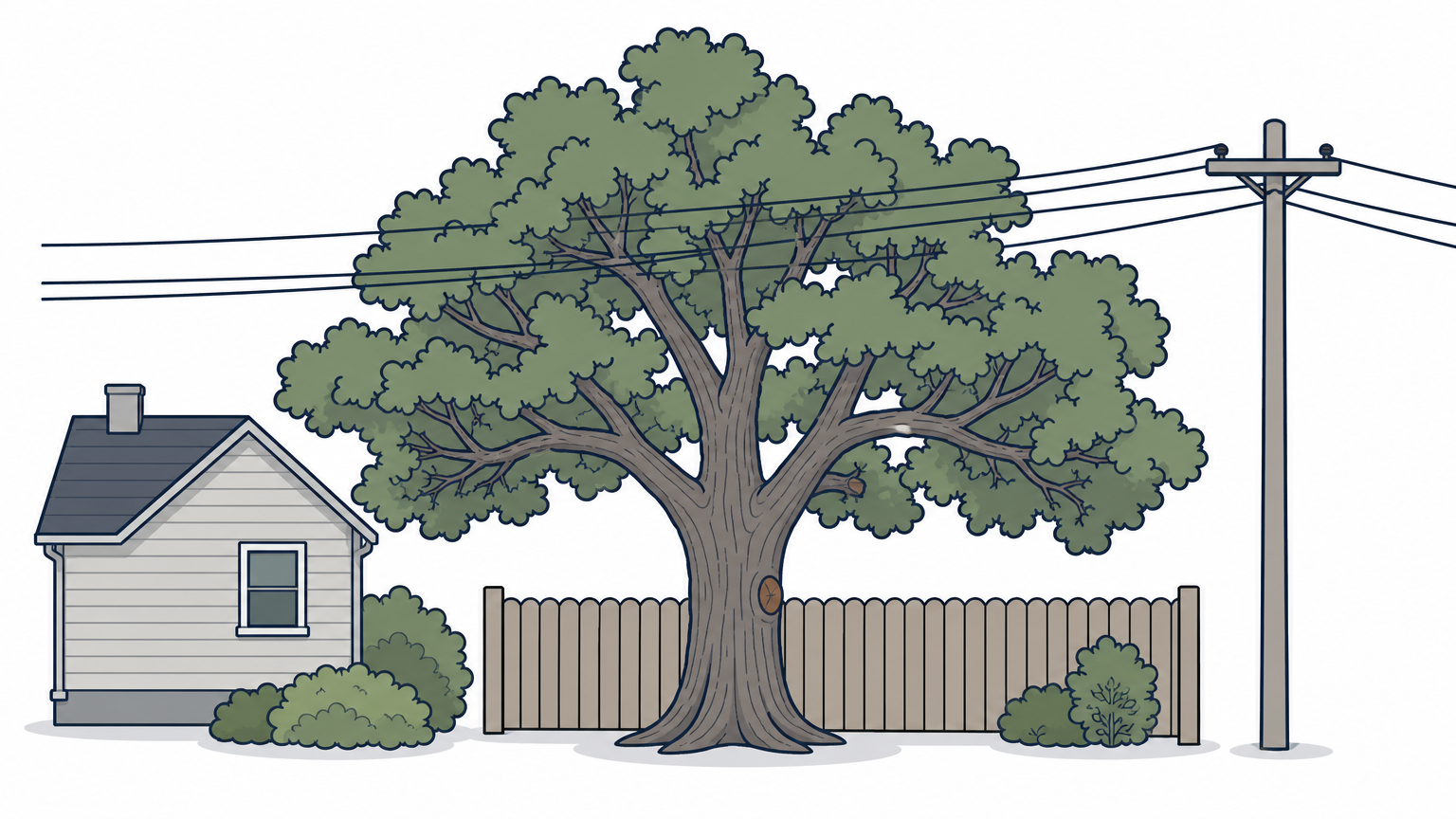
Where the tree sits changes the job as much as its size does. A tree growing ten feet from a fence, a pool cage, or power lines forces the crew to lower limbs piece by piece instead of felling the whole tree at once. That slower, more careful process adds hours to the job.
A tree in an open field costs a fraction of an identical tree wedged between a house and a power line.
Access for equipment matters too. If a bucket truck can't reach the backyard because of a narrow gate or soft ground, the crew has to rely on manual rigging, which takes longer and costs more.
Tree condition and species
A dead or storm-damaged tree isn't automatically cheaper to remove. Dead wood is brittle and unpredictable, so crews often move slower and take extra safety precautions, which can raise the cost of a tree removal rather than lower it. Species matters too. Florida's tall, straight-trunked palms are usually quicker and cheaper to remove than a sprawling live oak with heavy, wide-reaching limbs, even at similar heights.
Lean and structural issues add another layer. A tree leaning toward a structure needs more careful rigging to control where each section falls, and that precision work takes time.
Disposal and cleanup needs
Once a tree is down, someone still has to deal with the wood. Full removal, including hauling logs and chipping brush, costs more than a job where you keep the wood for firewood or let the crew leave debris in a pile. Stump grinding is a separate line item in almost every quote, since it requires different equipment entirely. Ask upfront whether tree removal rates you're comparing include haul-away, because a quote that skips disposal can look artificially low next to one that includes everything.
How to get an accurate tree removal estimate
Getting a real number for tree removal estimates means skipping the phone-quote game entirely and understanding what goes into a removal quote before anyone quotes it. Anyone who gives you a firm price without seeing the tree is guessing, and guesses tend to turn into change orders once the crew shows up and finds a leaning trunk or a stump full of rock-hard roots. A proper estimate starts with someone walking your property, looking up at the canopy, and checking what's underneath and around the tree.
Why an on-site visit matters
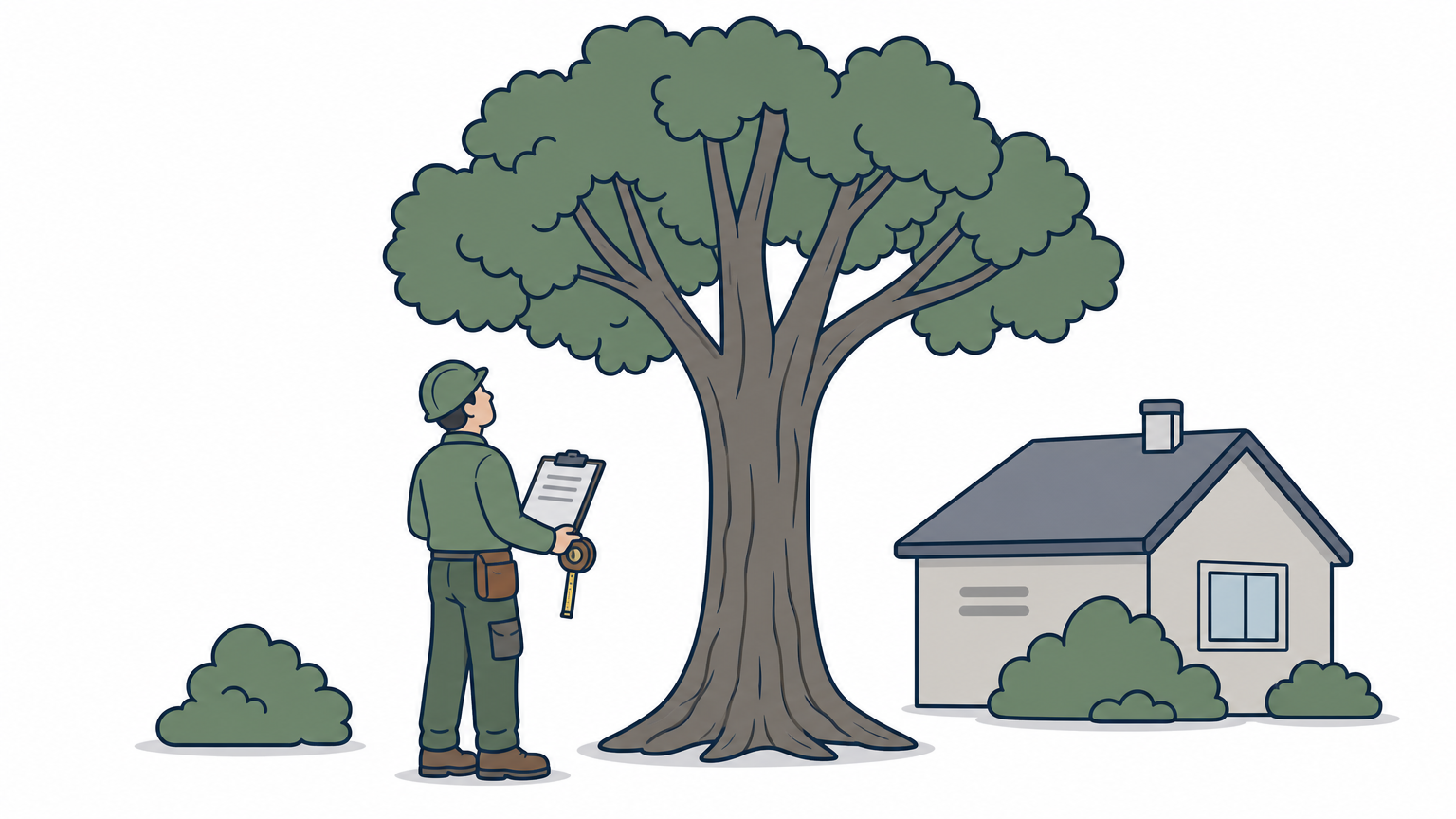
Onsite visits let an arborist measure trunk diameter, check for internal decay, and evaluate how close the tree sits to fences, sheds, or power lines. These details change labor time in ways a photo or a phone description never captures. A certified arborist tree evaluation, like the one leading every ArboBella visit, also looks at root flare and lean direction, because a tree that looks straightforward from the street sometimes needs careful rigging once you see it up close.
If a company quotes your job without stepping foot on your property, get a second opinion before you sign anything.
What a written estimate should include
Before you agree to anything, make sure the quote spells out exactly what you're paying for. A vague one-line total tells you nothing about what happens if the crew hits a surprise.
- Tree height, trunk diameter, and species noted on the estimate
- Whether stump grinding is included or billed separately
- Full haul-away of logs and debris, or a stated leave-behind arrangement
- Permit responsibility, if your municipality requires one
- Insurance and licensing information for the crew doing the work
Comparing multiple quotes fairly
Gathering two or three quotes only works if you're comparing the same scope of work. One company's low number might exclude stump grinding while another bundles it in, so a low bid on paper can end up costing more once you add the missing pieces back in. Requesting itemized estimates from every company you contact makes the comparison honest, especially once you know the tips for choosing the best tree trimming and removal service. If you want a straightforward, in-person evaluation for a property in North Port, Port Charlotte, or Venice, you can request a free estimate and get a number based on your actual tree, not a phone guess.
Typical tree removal costs by size and tree type
Once you understand the variables that determine the cost of a tree removal, it helps to see real numbers side by side. Tree removal pricing in Southwest Florida shifts noticeably depending on species, not just height, because some trees are simply built to be harder to take down. Knowing where your tree falls on this list gives you a realistic starting point before an arborist ever walks your yard.
Palms and smaller trees
Florida's palms are usually the cheapest category for removal tree cost , even at heights that would spook you on a hardwood. Their single, straight trunks and lighter canopies mean less rigging and fewer cuts. Smaller ornamentals like crepe myrtles or citrus trees fall in this same low bracket, often finishing in under an hour of crew time.
Oaks, pines, and larger hardwoods
Live oaks are the opposite story. Their wide, heavy limbs spread in unpredictable directions, so crews spend more time lowering sections piece by piece instead of felling the tree in one motion. Pines grow tall and straight, which sounds simple, but their height alone often pushes the job into crane territory.
Two trees of the same height can carry wildly different price tags once species and limb structure enter the picture.
| Tree type | Typical height | Cost range |
|---|---|---|
| Palm | 20 to 50 ft | $150 to $600 |
| Crepe myrtle or citrus | Under 25 ft | $150 to $400 |
| Pine | 40 to 80 ft | $600 to $1,500 |
| Live oak | 40 to 70 ft | $800 to $1,800+ |
Why species-specific pricing matters when budgeting
If you're wondering how much is tree removal going to cost for your specific yard, start with species before anything else. A homeowner comparing a $400 quote to a $1,200 quote isn't necessarily seeing a scam versus a fair deal; they might be comparing a palm to an oak. Bringing up the species by name when you request quotes helps every company you contact give you a number that reflects the actual price of tree removal for your tree, not a side-by-side look at removal prices pulled from a different job entirely.
Additional costs that can add to your bill
Even after you've nailed down the base price for tree removal , a handful of add-ons can change your final invoice. These aren't hidden fees when a company operates honestly, they're separate services that don't always come standard, so knowing about them ahead of time keeps you from being surprised when the crew asks about them on the day of the job.
Stump grinding
Grinding a stump down below grade takes a completely different machine than the one used to fell the tree, which is why almost every contractor bills it separately. Stump grinding prices typically run $100 to $400 depending on the diameter and how deep you want the grind, since a stump you plan to plant grass over needs a deeper cut than one you're just trying to stop tripping over. Skipping this step saves money upfront, but you're left with a stump that can sprout new growth or attract termites near your home.
Permits and municipal requirements
North Port, Port Charlotte, and Venice each have their own rules about which trees require a permit before removal, especially protected species or trees over a certain diameter. A reputable crew handles this paperwork for you, but the permit fee itself usually gets passed along as a line item. Confirming permit responsibility before work starts avoids a fine landing on your desk later.
Emergency and storm-related premiums
After a storm, everyone in Southwest Florida wants the same thing at once, and that demand pushes prices up.
A fallen tree on a Tuesday afternoon costs less than the same tree blocking your driveway during hurricane cleanup week.
Emergency tree removal, especially for a tree resting on a roof or power line, often carries a premium because it requires immediate crew mobilization outside normal scheduling. Storm clean up and debris removal after a major weather event can also add cost if multiple trees or heavy limb damage cover your property.
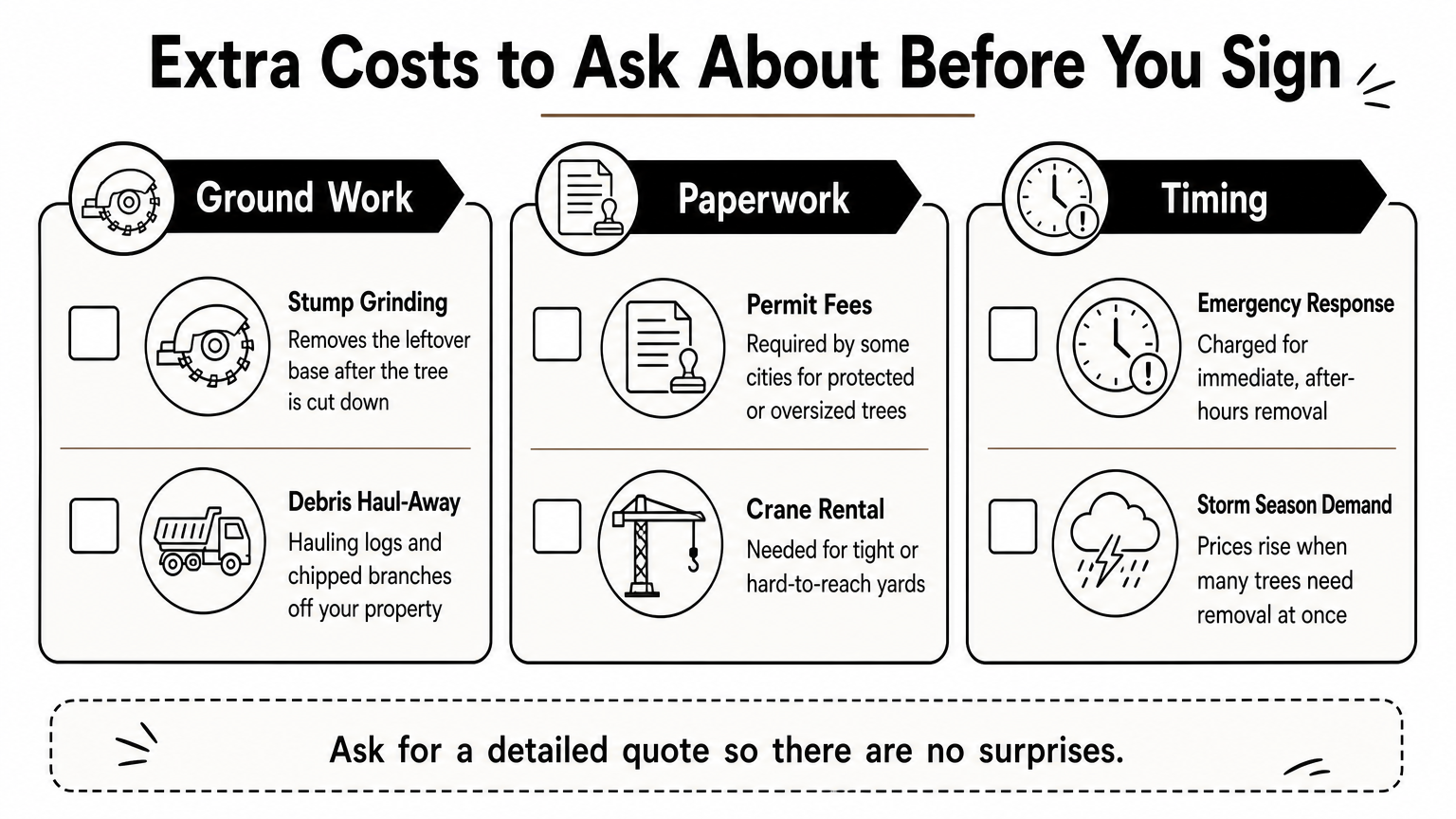
Before signing anything, ask specifically about these possible additions:
- Stump grinding
- Permit fees
- Debris haul-away beyond a set volume
- Crane rental for tight access
- After-hours or emergency response charges
How to reduce your tree removal costs
You can control more of the final number than most homeowners realize. Tree removal pricing isn't fixed once a crew looks at your yard; several choices you make before booking the job shift the total in your favor. None of these shortcuts involve cutting corners on safety, they just involve planning ahead instead of calling in a panic.
Schedule outside storm season
Booking non-emergency work in the slower months, typically late fall through early spring in Southwest Florida, avoids the demand spike that hits every crew right after a hurricane. Waiting a few weeks for a declining but stable tree, instead of treating it as an emergency, often saves you the after-hours premium entirely.
The cheapest tree removal is almost always the one you schedule before it becomes an emergency.
Bundle multiple trees or services
If you've got two or three trees that need attention, ask for one combined quote instead of separate visits. Crews already on-site with equipment set up can often knock out stump grinding or a second tree for less than a standalone trip would cost. Pairing a price for tree removal quote with routine pruning on nearby trees spreads the mobilization cost across more work.
Handle disposal yourself
Keeping the wood for firewood or letting the crew leave chipped debris in a pile instead of hauling it away shaves a real amount off most invoices. This only works if you have space to store logs and don't mind doing the final cleanup yourself, but it's worth asking about on every quote.
Get an accurate diagnosis before removal
Sometimes the biggest savings come from not removing the tree at all. An arborist evaluation might reveal that a struggling tree only needs pruning or a targeted fertilization treatment to recover, which costs far less than full removal. Consider these lower-cost approaches before assuming removal is your only option:
- Structural pruning to correct a lean or reduce weight on weak limbs
- Root zone treatment for stressed but salvageable trees
- Cabling or bracing for trees with split or weak unions
- Regular health checkups to catch decline early, before it becomes an emergency
Your next steps for tree removal
You now know why costs for tree removal swing so widely, from a $200 palm to a $1,800 oak leaning over a roofline. Size, species, access, and disposal all factor into your final number, and add-ons like stump grinding or permits can shift the total further. The best way to avoid surprises is a written, itemized quote based on an actual look at your tree, not a phone guess pulled from an average.
If you're in North Port, Port Charlotte, or Venice and ready for a real number instead of another rough estimate, reach out to an ISA Certified Arborist who'll walk your property, explain every line item, and give you options beyond removal when a tree can be saved. Book your free tree removal estimate with ArboBella and find out exactly what your job costs before any crew shows up.