Tree Removal and Stump Removal: A Complete How-to Guide
That dead oak leaning toward your roof isn't going away on its own, and neither is the stump left behind once the trunk comes down. Whether you're staring down a hazard tree after a storm or just tired of mowing around an old stump, tree removal and stump removal are two separate jobs with different tools, different risks, and very different price tags. Knowing which route fits your situation saves you money and, in some cases, saves you from a trip to the emergency room.
This guide walks through both paths honestly. We cover when a DIY approach makes sense (small stumps, low-risk trees, a weekend and a rented grinder) and when you're better off calling in licensed professionals with the equipment and insurance to handle a 60-foot pine safely. You'll get realistic cost ranges, the actual steps involved in cutting down a tree and grinding out what's left, and the warning signs that mean a tree needs to come down now, not next month.
We work these jobs daily across North Port, Port Charlotte, and Venice, so the advice here reflects what actually happens on Southwest Florida properties, not generic checklist content.
What to know before removing a tree or stump
Before you rent a chainsaw or call a crew, a few things need sorting out first. We handle removals across North Port, Port Charlotte, and Venice every week, and the jobs that run over budget or drag on almost always skipped one of these steps. Getting an honest read on tree risk and confirming whether your municipality requires a removal permit before the first cut keeps the whole project predictable instead of a surprise fine or a stop-work order halfway through.
Check permits and protected species first
Sarasota and Charlotte counties both regulate removal of certain native and heritage trees, and skipping this step can mean fines even on your own property. Call your local building department before scheduling anything, and if you're unsure whether a species is protected, the International Society of Arboriculture publishes guidance on tree risk assessment that most local ordinances reference. This matters even more for stump removal near property lines , where county rules sometimes apply differently than they do to standing trees.
Know your cost range before you call anyone
Pricing swings wildly based on size, location, and whether roots have grown into a foundation or septic line, so it helps to know what tree and stump removal really costs before the quotes start coming in. Here's what we typically see:
| Job | Typical Cost Range | Best For |
|---|---|---|
| DIY stump grinder rental | $75–$150/day | Stumps under 12" diameter, open yard |
| Professional stump grinding | $150–$450 per stump | Any size, tangled roots, no equipment hassle |
| Tree removal, under 30 ft | $300–$800 | Low-risk trees away from structures |
| Tree removal, 60+ ft or near power lines | $1,200–$3,000+ | Hazard trees, storm damage, tight access |
A hazard tree leaning toward power lines is never a DIY job, no matter how much you think you'd save.
Step 1. Assess the tree and decide who should do the job
Walk the property and look at the tree with fresh eyes before you decide anything. Trunk cracks, mushrooms at the base, and dead limbs in the canopy all point to internal decay that a quick glance from the driveway won't catch. Grab binoculars and check the upper crown too. A tree that looks fine at eye level can be hollow twenty feet up, and that's exactly the kind of tree that surprises homeowners mid-cut.
Signs you need a certified arborist, not a chainsaw
Some situations aren't worth the gamble. Call a licensed pro when you see any of these:
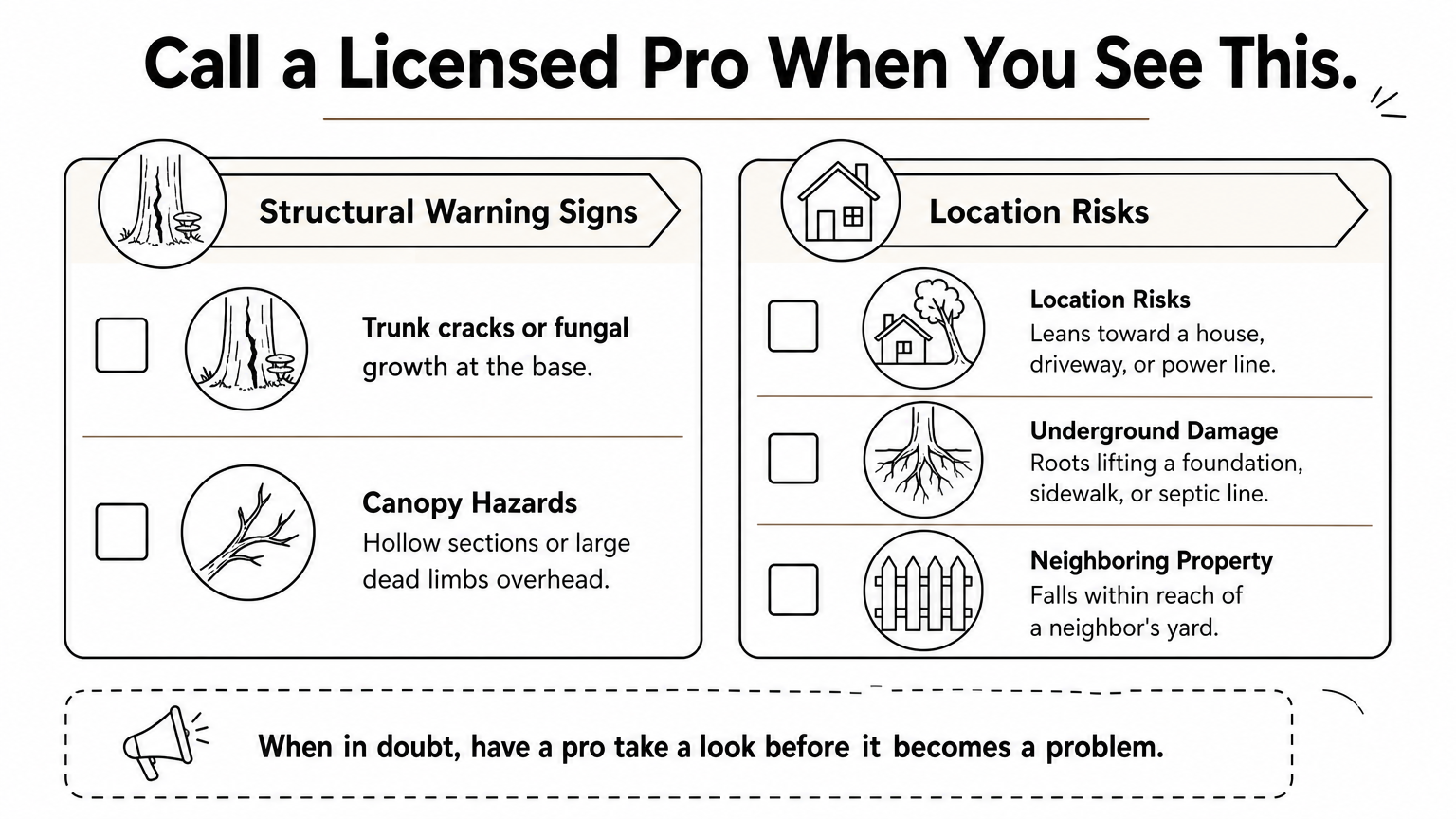
- The tree leans toward a house, driveway, or power line
- Trunk diameter exceeds 12 inches
- Roots have lifted a foundation, sidewalk, or septic line
- You spot fungal growth, hollow sections, or large dead limbs overhead
- The tree sits within falling distance of a neighbor's property
If the tree could land on something you can't afford to replace, that's your answer.
Otherwise, a small, isolated tree in an open yard, ten to fifteen feet tall with no lean, is often manageable DIY tree removal territory with the right gear and a second person on hand. When in doubt, a certified arborist tree inspection in North Port costs far less than a mistake.
Step 2. Remove the tree safely
Cutting down a tree isn't just swinging a chainsaw at the trunk. Proper felling technique starts with clearing a drop zone twice the tree's height in every direction, checking for overhead wires, and cutting a notch on the side you want it to fall. Get this wrong and the tree can barbershop, snap unpredictably, and kick back toward you.
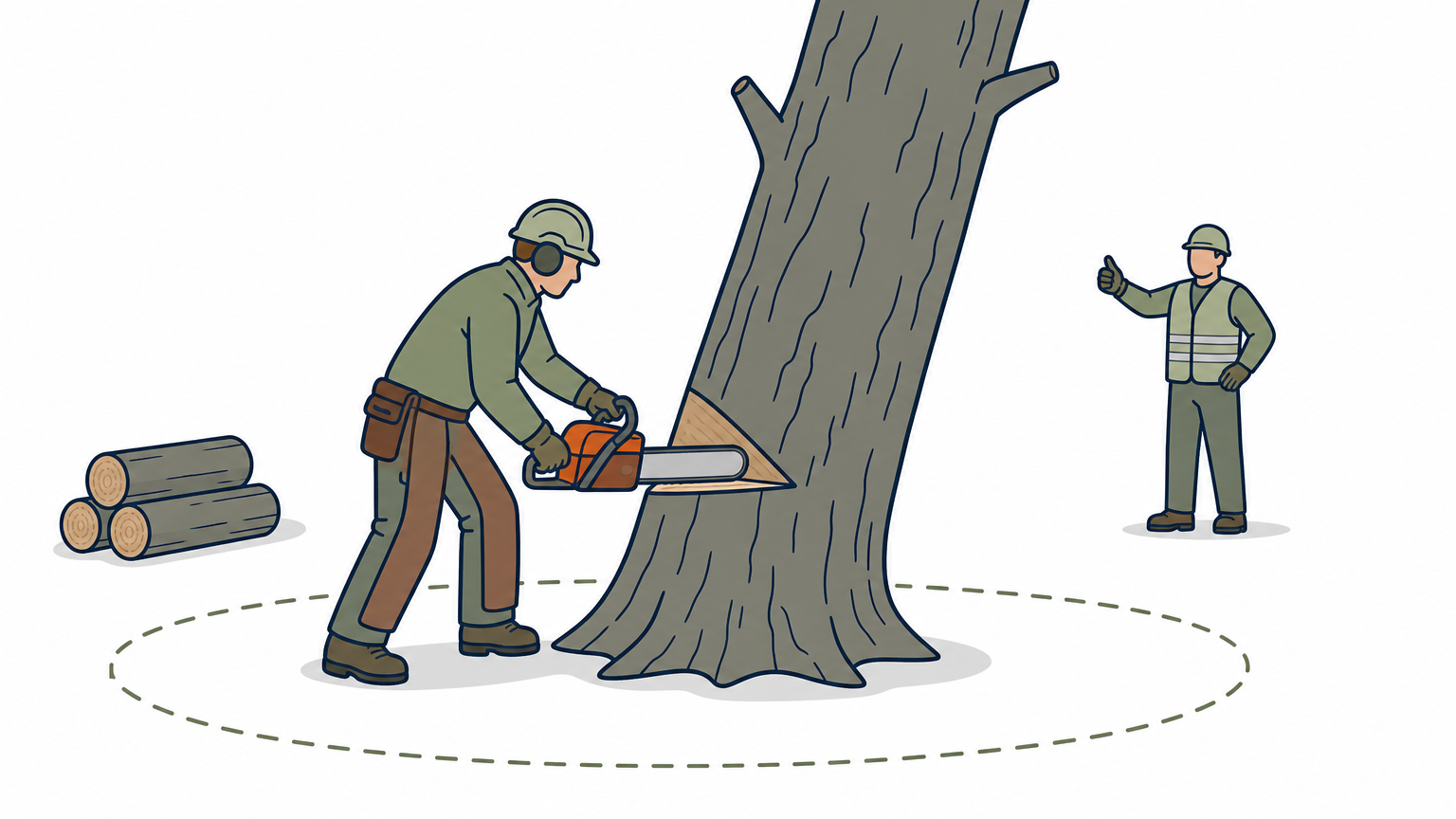
Gear matters as much as technique. Before you make a single cut, confirm you have:
- Chaps, a hard hat, and eye protection
- A sharp chainsaw sized for the trunk diameter
- A second person spotting from a safe distance
- An escape path cut before you start the felling cut
- Rope or a truck for controlled pulls on leaning trees
One missed step in a felling cut turns a routine job into an emergency room visit.
For anything over 20 feet or with any lean toward a structure, this is where arborist-led removal of a declining or leaning tree earns its cost. Crews use rigging, cranes, or sectional dismantling to bring down large or hazardous trees piece by piece instead of dropping the whole trunk at once. When storms knock a tree partway down overnight, our same-day help for storm-damaged and hanging trees handles the same job under far more dangerous conditions, with the equipment to do it without risking your roof or your neighbor's fence.
Step 3. Remove the stump and roots
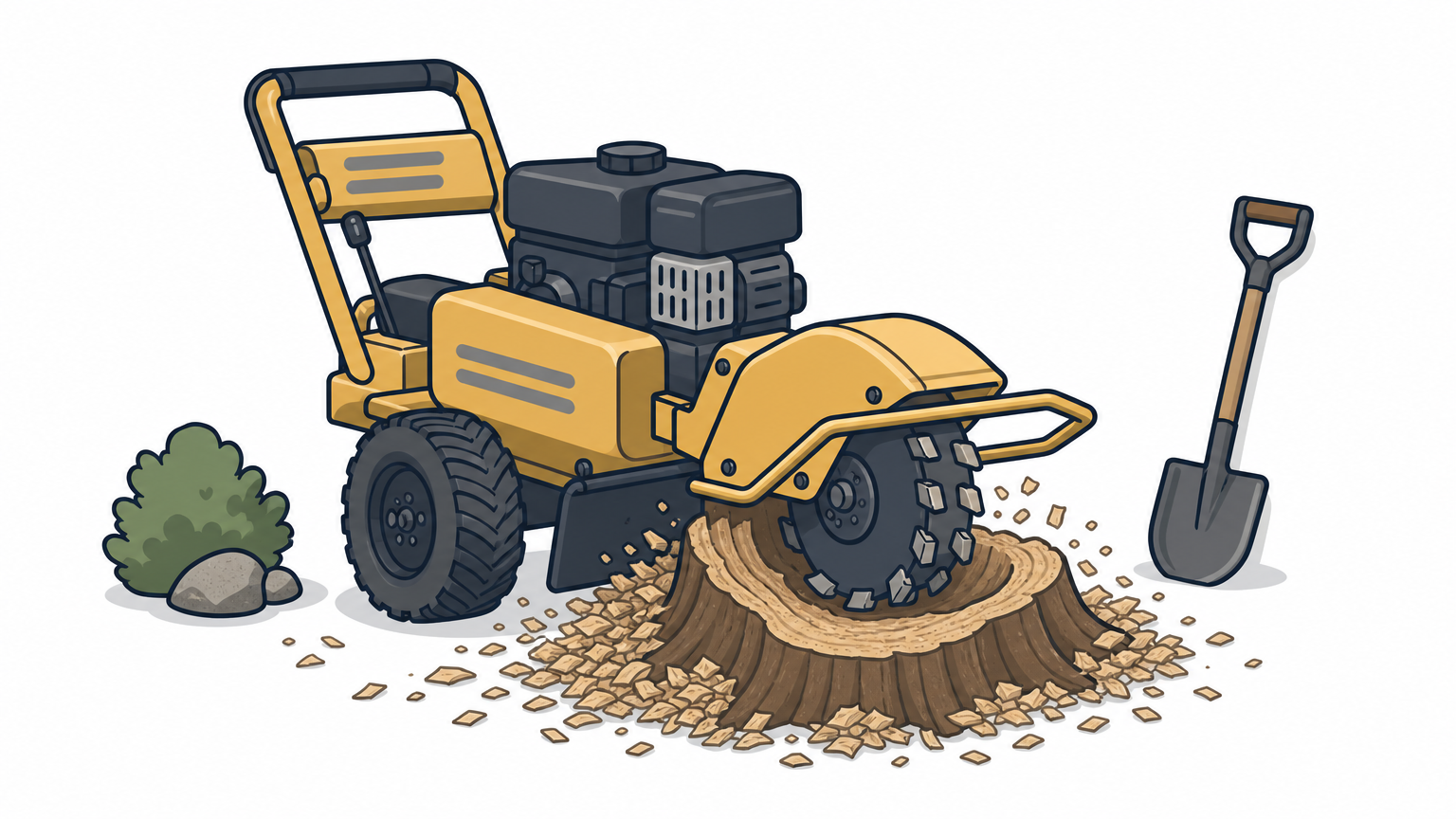
Once the tree is down, the stump is still a tripping hazard and a magnet for termites if you leave it sitting. Grinding a tree stump step by step is the fastest fix for most Southwest Florida yards, chewing the wood down 8 to 12 inches below grade with a rented or professional-grade grinder. Chemical stump removers work too, but they take weeks to months to soften the wood enough to dig out, so they're a poor fit if you need the space back soon.
Grinding vs. digging by hand
Digging out a stump by hand only makes sense for small, shallow-rooted trees like young palms or ornamentals. Anything larger, and you'll fight roots for hours with a mattock and shovel for a job a grinder finishes in twenty minutes.
Grinding beats digging every time except on the smallest stumps.
Handling roots that spread wide
Surface roots near sidewalks, septic lines, or a neighbor's fence need extra care. Cutting them without checking depth first risks nicking utility lines, so call 811 before grinding near any buried infrastructure. For tangled root systems, stump removal near property lines is one of the more common jobs our grinding crew gets called in to finish once a homeowner's rental hits a root it can't chew through.
Step 4. Restore the yard and prevent regrowth
Grinding a stump leaves a crater of wood chips and loose soil where the trunk used to be, and that hole needs backfilling before you can mow, plant, or walk across it safely. Backfilling the grinding pit with a mix of the ground-up wood chips and fresh topsoil settles the area faster than dirt alone, since the chips break down over a few months and keep the surface from sinking unevenly later.
Some species do not take the hint after removal. Certain trees, like camphor or Chinese tallow, send up root sprouts for a full season after the stump is gone, and mowing over them just makes them bushier. Painting the freshly cut stump surface with a systemic herbicide labeled for stump treatment blocks that regrowth at the source, and it works far better applied within minutes of the final cut than weeks later.
A stump that's ground down but not treated can still send up sprouts for months.
Once the pit is filled and leveled, tamp it down, add a couple inches of topsoil, and reseed or sod to match the surrounding lawn. Skip this step and you'll be staring at a bald patch or a sunken divot every time you cut the grass.
Getting your yard back in shape
Removing a tree and grinding out its stump are two different projects with two different risk levels, and the line between DIY and hiring a pro usually comes down to trunk size, lean direction, and what's standing nearby. A small ornamental in an open yard is a weekend job. A leaning oak over your roofline is not, no matter how much a rental saw promises to save you. Honest tree risk assessment upfront, whether you do it yourself or bring in a certified arborist, is what keeps this kind of project from turning into a hospital bill or a fine from the county.
If you're staring down a hazard tree, a stump that won't quit sprouting, or storm damage that needs cleanup now rather than next week, don't gamble on a job that's outgrown your equipment. Get an on-site estimate for tree and stump removal from ArboBella Tree Service and a straight assessment at a fair price, backed by a decade of doing this work right across North Port, Port Charlotte, and Venice.