Tree Removal Company Near Me: 6 Checks Before You Hire One
When you search for a tree removal company near me , the pick that holds up is the one with a certified arborist, proof of insurance, reviews that mention cleanup, and an itemized written quote. Homeowners unsure whether a tree needs to go should start with the arborist check. If a storm just hit, lead with insurance and response time. Budget shoppers should spend their effort on comparing quotes line by line.
The hard part is that search results mix real local crews with lead-generation sites and listings that all show the same four-and-a-half stars. Prices for one tree can differ by hundreds of dollars. A wrong hire can leave you with a damaged roof, an injured worker you are liable for, or a stump you thought was included.
This article gives you six checks, in the order you would use them, so you can narrow any list of local companies to one you can trust. ArboBella Tree Service is a family-owned company in North Port serving North Port, Port Charlotte, and Venice, so these are also the standards we expect to be held to.
1. Confirm a certified arborist evaluates the tree
A reputable company sends someone qualified to judge whether the tree needs to come down at all. Look for an ISA Certified Arborist, because removal is permanent and the right answer is sometimes tree pruning or treatment.
What to look for
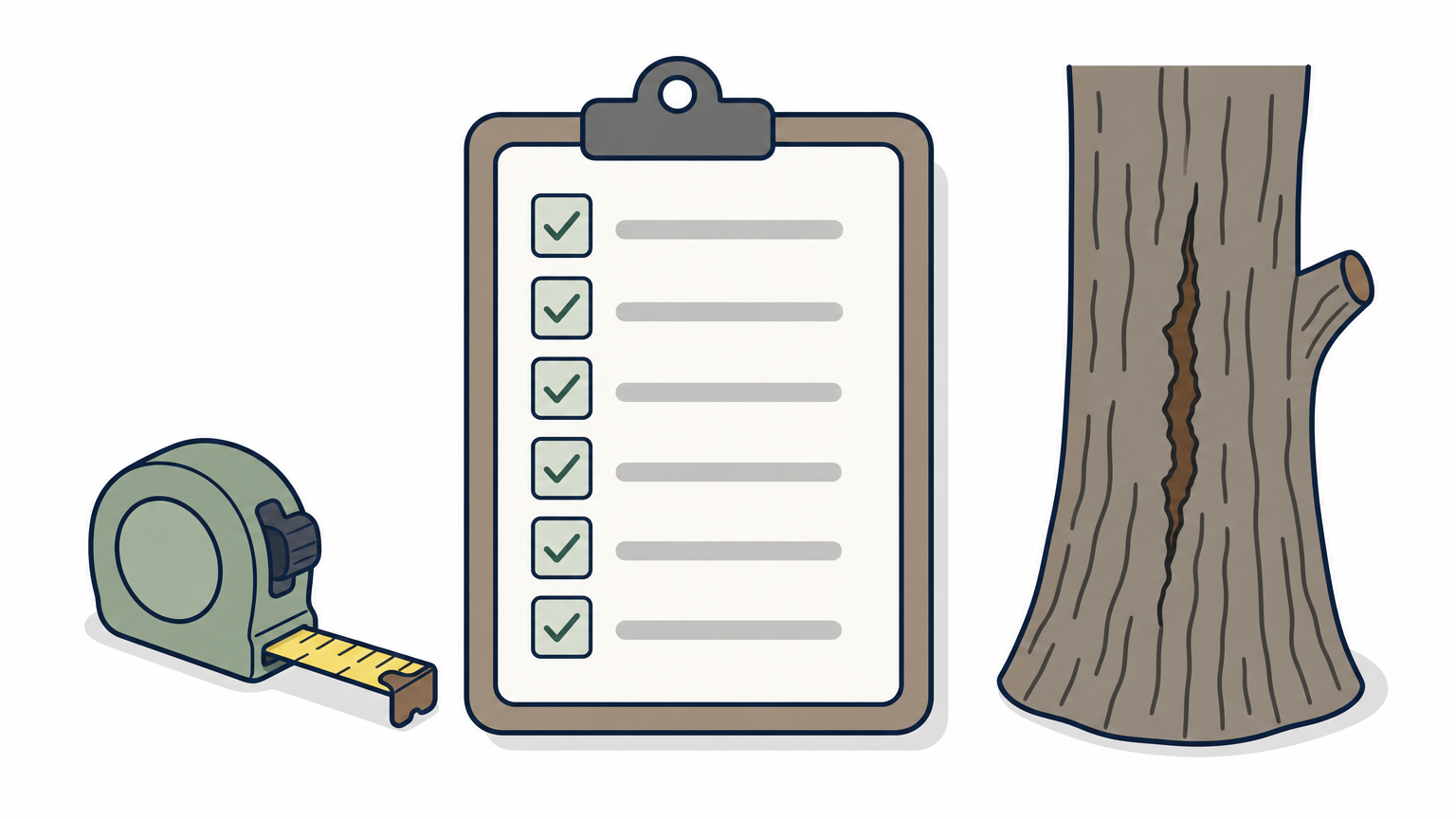
Ask who will actually inspect your tree and whether that person holds ISA Certified Arborist credentials. A good evaluation covers the tree's health, structure, location, and surrounding conditions before any recommendation. ArboBella is led by an ISA Certified Arborist (FL-295224A) and follows that process. We aim to preserve healthy trees whenever practical, and we remove trees when they are dead, declining, damaged, or hazardous.
How to verify it
Ask for the certification number and confirm it with the ISA rather than trusting a logo on a truck. Membership in a professional body such as the ISA Florida Chapter is a useful extra signal, but it is not a credential by itself.
Red flags
- A quote for a large tree given by phone with no site visit.
- A recommendation to remove without explaining what is wrong with the tree.
- An offer to "top" the tree, which arborists consider harmful to its health and structure.
A company that will tell you your tree can stay is more trustworthy than one that quotes removal sight unseen.
2. Verify license and insurance in writing
Ask for proof of liability insurance and workers' compensation, plus a current local business license or tax receipt, before any work begins. Tree work is dangerous, and a dropped limb through your roof is exactly the situation insurance exists for.
What to look for
You want general liability coverage for damage to your property and workers' compensation for the crew. Without that coverage, an injury on your property can become your problem, so do not take a verbal "yes, we're insured" as an answer.
How to verify it
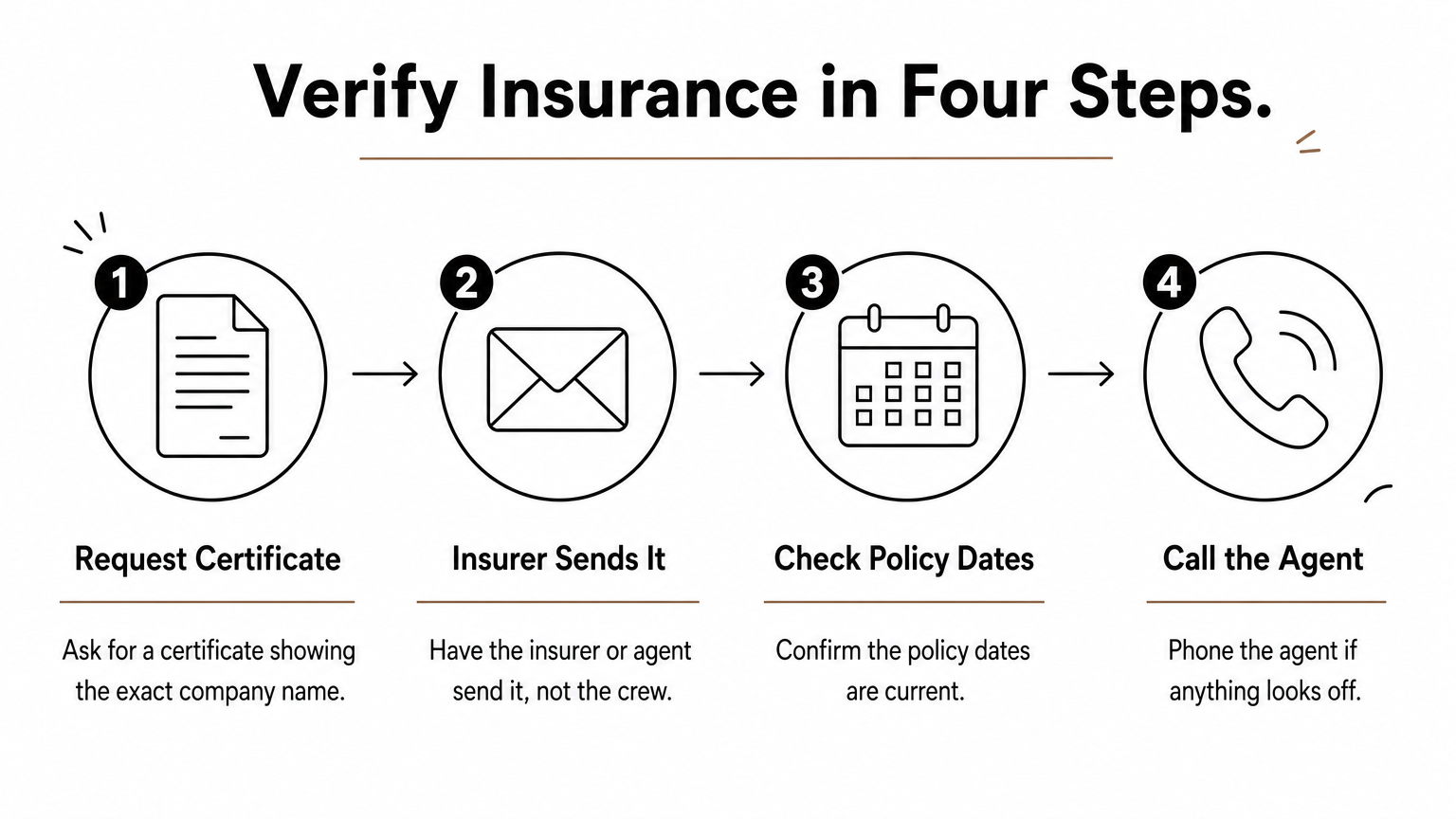
- Ask for a certificate of insurance showing the company's exact name.
- Have it sent by the insurer or agent, not forwarded by the crew.
- Check that the policy dates are current.
- Call the agent if anything looks off.
Red flags
Be wary of crews that knock on doors right after a storm, insist on cash only, or cannot produce a certificate the same day. A reputable company can send the paperwork within hours.
A certificate of insurance takes minutes to send, and if a company stalls, you are the one carrying the risk.
3. Read reviews for details, not star averages
Read reviews for specifics about cleanup, punctuality, and whether the final bill matched the quote. Twenty detailed reviews tell you more than three hundred that say "great job."
What to look for
Good reviews name the size and type of job , describe the crew's behavior, and mention what was left behind. Scan for these points:
- Debris hauled or chipped, and the yard raked.
- Arrival at the quoted time.
- A final price that matched the estimate.
- An owner who replied politely to complaints.
Check more than one source, such as Google, the Better Business Bureau, and local community groups.
How to verify it
Sort by lowest rating first and judge how the company handled the problem. Then ask for two or three references for similar jobs . If there are few online reviews, references matter even more, because an established company will not be your first customer.
Red flags
Watch for a burst of reviews posted within a few days, repeated phrasing, a business name that differs from the one on the quote, or no local address. Complaints about damage that get no response are the most telling sign.
The best review tells you what happened on cleanup day, because that is where weak companies cut corners.
4. Compare three written, itemized quotes
Get at least three written quotes that cover the same scope, and compare the totals rather than the headline number. National cost guides commonly put the cost of a typical single-tree removal between $200 and $2,000 , with an average near $750. Your quote will depend on the tree and the site.
What to look for
| Job | Typical national range |
|---|---|
| Fallen tree, not on a structure | $100 to $500 |
| Typical single-tree removal | $200 to $2,000 (average about $750) |
| Smaller tree | From about $8 per foot |
| Tree over 80 feet | $1,500 and up, about $15+ per foot |
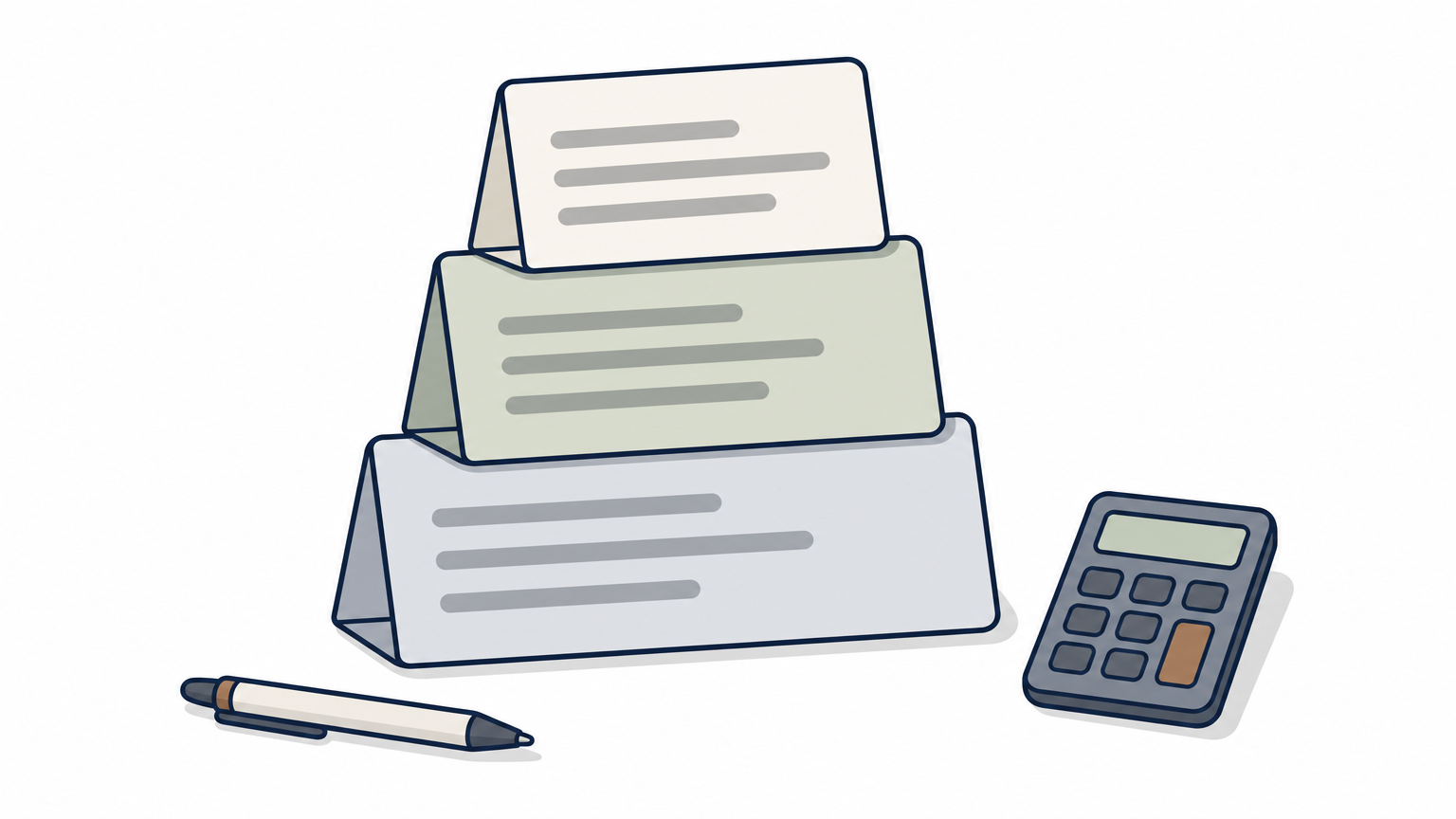
These are national figures, not local quotes. Trees near a house, fence, or power lines cost more. A line-by-line quote should separate tree removal, stump grinding , haul-away or chipping, cleanup, any permit work, and equipment such as a crane or lift.
How to verify it
Use per-foot figures as a sanity check. A 40-foot tree at $8 per foot is about $320. A $1,000 quote points to a tree of roughly 65 feet at $15 per foot, or a smaller tree in a tight spot.
Then compare scope. Suppose Quote A is $500 for felling only, and Quote B is $750 with debris hauled and the stump ground. If you need both, Quote A plus $150 for haul-away and $200 for the stump is $850 . The "cheapest" tree removal is the lowest quote that includes everything you need.
Red flags
- A quote that is a single total with no breakdown.
- Pressure to sign on the spot.
- A large upfront cash payment.
- A "free removal" offer, which is rare. Free estimates are normal, so ask what the catch is.
The cheapest tree removal is the lowest total after cleanup, stump work, and extras, not the lowest first number.
5. Match the company to the job you have
Pick a company that does the kind of work your situation needs. A small healthy tree, a leaning one near your roof, and a storm-split trunk call for different skills and equipment.
What to look for
| Your situation | What to ask for |
|---|---|
| Small tree you simply want gone | Minimum charge and whether the stump is extra |
| Dead, declining, or leaning tree | Arborist diagnosis first, then removal planned around the house and fence |
| Fallen tree, hanging limb, or split trunk | Emergency service and realistic response time |
| Storm debris across the property | Storm cleanup and debris removal |
| HOA, business, or municipal property | Commercial removal with planned scheduling |
| Concern about insurance | Documented tree-risk mitigation you can show your agent |
ArboBella offers each of these as a service. Our homeowner tree risk mitigation program ends with a final inspection by an ISA Certified Arborist and documentation you can give to your insurance agent. We do not guarantee that it will result in a discount, premium reduction, or coverage approval.
How to verify it
Ask for a similar recent job and how the crew approached it. Ask how they protect your lawn, fence, and landscaping. Ask what stump grinding includes, because grinding generally does not remove the underground root system.
Red flags
Be careful with a company that offers one answer for every tree, or one that cannot say how it would reach a tree beside your home.
Hire for the job in front of you: a company that is great at storm response may not be the best fit for a careful, preserve-if-possible evaluation.
6. Ask about timing, permits, and cleanup
Before you sign, settle when the work happens, who handles permits, and what is left behind. Those three answers prevent most disputes.
What to look for
Timing affects price. Demand in Southwest Florida spikes after storms during hurricane season, which runs June 1 to November 30. Non-urgent removals are usually easier to schedule and price when no storm has just hit. Removing a weak tree before a storm is typically cheaper than an emergency call afterward. Confirm these points in writing:
- The start date or window.
- Whether the company handles any permit, since some cities and counties regulate removal of certain trees.
- Whether the quote includes chipping, hauling, raking, and the stump.
How to verify it
Check permit rules with your city or county directly rather than relying on a contractor's word. Then make sure the written scope lists the cleanup items so the finished yard matches what you agreed to.
Red flags
A deep discount for starting immediately after a storm, "no permit needed" with no explanation, or logs left in the yard with no mention in the quote all point to trouble.
Anything not written into the scope is a bill you may see later.
Pick the company that passes all six
A good tree removal company shows you a certified arborist, current insurance, specific reviews, an itemized quote, the right fit for your job, and a clear plan for timing, permits, and cleanup. If one check fails, move to the next company on your list.
If you live in North Port, Port Charlotte, or Venice and want a certified arborist to look at your tree, contact ArboBella Tree Service and ask us to walk through the six checks above.