Cheap Tree Removal Near Me: Prices and 4 Ways to Save
The safest way to get cheap tree removal near me is to pay only for the work your tree needs, at a fair price, from a crew that carries insurance. In practice, that means four moves: have an arborist confirm that removal is necessary, compare itemized written estimates, bundle the work and book outside storm season, and deal with risky trees before they become emergencies. Homeowners unsure about a declining tree should start with the evaluation. Homeowners who already know a tree must go should start with estimates. Anyone with several trees or a stump should bundle.
The problem is that the lowest number on a quote is rarely the lowest real cost. A cheap bid can leave out debris hauling or stump grinding, or it can come from a crew with no liability coverage. Prices also swing with tree size, access, and timing, so it is hard to know whether a quote is fair.
This guide starts with typical price ranges, so you can judge any quote. Then it covers four ways to lower what you pay. It is written from the perspective of ArboBella Tree Service, a family-owned, ISA Certified Arborist-led company serving North Port, Port Charlotte, and Venice, Florida. The advice applies to affordable tree removal anywhere, with a few Southwest Florida details noted along the way.
Tree removal prices: what to expect
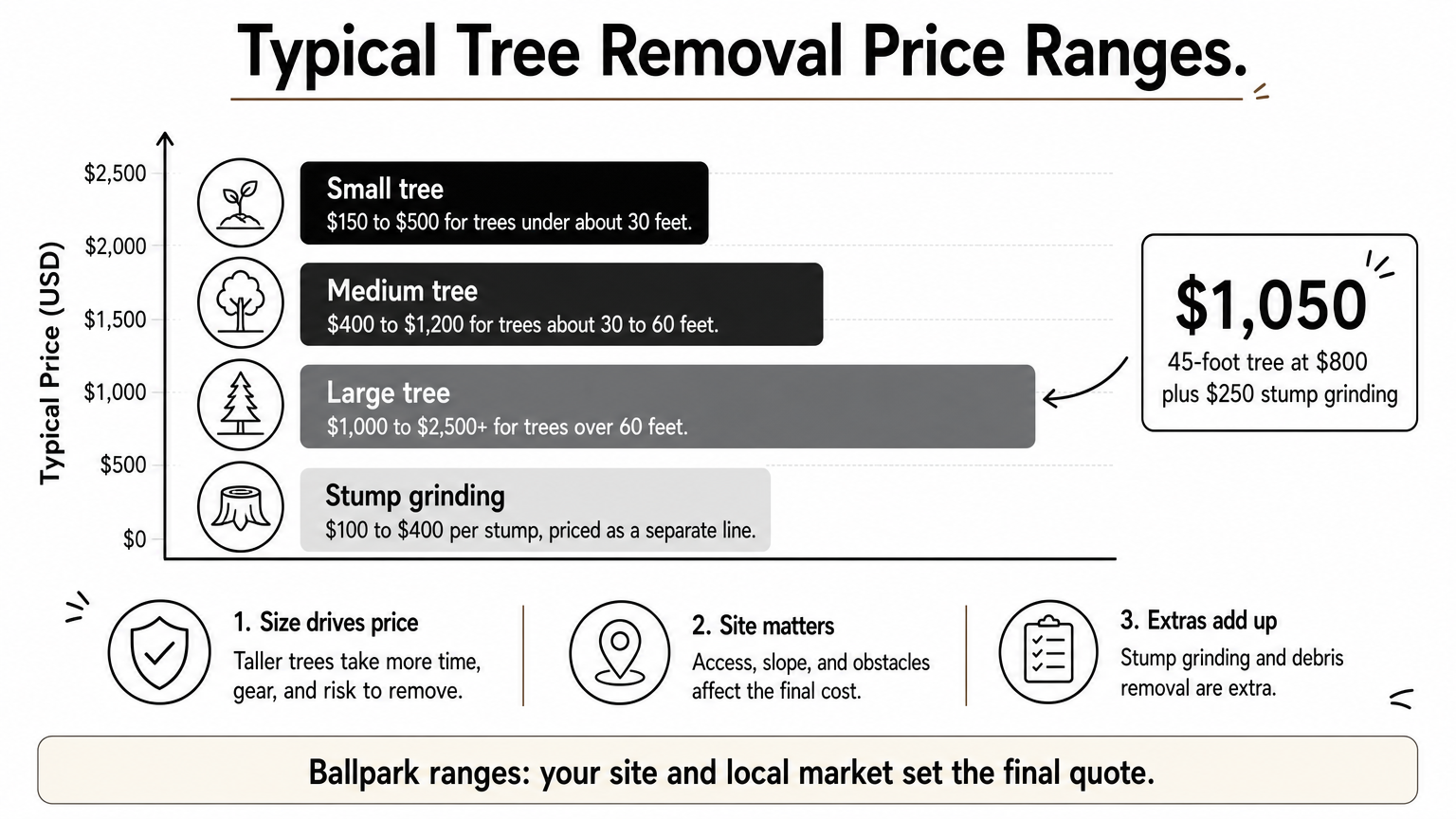
Most residential removals in the US land between roughly $150 for a small tree and $2,500 or more for a large one, with stump grinding extra. Treat these figures as ballpark ranges, because your site and local market decide the final quote.
Typical price ranges by tree size
Height, trunk diameter, and the effort needed to get the tree down safely set the base price. When you compare tree removal service prices, ask each company which size category your tree falls into.
| Job | Ballpark price | What mainly drives it |
|---|---|---|
| Small tree (under about 30 ft) | $150 to $500 | Easy access, light debris |
| Medium tree (about 30 to 60 ft) | $400 to $1,200 | Climbing time, hauling volume |
| Large tree (over 60 ft) | $1,000 to $2,500+ | Rigging, crew size, equipment |
| Stump grinding, per stump | $100 to $400 | Stump diameter, root flare |
| Emergency or storm work | Premium over standard rates | Urgency, hazards, structural damage |
What pushes a quote up or down
The same tree can cost twice as much in one yard as in another. The usual factors are:
- Access: a tree reachable by truck costs less than one behind a fence or locked gate.
- Targets: roofs, pool cages, fences, and power lines force slower, rigged cuts.
- Condition: dead or decayed wood is brittle and less predictable to cut.
- Cleanup scope: hauling everything away costs more than leaving wood on site.
- Timing: urgent jobs cost more than scheduled ones.
A worked example
Say a healthy 45-foot tree stands in a backyard with truck access. A mid-range removal quote is about $800. Grinding the stump adds about $250. The total is $1,050, and an itemized quote shows both lines separately. If the same tree leaned over your roof, expect the upper end of the range or higher.
The cheapest quote is only cheap if it covers the same scope as every other quote.
1. Get an arborist evaluation before you commit
An arborist evaluation can save you the most, because the cheapest removal is the one you never need. Many declining trees respond to pruning, treatment, or fertilization at a fraction of removal and replacement cost.
How it saves money
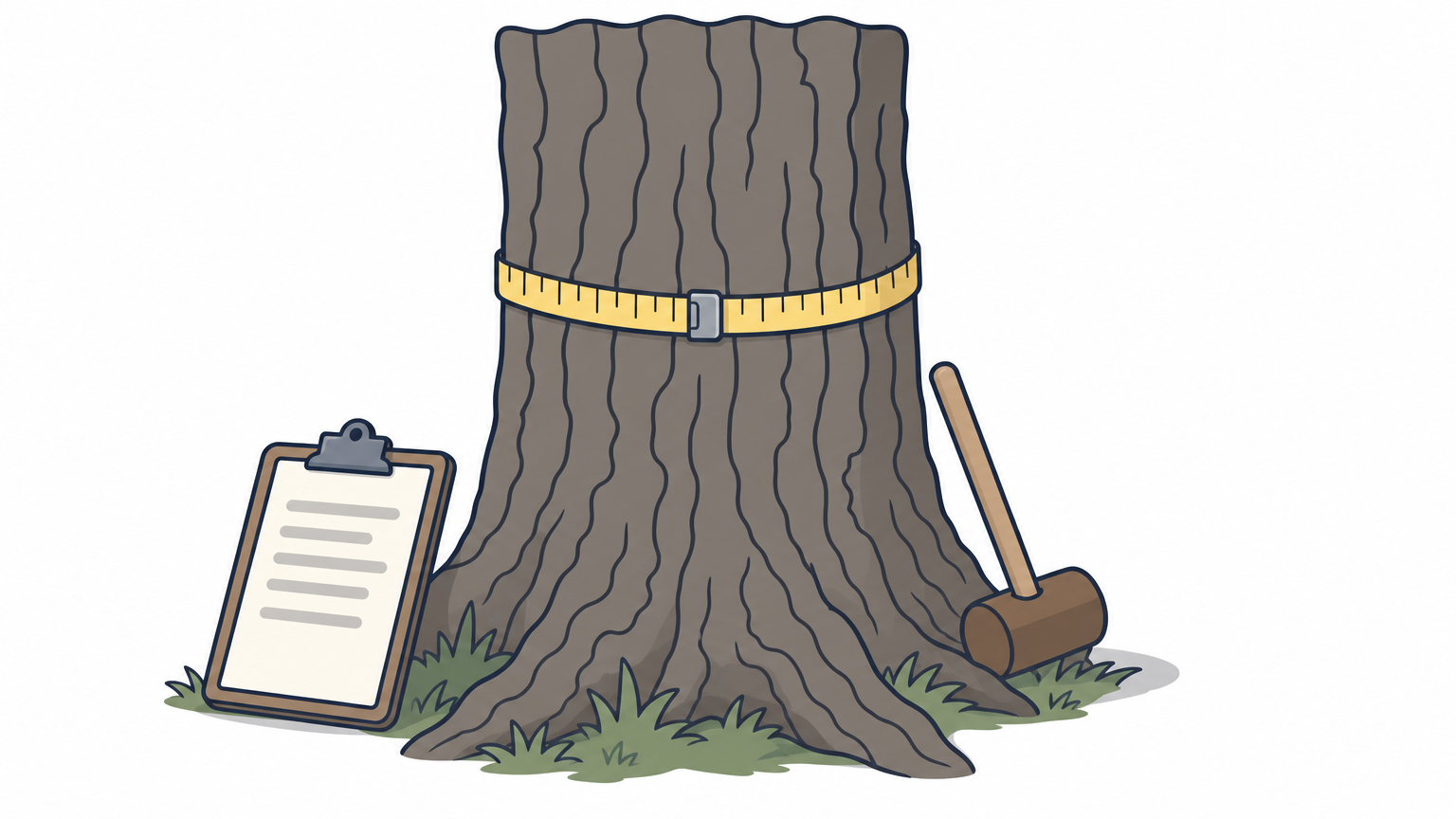
An evaluation looks at the tree's health, structure, location, and surrounding conditions before anyone recommends a cut. ArboBella Tree Service builds its Arborist Diagnosis around that idea, and its ISA Certified Arborist (FL-295224A) aims to preserve healthy trees whenever practical. If removal is the right call, you get a clear reason for it. That helps when a neighbor, an HOA, or an insurance agent asks why the tree came down.
A diagnosis costs less than removing a tree that could have been saved.
Who it suits
This fits you if the canopy is thinning, limbs are dying back, fungus is showing at the base, or the tree leans after a storm. It also fits you if one company told you removal is the only option and you want a second opinion before spending $1,000 or more.
What to watch for
Ask what the evaluation costs and whether that fee is credited toward any work. Confirm that the person assessing your tree holds an ISA certification, and ask for the credential number. Be cautious of anyone who recommends removal over the phone without seeing the tree.
2. Compare itemized free estimates
Collect three written estimates for the same scope of work, and ask for them in writing. Many companies offer a free estimate for tree removal, but confirm that before you book a visit.
How it saves money
Quotes for the same tree can differ by hundreds of dollars, and a fair comparison only works when each one lists the same items. Ask every company to price the removal, debris hauling, stump grinding, cleanup, and whether the wood stays or goes. A photo-based quote by phone is a rough guide at best. An on-site visit is what gives you a number you can hold the company to.
A good estimate lists:
- The trees and stumps covered, identified by location
- Climbing, rigging, or equipment charges
- Debris hauling and cleanup
- Stump grinding as a separate line
- Proof of liability insurance and workers' compensation coverage
- The total price and how payment works
Three itemized quotes beat ten phone estimates.
Who it suits
This suits homeowners who already know a tree has to come down. It also suits property managers and HOAs who need documented bids before approving a budget.
What to watch for
The lowest bid often leaves out hauling or grinding. Be wary of crews who knock on doors after a storm, demand cash up front, or have no proof of insurance. If a company's pitch includes "topping" a tree to reduce its size, ask why, because topping damages trees.
3. Bundle the work and book off-peak
Combining jobs into one visit and scheduling outside peak demand lowers the per-job cost of affordable tree removal services. Crews charge for mobilization, equipment, and travel, and bundling spreads those costs across more work.
How it saves money
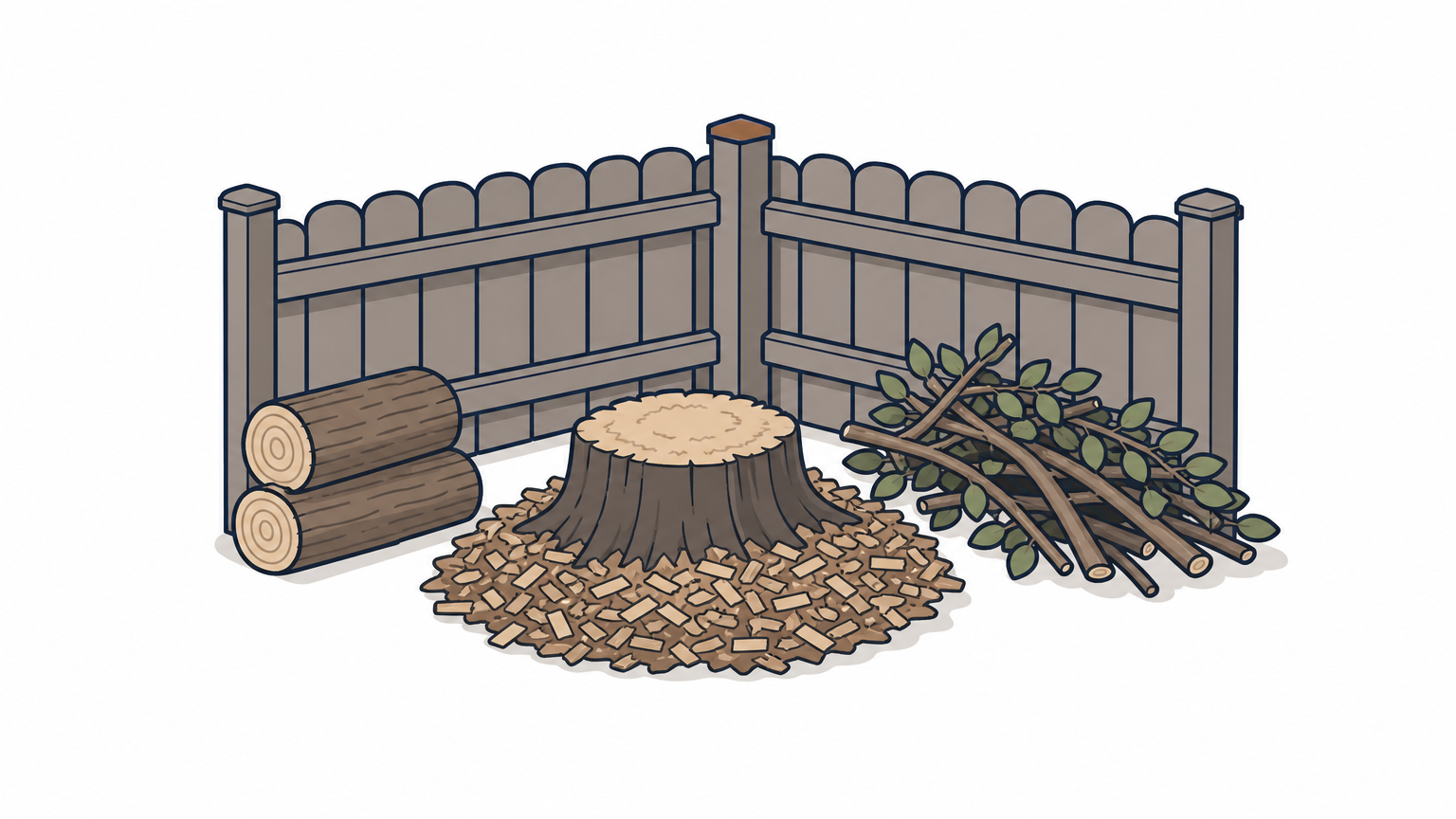
If you have two trees to remove, a stump to grind, and a few branches to trim, ask for one combined quote rather than three separate visits. Timing matters too. In Southwest Florida, demand and prices climb in the weeks after a hurricane or tropical storm, and hurricane season officially runs June 1 to November 30. Scheduling a planned job well away from those windows gives you more room to negotiate and shorter waits.
You can also trim the scope. Ask whether leaving wood chips or logs on site lowers the price, since hauling is a real cost.
Combining jobs into one visit is the easiest discount you can ask for.
Who it suits
This works best for yards with several trees, properties with an old stump, or owners who can be flexible about the date. It works poorly for a tree that is already failing.
What to watch for
Never delay a hazardous tree for a better price. Also set expectations on stumps: grinding removes the stump surface, but the underground root system is generally not excavated. If you plan to build or plant on that spot, say so when you get quotes.
4. Remove risky trees before an emergency
Dealing with a dead, leaning, or storm-weakened tree early costs less than emergency work. An urgent call means premium rates, hazardous conditions, and often damage to a roof, fence, or pool cage on top of the removal itself.
How it saves money
A scheduled removal gets a normal crew, a normal timeline, and a planned cleanup. ArboBella Tree Service offers a Homeowner Tree Risk Mitigation Program that identifies potentially hazardous trees, carries out the recommended work, and provides documentation you can give to your insurance agent. An ISA Certified Arborist conducts a final inspection after the work is done. Its Annual Tree Risk Protection Service keeps ongoing documentation and gives annual customers priority consideration for qualifying preventive and storm-related work, subject to availability.
Fixing a hazard on your schedule almost always costs less than fixing it on the tree's schedule.
Who it suits
This suits owners of mature trees near the house, a pool cage, or power lines, especially before hurricane season. It also suits anyone who has been putting off a dead tree for a year or more.
What to watch for
Programs and annual services have their own cost, so compare them with the number of trees you actually have. ArboBella does not guarantee that risk mitigation will lead to an insurance discount, premium reduction, or coverage approval. Ask your insurance agent what they will accept before you count on any savings.
Pay for the right job, not just the lowest bid
Cheap tree removal comes down to scope, timing, and proof. Confirm that the tree really needs to go, price the same job three ways, bundle what you can, and act before a storm forces your hand. Skip any bid that cannot show insurance.
If you live in North Port, Port Charlotte, or Venice and want an arborist to look at your tree first, talk to ArboBella Tree Service about your tree. You can also reach the team at 941-932-1768 or info@arbobellatreeservice.com. A clear answer on whether to trim, treat, or remove is the first step toward a fair price.