Tree Removal Cost: How Much to Expect by Size and Risk
Most homeowners pay between $200 and $2,000 to have one tree taken down, and the national average sits around $750. How much a tree removal costs on your property comes down to three things: the tree's height, how hard it is for a crew to reach, and whether the tree is healthy or hazardous. The price normally covers felling the tree, cutting it into pieces, and hauling the debris away. Stump grinding is usually a separate line.
This article shows what each factor does to the price, how to build a rough budget before you call anyone, which extra charges catch people out, and how to pay less without hiring a risky bargain crew. You will also see what a solid written quote contains, so you can compare offers on equal terms.
We are ArboBella Tree Service, a family-owned, licensed, and insured company led by an ISA Certified Arborist, serving North Port, Port Charlotte, and Venice. The ranges below are published national figures. Use them to judge the quotes you receive, not to replace them, because local prices in Southwest Florida can differ.
Why tree removal costs vary so much
Tree removal costs vary because every job carries a different mix of labor, risk, and equipment time. Height sets the starting price, then access and condition push it up or down.
Typical price by tree height
Height is the best single predictor, since a taller tree means more rigging, more wood, and more crew hours. Published national ranges for one tree, stump not included, look like this:
| Tree height | Typical range | What it usually involves |
|---|---|---|
| Under 30 ft | $200 to $500 | Small trees, short climbs, easy cleanup |
| 30 to 60 ft | $500 to $1,200 | Most mature backyard shade trees |
| 60 to 80 ft | $800 to $1,500 | Climbing, rigging, and heavy wood |
| Over 80 ft | $1,500 to $3,500 or more | Large crews, and a crane on some jobs |
Some companies quote by the foot instead, at roughly $10 to $14 per foot. That puts a 40 ft tree near $400 to $560. A tree crosses the $1,000 mark at about 50 to 60 feet with normal access, or at a much smaller size when it stands over a house. Trunk diameter counts too, because a wide trunk holds far more wood to cut, lower, and haul than a slim one of the same height.
Location and access
Where the tree stands can change a quote as much as its height. A tree in open lawn can be felled whole or dropped in large sections. A tree over a roof, pool cage, fence, or power line has to be lowered piece by piece with ropes, or lifted out by crane, and that takes more people and more hours.
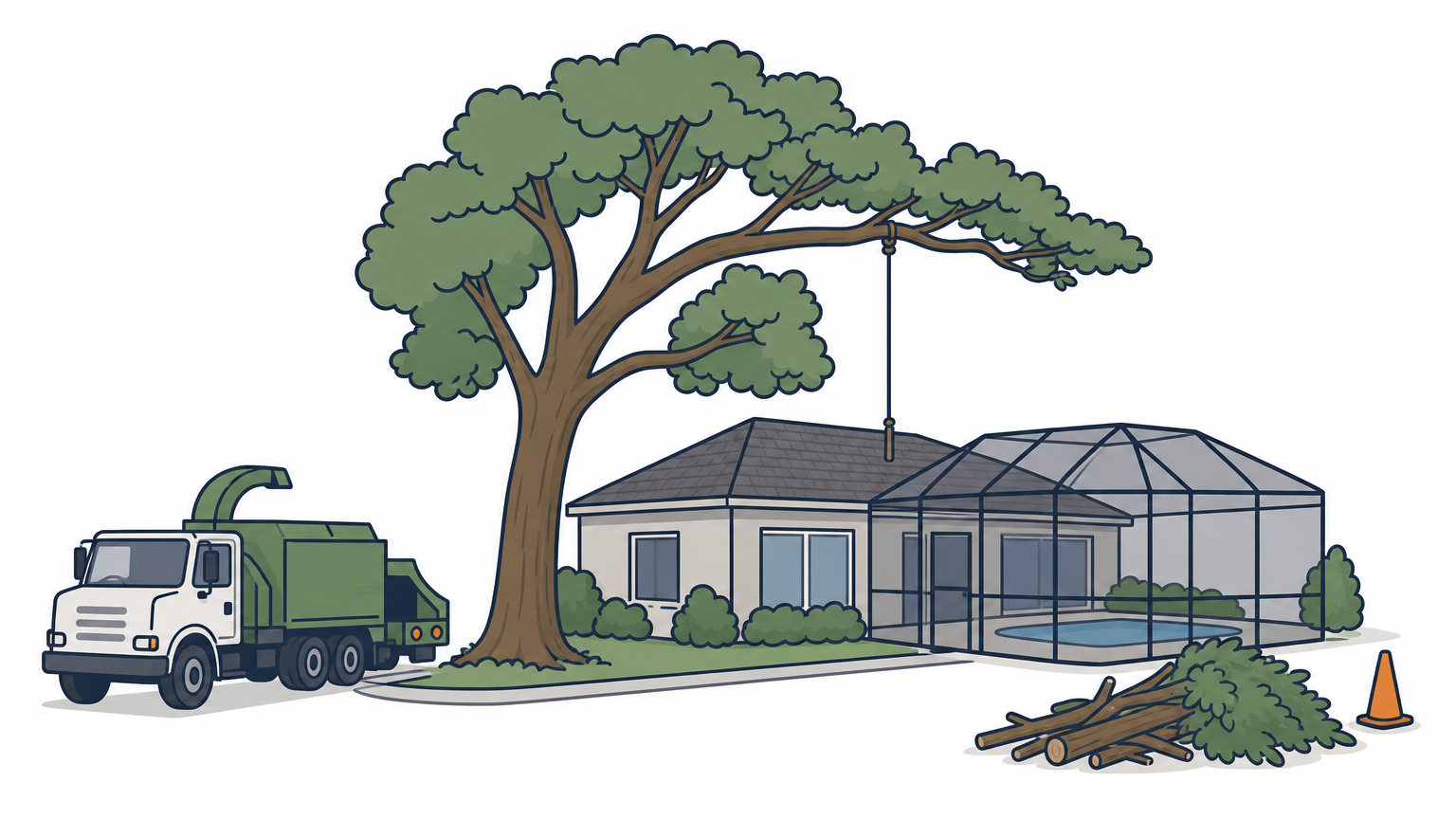
Access matters as well. If a truck or chipper cannot get close, crews carry the wood out by hand. Labor, fuel, and disposal fees also differ by region and even by county, so a national average is a reference point, not your price.
Condition and risk
A dead or damaged tree behaves unpredictably, so it costs more to remove than a healthy tree of the same height. Dead wood can be brittle, leaning trees may not fall where you expect, and split trunks can fail under load. Crews slow down, rig more, and sometimes add workers.
Decay hidden inside the trunk is common in older trees, which is why an inspection before the quote helps. A healthy tree that is simply unwanted is the cheapest kind of job.
Height sets the starting price, but access and condition decide where in the range you land.
How to estimate your cost and read a quote
You can estimate your cost by measuring the tree, picking the matching band from the table, and adjusting for access and condition. Then compare at least three written quotes against that number.
Build a rough budget in four steps
Start with a simple measurement and move to adjustments. These steps take about ten minutes:
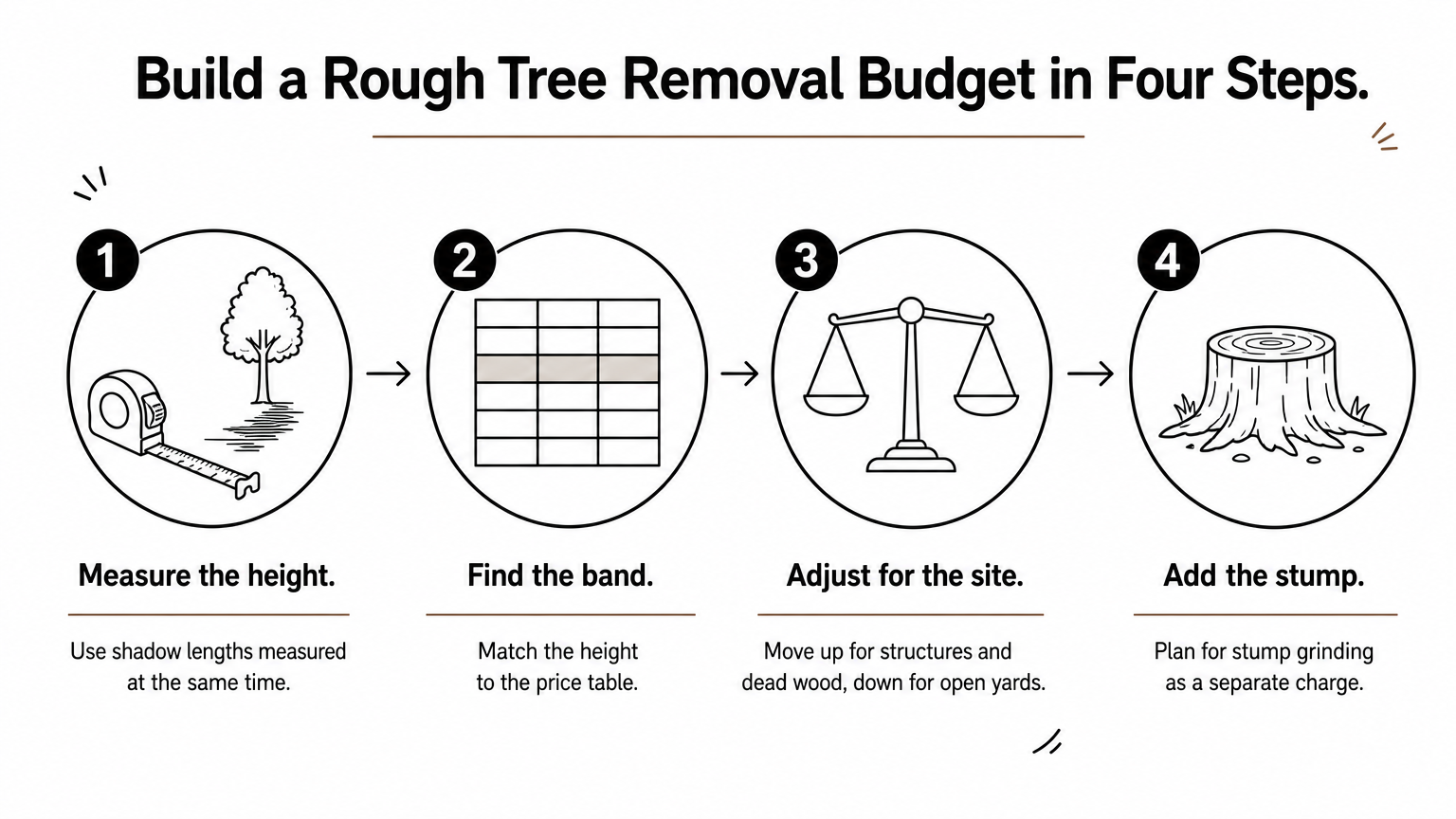
- Measure the height. On a sunny day, multiply your own height by the length of the tree's shadow, then divide by the length of your shadow. All three measurements must be taken at the same time.
- Find the band. Match the height to the table above.
- Adjust for the site. Move toward the top of the band for structures, power lines, tight access, or dead wood. Move toward the bottom for an open yard and a healthy tree.
- Add the stump. If you want the stump ground out, plan for that as a separate charge.
Here is an illustrative example. A healthy 40 ft oak in an open back lawn lands in the lower half of the 30 to 60 ft band, roughly $500 to $700 . The same oak with limbs over your roof or a service line nearby moves to the top of the band, roughly $1,000 to $1,200 . A per-foot quote of $10 to $14 gives $400 to $560, which makes a useful floor for the easy version.
What a written quote should list
Insist on a quote you can read twice. Most are priced per job, not per hour. If a company quotes hourly, ask about crew size, equipment, and an estimated total. A solid quote lists:
- The tree or trees to be removed and where they stand on the property
- The scope of work: felling, cutting up, hauling away, and cleanup
- Whether stump grinding is included, and how it is priced
- The total price and the payment terms
- Proof of license and liability insurance
Skip any crew that cannot show insurance. If someone is hurt on your property or a neighbor's fence is crushed, you can be left exposed to the cost.
A fair quote is itemized, written, and backed by proof of insurance.
Extra charges that change the final bill
The base price often leaves out stump grinding, large equipment, and rush work, so ask exactly what is excluded before you accept.
Stump, cleanup, and equipment
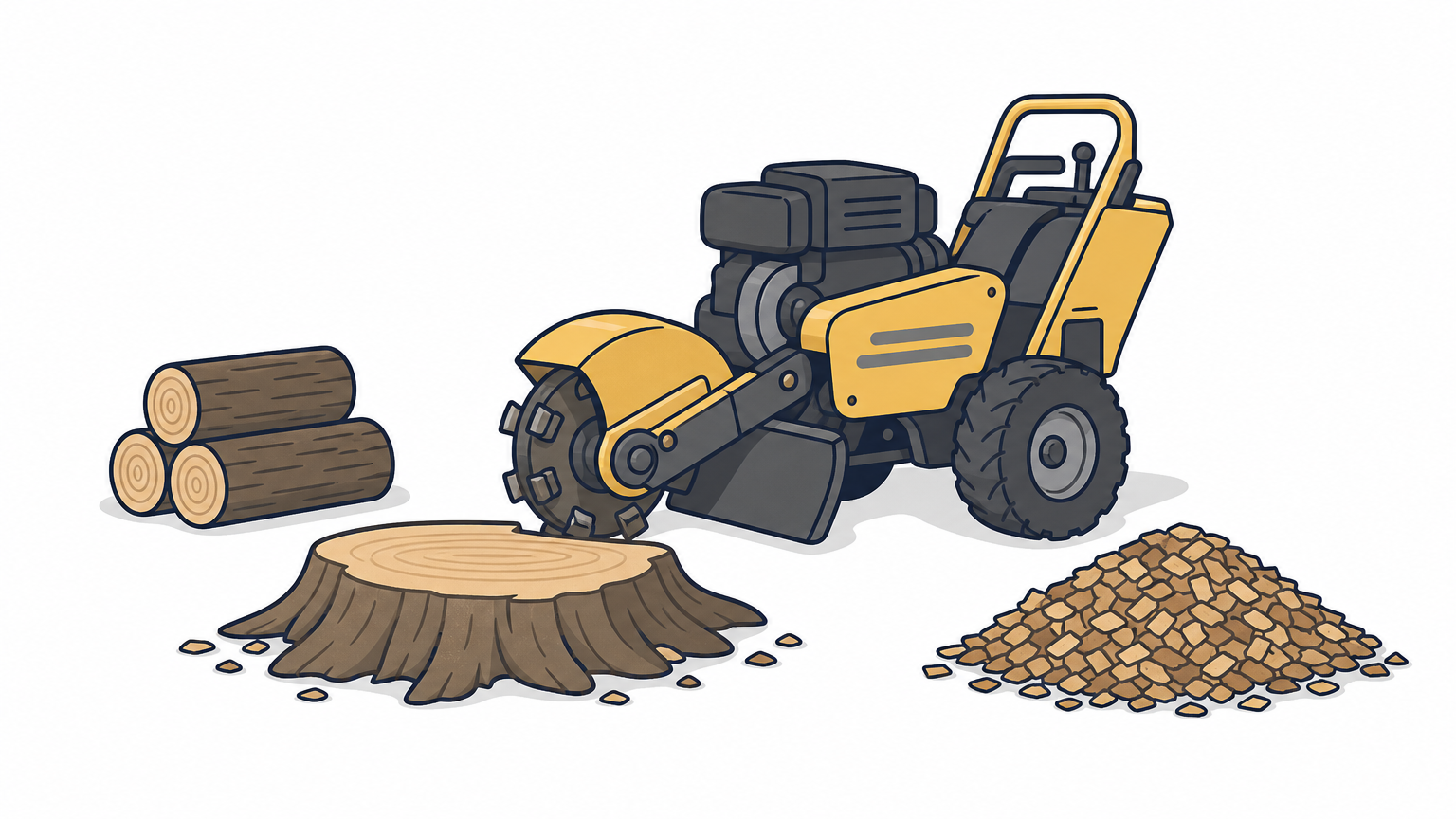
Stump grinding is commonly priced on its own, usually by stump diameter. Grinding removes the stump below ground level, but it does not dig out the whole root system, so ask what the crew will do with the grindings. Hauling away all the wood can also cost extra, and some crews leave logs on site for a lower price.
Equipment is the other swing factor. A crane or bucket truck adds a heavy line to the bill, and a quote that omits it for a tree over a structure deserves a follow-up question.
Emergency, storm, and permit costs
Emergency work costs more because crews respond fast, often after hours, to trees that are down or hanging. In Southwest Florida, hurricane season runs from June 1 to November 30. Demand and wait times jump after a storm, and so do prices.
Rules matter too. Some cities and counties regulate the removal of certain trees and may require a permit or fee. Check with your local permitting office before any cut. A reputable company will know the local requirements and tell you up front who handles the paperwork.
Ask what the price excludes, because stump grinding and cleanup are where quotes quietly diverge.
How to pay less for tree removal
You pay less by getting a diagnosis first, scheduling off-peak, and comparing itemized quotes, not by picking the lowest number on the table.
Time it and bundle it
The cheapest time for removal is when demand is low. In Florida, that generally means outside the weeks after a major storm and away from peak storm season, when crews are booked solid. If a tree is not an immediate hazard, waiting for a quieter stretch can help.
Bundling also helps. Removing several trees, grinding stumps, and trimming in a single visit means the crew sets up once, which can lower the per-tree price. Ask for the bundled price and the separate prices, then compare.
Check whether removal is needed, and when it is free
Removal is rarely free, but a few situations shift the cost. Your utility may deal with trees that threaten its lines, and you should never go near those lines yourself. A city or county may handle trees in the public right-of-way. Homeowners insurance may help with removal when a tree damages a covered structure, though coverage varies, so read your policy or call your agent.
The best saving is avoiding removal altogether. A tree that looks bad is sometimes fixable with pruning or treatment. At ArboBella, an arborist evaluates the tree's health, structure, and surroundings before recommending anything, and we aim to keep healthy trees whenever that is practical.
The cheapest tree removal is the one you do not need, so get a diagnosis before you commit.
Budget with a range, then get it in writing
Tree removal usually costs $200 to $2,000, with the national average near $750. Height sets the base, access and condition move it, and extras like stump grinding, cranes, and emergency timing can add more. Estimate your own range first, then compare itemized quotes from licensed, insured companies.
Treat any number far below the rest with suspicion, and treat a number far above them with questions. If you are in North Port, Port Charlotte, or Venice and want a firm figure for a specific tree, ask ArboBella Tree Service for a tree evaluation and get the price in writing before any work begins.