
What Is Tree Stump Grinding? How It Works and What It Costs
A dead stump in your yard is more than an eyesore. It traps your mower, sprouts suckers, and attracts termites and carpenter ants, which matters in Southwest Florida's warm, humid climate. If you're searching for stump grinding tree information, you probably want to know what the job involves before you call anyone or rent a machine.
Stump grinding is the process of shredding a stump into wood chips with a rotating cutting wheel, usually 4 to 12 inches below ground level. It leaves the root system to decay on its own. Full stump removal digs out the whole root ball, which is far more invasive and costly. Most homeowners in our area pay roughly $100 to $400 per stump , depending on diameter, roots, and access.
Below, we explain how grinding works step by step, how it compares with full removal, what drives the price, and when a DIY rental makes sense. As a certified arborist team serving North Port, Port Charlotte, and Venice, we grind stumps every week, so you'll get practical numbers and honest advice from the field.
Why stump grinding matters for your yard
Most people treat a stump as a problem for later. That's a mistake. A leftover stump keeps causing trouble for years, and the longer it sits, the more it costs you in repairs, pest control, and lost yard space.
A stump left in place keeps costing you, while a ground stump is a problem solved once.
Safety and pest risks
Decaying wood is a food source. In Florida's heat and humidity, a stump softens fast and becomes a magnet for termites, carpenter ants, and fungus . Those pests don't always stay put, and they can move toward your fence, shed, or the wood framing of your home. The physical risks are just as real:
- Trip hazards: a stump hidden in turf or mulch is easy to miss, especially for kids and guests.
- Equipment damage: mower blades and string trimmers hit stump edges and exposed roots.
- Mushrooms and mold: fungi fruit around decaying wood and make the area unusable.
Regrowth and wasted space
Many Florida species, including live oak, ficus, and Brazilian pepper, resprout from stumps and roots. Grinding destroys the wood near the surface, so it stops most sucker growth . Some roots may still send up a few shoots, but you can clip those back easily.
Grinding also gives you the space back . Once the chips are raked out and the hole is filled with soil, you can lay sod, plant a replacement tree, or extend a patio over the spot. Any stump grinding tree project goes cheapest when you bundle it with the tree removal itself. If you're already paying to take a tree down, adding stump removal and stump grinding to the same visit saves you a second trip charge, because the crew and equipment are already on site.
How to grind a stump step by step
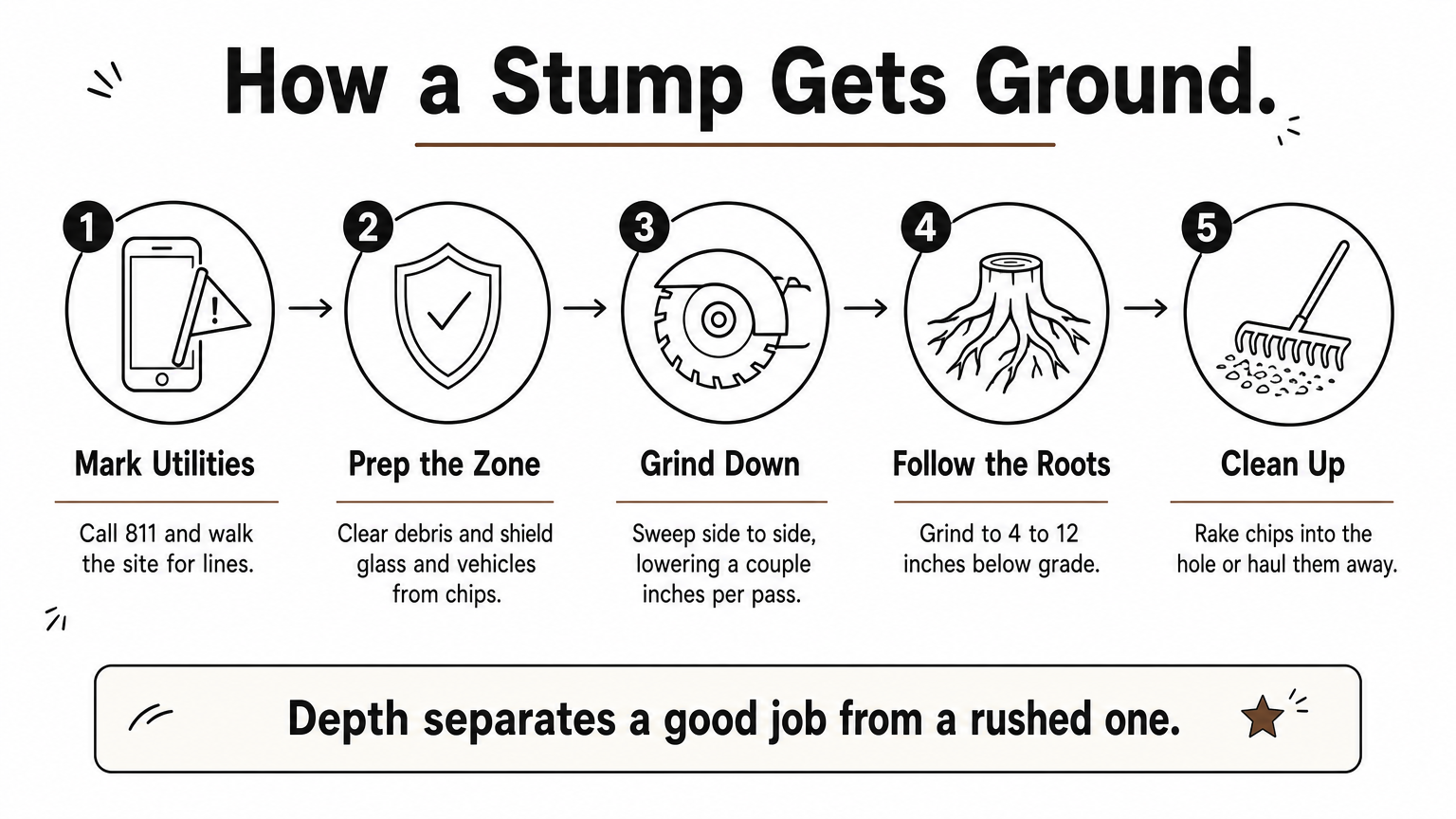
A professional job follows the same sequence every time. Here is how a typical stump grinding tree job runs on our crews, from the first walk-around to the last rake stroke. Knowing the steps also helps you compare quotes fairly and spot a crew that cuts corners.
Prep and safety checks
Before any blade spins, the crew marks underground utilities by calling 811 and walking the site for irrigation lines, cables, and septic parts. Then the crew prepares the work zone :
- Cut the stump as close to the ground as possible.
- Clear rocks, loose debris, and small obstacles nearby.
- Set up shields or move vehicles so flying chips can't hit glass or paint.
Grinding and cleanup
- Position the cutting wheel at the edge of the stump.
- Sweep the wheel side to side, lowering it a couple of inches per pass.
- Grind to 4 to 12 inches below grade, then follow thick surface roots outward.
- Rake the chips back into the hole or haul them away.
Depth is the step that separates a good job from a rushed one. Grinding only to ground level leaves wood that sprouts and rots right under your new sod.
A stump is truly gone only when the grinder cuts well below the soil line.
Finally, you choose what happens to the chips. Many homeowners keep the chips as mulch for garden beds. For a lawn or new tree, ask the crew to haul the chips off and fill the hole with clean soil, since fresh chips pull nitrogen from the ground as they break down.
Stump grinding vs. stump removal
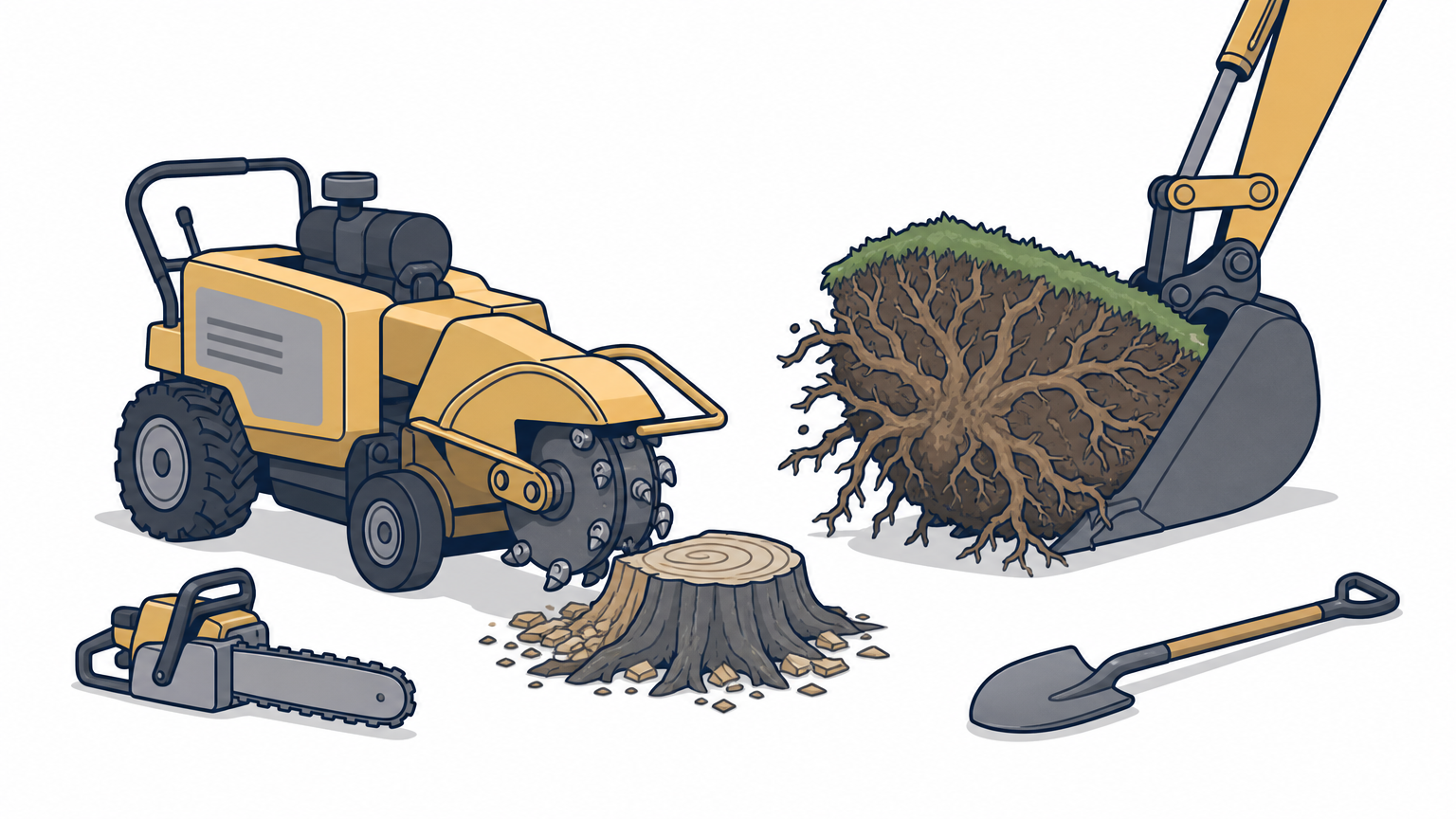
People often use the two terms as if they mean the same thing. They don't. Grinding shreds the stump and upper roots , while removal digs out the entire root system . Many quotes for tree stump removal grinding are really for grinding, so confirm which one you're being offered.
Side-by-side comparison
| Factor | Stump grinding | Full stump removal |
|---|---|---|
| Method | Rotating cutter shreds the wood | Excavator digs out the root ball |
| Depth | 4 to 12 inches below grade | Whole root system |
| Yard impact | Small hole filled with chips | Large crater and torn turf |
| Typical cost | $100 to $400 | Often 2 to 3 times more |
| Best for | Lawns, gardens, replanting | Foundations, pools, slabs |
When grinding is enough
For most yards, grinding does the job. You get a clean surface, less mess, and a lower bill . Roots left underground rot slowly and cause no harm to turf, shrubs, or patios. If you plan to replant, set the new tree a few feet from the old spot so its roots avoid the decaying wood.
When full removal is worth it
Choose removal when you're building directly over the stump, such as a foundation, slab, or pool . Decaying roots leave voids, and the ground can settle over time. Excavation also makes sense for a stump with aggressive, disease-carrying roots.
Grind for a yard, dig for a foundation.
An arborist can check the species and site before you commit to either method.
How much stump grinding costs
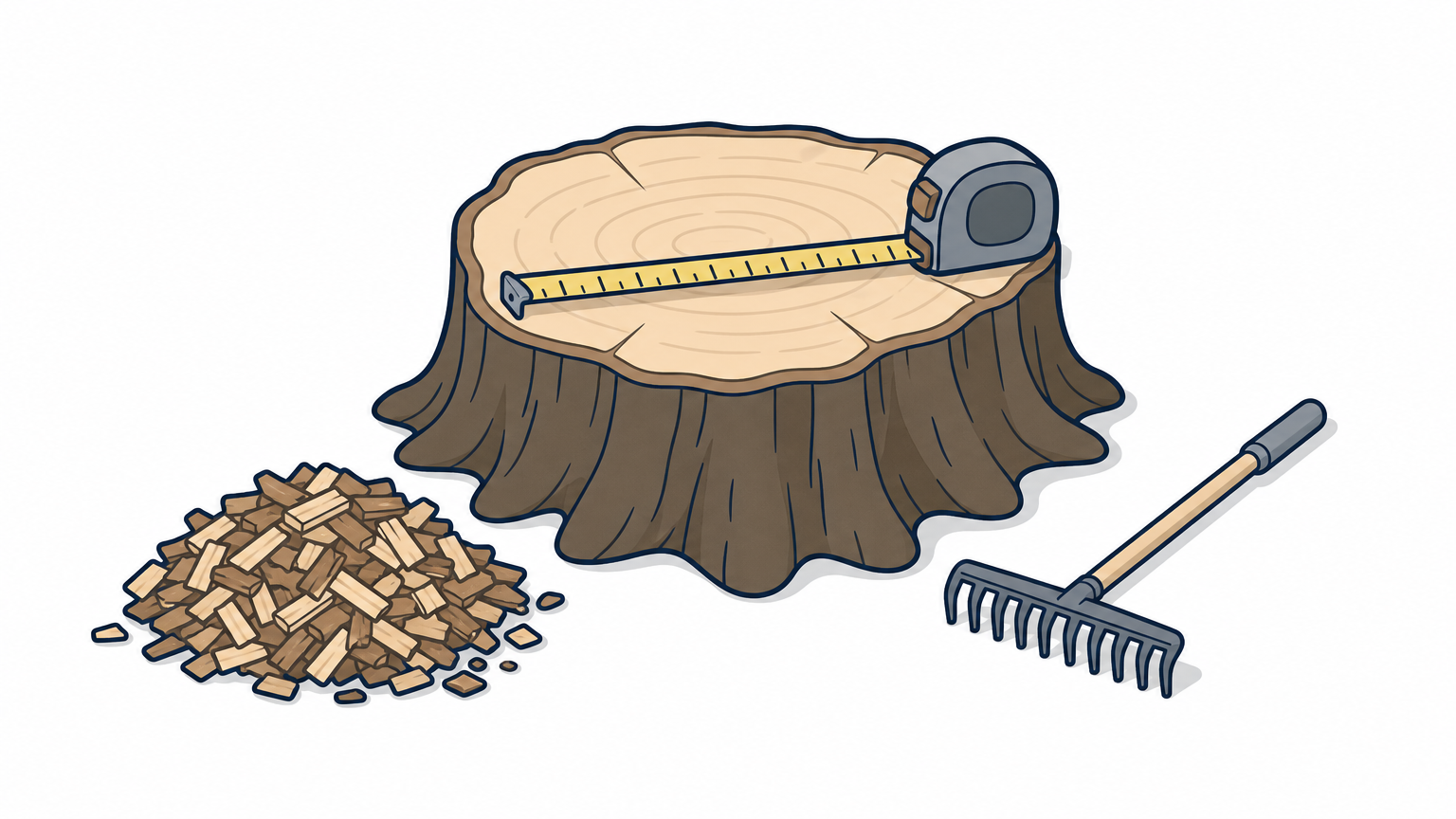
Most stump grinding tree jobs in North Port, Port Charlotte, and Venice run $100 to $400 per stump . Many crews price by diameter, often around $2 to $5 per inch measured at the widest point, with a minimum charge of about $100 to cover travel and setup.
What moves the price
Diameter sets the baseline, but site conditions push a quote up or down. A 12-inch pine in an open front yard is a quick job. A 30-inch live oak with surface roots behind a narrow gate is not.
| Factor | Effect on your quote |
|---|---|
| Stump diameter | Biggest driver, priced per inch |
| Surface roots | More roots mean more grinding time |
| Access | Gates under 36 inches may require a smaller machine |
| Wood density | Live oak and other hardwoods slow the cutter |
| Number of stumps | Extra stumps often get a lower rate |
How to keep the bill down
Bundling saves the most money. Have the stump ground during the same visit as the tree removal, and group every stump on your property into one appointment. Many companies discount the second and third stump because setup time is only paid once.
Always compare quotes on the same terms. Ask whether the price includes grinding depth, chip cleanup, and hole fill , since some bids leave those out and add them later.
A cheap quote that skips depth and cleanup usually costs you more in the end.
Hire a pro or grind the stump yourself
Renting a grinder looks cheap on paper. Rental rates run about $100 to $250 per day , which only beats a professional quote if nothing goes wrong. Here's how to decide which route fits your stump.
When DIY makes sense
Grinding a stump yourself works for one small stump under 12 inches across , in open ground with no utilities nearby. Add up the real cost before you commit: trailer or delivery fees, fuel, safety gear, and a full day of heavy labor. Most rental machines weigh 500 pounds or more, so plan on a helper and a ramp.
A rental saves money only when the job is small, open, and free of surprises.
When to hire a pro
Call a crew if any of these apply:
- The stump is over 12 inches wide or is dense hardwood like live oak.
- You have several stumps to clear.
- Sprinkler lines, cables, a fence, or your foundation sit close by.
- Access is tight or the ground slopes.
For stump grinding tree work near a house, a pro brings the right-size machine and handles the 811 utility check. The wheel throws chips and rocks at high speed, so eye protection, hearing protection, and steel-toe boots are the minimum. One cut sprinkler line or buried cable can cost more than the entire professional job, and insurance covers that risk instead of you.
Choosing the right next step
Stump grinding shreds the wood below the soil line, stops most regrowth, and costs far less than digging out the root ball. For most yards, grinding is the right call , and $100 to $400 per stump is a fair range to expect in Southwest Florida. Save full removal for spots where you plan to build.
Your next move depends on the stump. A small one in open ground may suit a rental machine. Anything large, dense, or close to utilities belongs with a crew. Before you commit to any stump grinding tree job, get a written quote that spells out depth, cleanup, and hole fill, so you can compare bids on equal terms .
If you'd rather have a straight answer on your own stump, talk to the certified arborists at ArboBella Tree Service. We'll look at the tree, the roots, and the site, then tell you what makes sense for your yard and budget.