Stumps Tree Removal: How to Get Rid of Them in SW Florida
The fastest way to handle stumps tree removal is to grind the stump at least 6 inches below ground level, either with a rented grinder or a professional crew. The cheapest way is to dig it out by hand or treat it with a chemical remover and wait, which costs little but takes weeks to months. Pick your method based on stump size, root spread, and how soon you need the space back.
A leftover stump looks harmless until it sends up sprouts, catches a mower blade, or sits where your new fence should go. In Southwest Florida the problem shows up often after storm season, when a downed tree leaves behind a wide root flare that stays put no matter how hard you dig. Rotting wood also draws termites and carpenter ants, and you do not want either one near your house.
This guide walks you through four steps: check the site, choose a method, remove the stump, and decide when to hire out. You get a comparison table, a grinder walkthrough, and a breakdown of what drives the price. We are ArboBella Tree Service, a certified arborist company serving North Port, Port Charlotte, and Venice, so the advice reflects what we see in local yards.
Why stumps need to go and which route fits
Remove a stump when it creates a hazard, blocks a project, or keeps sending up shoots, and match the method to its size and your timeline. Waiting rarely helps, because roots keep their grip long after the tree is gone and the wood softens unevenly.
What a leftover stump costs you
Left alone, a stump turns into a short, steady list of problems. Decay attracts pests , and in Florida's humid climate that includes termites and carpenter ants. The issues that matter most:
- Trip hazards and mower damage, especially once grass grows up around the stump
- Sprouts and suckers, since many hardwoods try to regrow from the stump and roots
- Pests and fungus feeding on rotting wood near your house or shed
- Lost space for a patio, fence line, garden bed, or replacement tree
Remove a stump when it creates a risk or blocks a plan, and choose the method by size and timeline.
Three routes, one decision
Every stumps tree removal project comes down to three routes. Grinding shreds the wood below grade with a machine. Digging exposes and cuts the roots so the stump can be pulled out. Decay lets chemicals or time break the wood down on its own.
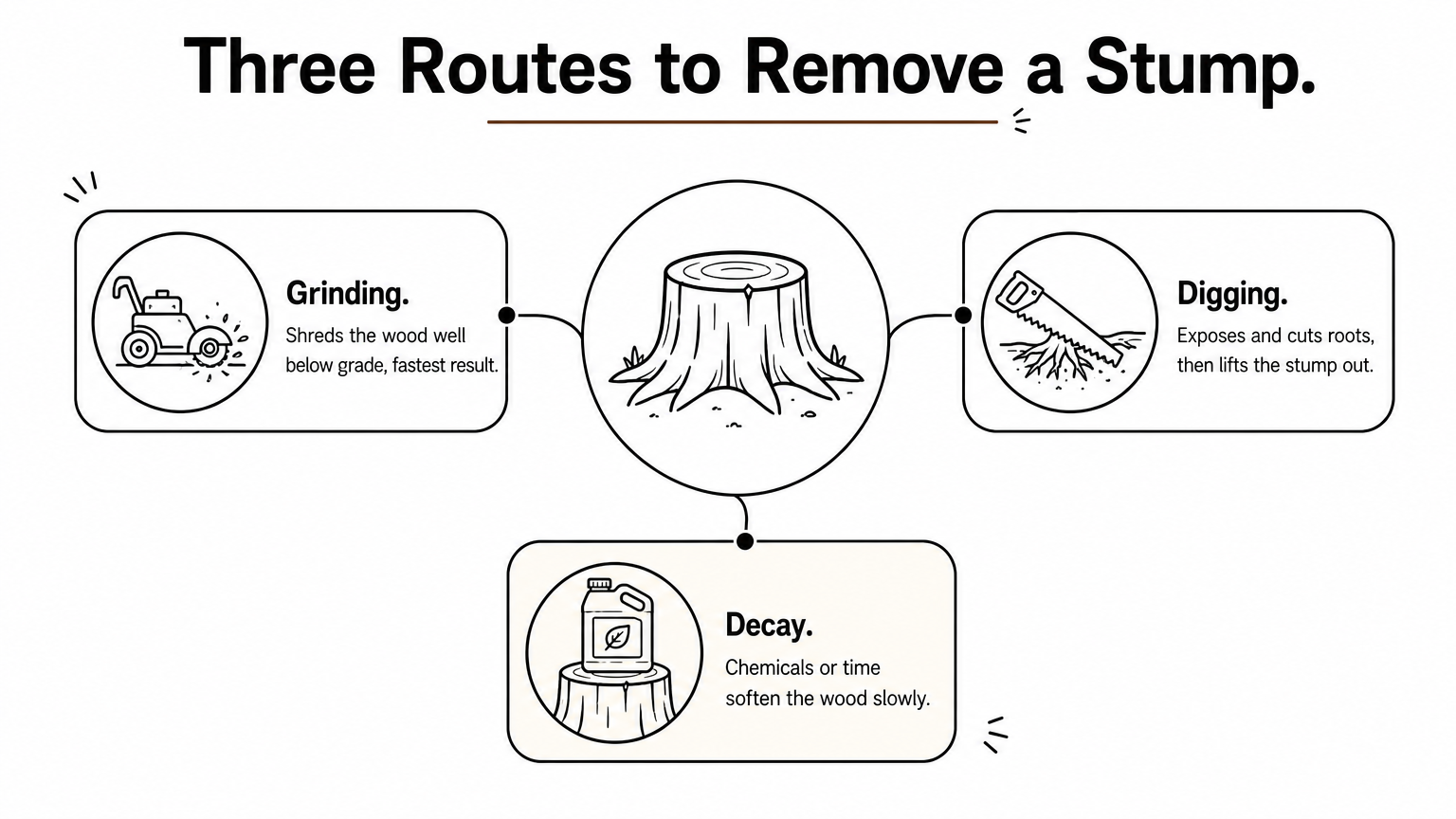
Grinding wins on speed and is the only route that clears a large stump in a day. Digging and decay win on cost, but they charge you in time or sweat. The next steps help you decide, starting with what is actually in your yard.
Step 1. Check the site and size up the stump
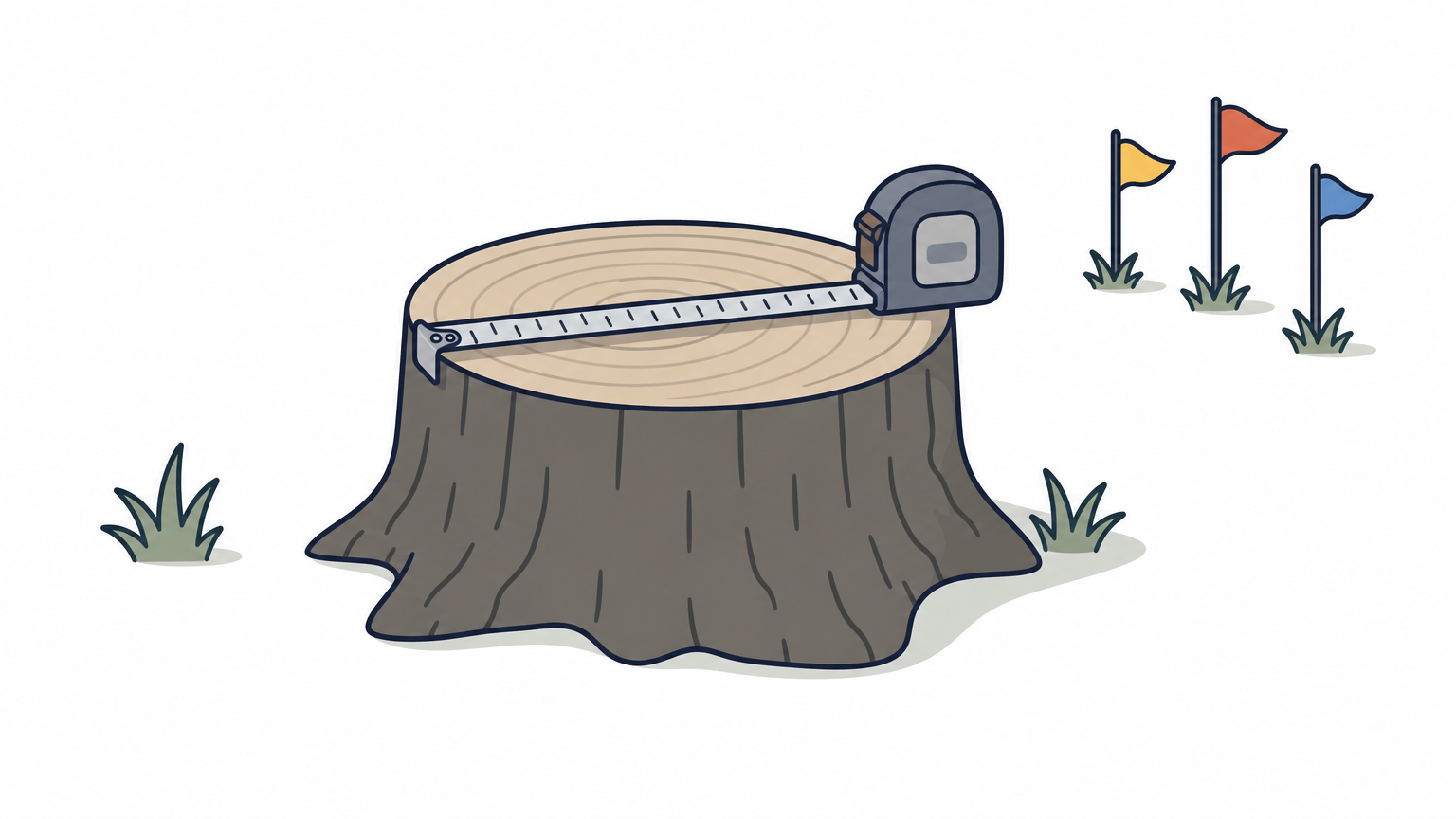
Call 811 and measure the stump before you pick a tool, because buried lines and root spread decide what is safe and practical. Ten minutes of prep here prevents the two expensive mistakes: a cut utility line and the wrong machine.
Call 811 and mark what is underground
Florida's one-call service, Sunshine 811, marks public utility lines for free. Dial 811 at least two full business days before you grind or dig, and wait for the marks.
Never put a grinder or shovel into the ground until 811 has marked it.
Utility crews mark public lines only. Irrigation lines, septic tanks, and the wiring running to a pool pump or shed are yours to locate, so check your property plans and probe gently before you start.
Measure the stump and read the roots
Measuring takes one tape and a notepad. Stump diameter drives both difficulty and price, so measure straight across the top at the widest point. Write down these details too:
- Species, since palm stumps are fibrous and usually shred more easily than dense oak or pine
- Number of stumps and how far apart they sit
- Distance to the house, pool cage, fence, and irrigation heads
- Gate width, if a machine has to reach the backyard
Step 2. Choose your removal method
Grinding is the best choice for most stumps, digging suits small ones, and chemicals or natural decay suit stumps you can wait on. This table puts the options side by side so you can match one to your stump.
Compare the options side by side
| Method | Speed | Effort | Best for |
|---|---|---|---|
| Stump grinder | Same day, often within hours | High if you rent, none if you hire | Any size, fastest clean result |
| Dig and cut by hand | Several hours to a weekend | Very high | Small stumps with shallow roots |
| Chemical remover | Weeks to months, then break up the wood | Low | Small stumps, tight budget, no deadline |
| Natural decay | Years | None | Stumps you can hide or live with |
Skip burning. A stump can smolder underground for hours, and local fire rules and the risk to nearby roots and structures make it a poor trade.
Fastest, cheapest, and best time of year
The fastest method is grinding. The cheapest is hand digging if your time is free, or a chemical remover if you can wait. Neither rotting nor chemicals is truly instant.
Timing is flexible in Florida because the ground never freezes. Many homeowners prefer the drier months, roughly November through April, since rain delays and soft, soggy lawns are less of a factor. Hurricane season fills crew schedules fast after a storm, so book early if you want a stumps tree removal visit without a long wait.
Step 3. Remove the stump yourself
If you go the DIY route, grinding with a rented machine is the quickest option, and hand digging or chemicals are the budget options. Whatever you choose, wear eye and ear protection and keep kids and pets well back.
Grind with a rented stump grinder
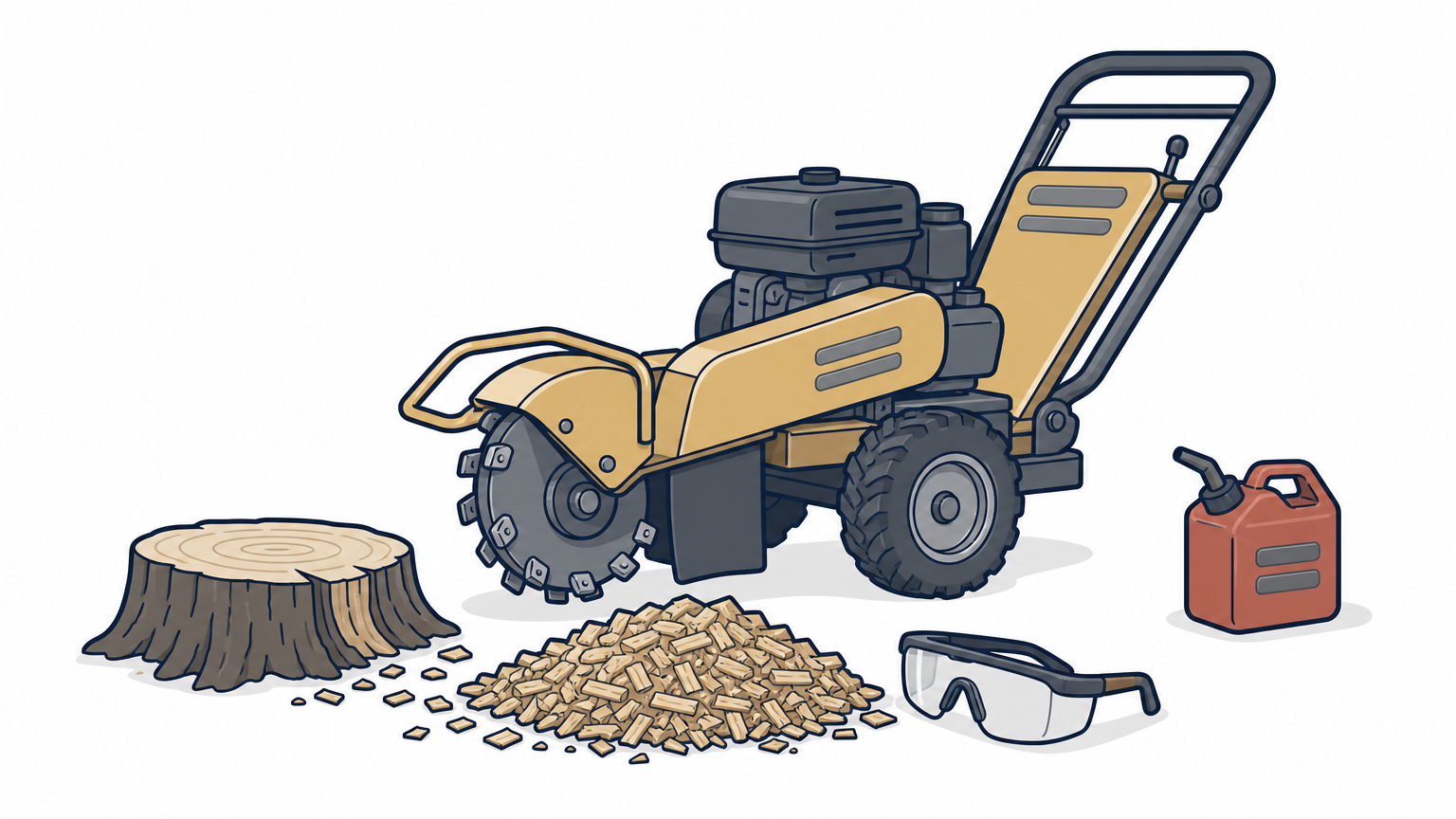
Rental grinders are heavy and have a spinning cutter wheel, so read the rental shop's instructions before you start. Follow this sequence:
- Cut the stump as low as you can with a chainsaw, and clear rocks, wire, and debris around it.
- Put on safety glasses or a face shield, hearing protection, gloves, long pants, and sturdy boots.
- Set the cutter wheel just above one edge of the stump and start the machine.
- Sweep the wheel side to side, lowering it an inch or two on each pass.
- Grind at least 6 inches below grade, and follow thick surface roots outward.
- Rake out the chips and check that no solid wood remains at the surface.
Grind at least 6 inches below grade, or the stump comes back as a lump under your sod.
Dig it out or treat it chemically
To dig, trench around the stump and expose the main roots. Cut them with a mattock, loppers, or a handsaw, then rock the stump loose and lift it out. Expect a long day for even a modest stump.
For a chemical remover, drill several holes into the top, fill them with the product, and add water as the label directs. Keep pets and children away, and expect weeks to months before the wood is soft enough to chop apart.
Fill the hole and finish the job
Fill the cavity with topsoil, tamp it down, and top it with sod or seed. Leave a slight mound , because the fill will settle as the remaining roots decay. Ground chips can go into a garden bed as mulch, but they tie up nitrogen as they break down, so do not mix a lot into planting soil.
Step 4. Hire a pro and know what you will pay
Hire a professional when the stump is large, the site is tight, or you would rather not run a machine that can injure you. Stump tree removal cost is set by size, number, access, and cleanup, so expect an on-site estimate rather than a flat rate for any stumps tree removal job.
When hiring beats renting
Big oak stumps with broad root flares, stumps beside a foundation or pool cage, and yards with several stumps are all better left to a crew. A rental machine is heavy to haul, billed by the day, and still leaves you with the labor and cleanup. A trained operator also knows how to work near irrigation lines and fences without damage.
If a mistake could hit a foundation, a pool cage, or a utility line, pay a pro to make the cut.
What drives the price
No honest number exists until someone sees the stump. These factors move the quote:
| Factor | Why it matters |
|---|---|
| Diameter | Larger stumps mean more wood and more time, and many crews price by the inch |
| Number of stumps | Grinding several in one visit usually lowers the cost per stump |
| Access | Tight gates, slopes, and obstacles slow the work |
| Roots and depth | Surface roots and deep grinding add effort |
| Cleanup | Hauling chips and backfilling costs more than leaving them in place |
Questions to ask before you book
Ask each company for the same details so quotes compare fairly:
- Are you licensed and insured, and can you show proof?
- How deep will you grind, and will you chase surface roots?
- Do you handle the 811 call and mark private lines?
- Are chips left, hauled away, or used to fill the hole?
- Is the quote written and the total price final?
If the tree is still standing, ask whether it truly has to come down. ArboBella is led by an ISA Certified Arborist, and we evaluate health and structure first, since a healthy tree is worth keeping when it is safe to do so.
Get the stump out and your yard back
Stump removal comes down to four moves: call 811 and measure, choose grinding, digging, or decay, do the work safely, and hire out when the stump or site is beyond a weekend project. Grind below grade, fill and settle the hole, and you will not see the stump again.
If you want it handled in one visit, our crew grinds stumps across North Port, Port Charlotte, and Venice and cleans up when we finish. Request a stump grinding estimate from ArboBella Tree Service and get your yard back without the rental machine.