Tree and Stump Removal: DIY vs. Hiring a Pro
That stump sitting in your yard isn't just an eyesore. It's a tripping hazard, a magnet for termites and fungus, and it can send new sprouts shooting up around your lawn for years. Whether a storm took down a tree or you removed one yourself, tree removal stump work is where most homeowners get stuck, do you rent equipment and grind it yourself, or call in a pro?
The honest answer depends on the stump's size, root spread, and how close it sits to pipes, foundations, or septic lines. A small stump in open soil is a reasonable weekend project with a rented grinder. A large oak stump tangled in roots near your house or driveway is a different situation entirely, and that's usually where stump removal tree jobs turn into costly mistakes if handled without the right equipment or experience.
In this guide, we'll walk through both paths: what DIY stump removal actually involves, what it costs to rent equipment versus hire a tree and stump removal company, and how to decide which option makes sense for your Southwest Florida property.
DIY vs. professional stump removal: how to decide
Deciding between renting equipment and calling a professional stump removal service starts with an honest look at the stump itself. Diameter, root depth, and location matter more than how big the tree looked standing up. A three-year-old maple stump in the middle of an open yard is a different job than a 40-year-old oak stump wedged between a fence and a septic line. Before you commit to either path, measure the stump's width at the base and note anything within 10 feet of it, sprinkler lines, pavers, foundations, or a septic field.
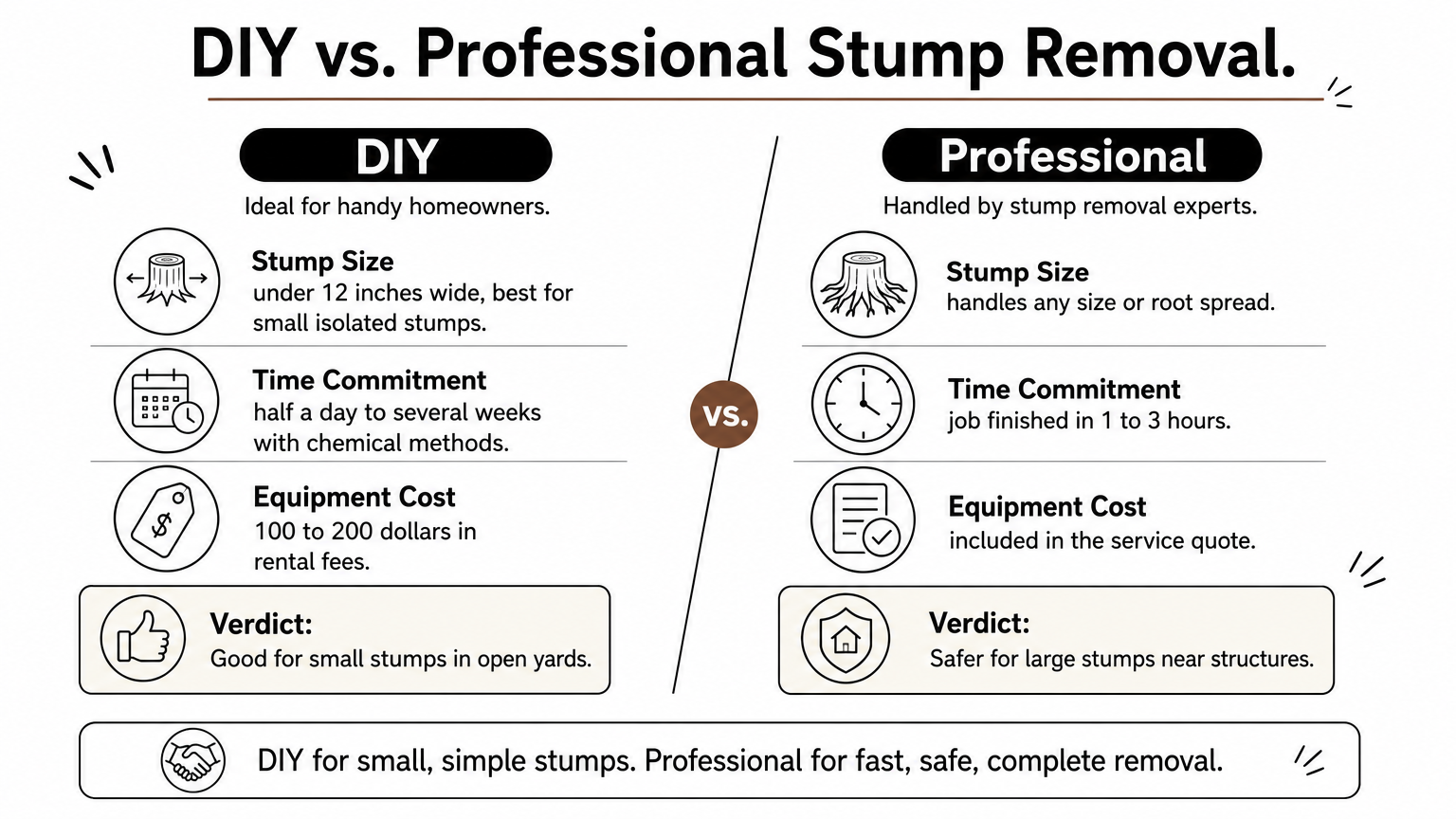
A stump under 12 inches wide in open soil is a DIY project. Anything larger, older, or closer to structures usually isn't.
When DIY makes sense
Grinding or digging out a stump yourself works best when you're dealing with a small, isolated stump and you're comfortable operating rented machinery. It also assumes you have a free weekend, since chemical rot methods can stretch the job out over weeks.
When to call a professional
Hiring a tree and stump removal crew makes sense once roots have spread under hardscaping, the stump sits near underground utilities, or you're removing several stumps at once, and it helps to know what stump and tree removal costs before you hire. Professionals bring commercial-grade grinders that chew through root systems homeowners' rental units can't touch, and they carry insurance if something goes wrong.
| Factor | DIY | Professional |
|---|---|---|
| Stump diameter | Under 12 inches | Any size |
| Location | Open yard | Near pipes, foundations, septic |
| Time investment | Half day to weeks (chemical) | 1 to 3 hours |
| Equipment cost | $100 to $200 rental | Included in service quote |
| Root damage risk | Higher if inexperienced | Low, handled by trained crew |
Step 1. Prepare the stump for removal
Before any grinder touches the wood, spend an afternoon getting the site ready. Skipping prep is how homeowners hit sprinkler lines, damage blades, or discover a septic pipe the hard way.
Call before you dig
Contact 811 at least two business days before you start, whether you're grinding it yourself or a crew is coming out. This free service sends someone to mark underground utilities like gas, water, and electrical lines with flags or paint, so you know exactly what to avoid.
Never touch a stump with a grinder or shovel until utility lines are marked.
Clear the work area
Once the area is marked, clear everything within a 10-foot radius. Wood chips and debris fly fast once grinding starts, and you don't want to be dodging patio furniture mid-job.
- Cut the stump as close to ground level as possible with a chainsaw
- Remove rocks, roots, and mulch from around the base
- Rope off the area if kids or pets are nearby
- Check for exposed root flares that extend beyond the visible stump
Handling this step properly sets up whichever removal method you choose next, whether that's a rented grinder or a tree removal stump crew arriving with commercial equipment.
Step 2. Remove the stump yourself: chemical, manual, or grinder methods
Once the site is prepped, pick a method that matches your timeline and tolerance for physical work. Each DIY stump removal approach trades speed for effort in a different way, so it's worth reading up on how to remove a stump yourself before you start.
Chemical rot method
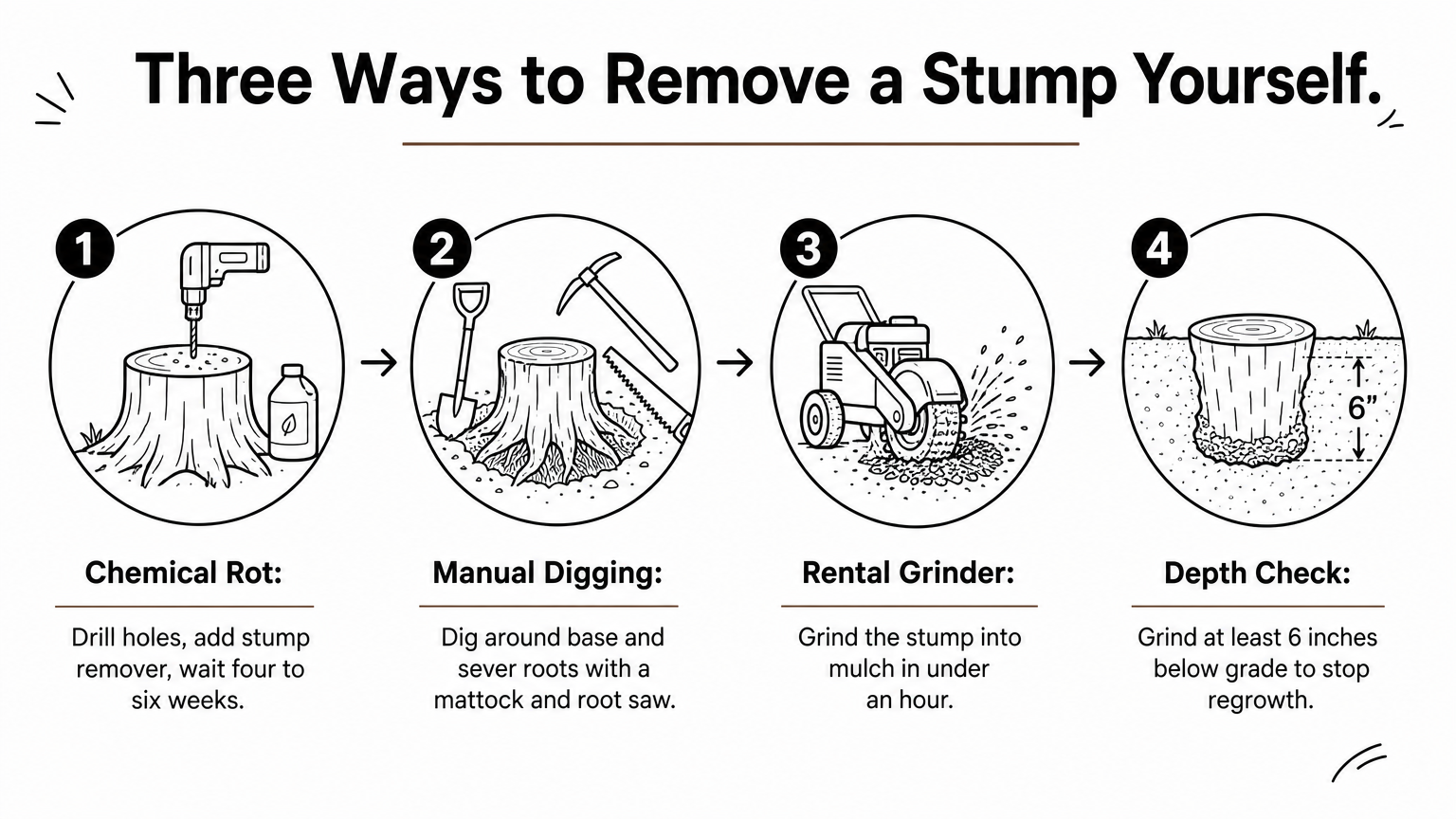
Drill several holes into the stump's top, fill them with potassium nitrate stump remover, and keep the wood covered and moist. This softens the stump enough to break apart with an axe in four to six weeks. It's the least physical option, but it's slow and won't touch the roots underground.
Manual digging
For stumps under 12 inches, a mattock, root saw, and some patience can get the job done in an afternoon. Dig around the base, sever roots as you expose them, then rock the stump loose. Expect sore muscles and a hole you'll need to backfill.
Rental grinder method
A rented stump grinder is the fastest DIY route, grinding wood into mulch in under an hour for small stumps, and our guide to grinding a tree stump walks through the machine work in order.
Grinders remove the visible stump fast, but roots stay in the ground and can still sprout.
- Wear safety glasses, ear protection, and steel-toe boots
- Grind in a fan pattern, working from the outside in
- Go at least 6 inches below grade to prevent regrowth
Step 3. Hire a professional stump removal service
Calling in a crew makes sense once you've weighed the table above and the stump still looks like more trouble than it's worth. A professional stump removal service brings a self-propelled grinder that chews through hardwood roots in a fraction of the time a rental unit would take, and the crew carries insurance in case a hidden root or utility line causes damage, which is part of what a tree stump grinding service includes and costs. For homeowners in North Port, Port Charlotte, or Venice dealing with oak or pine stumps tangled near a driveway, professional stump grinding and tree stump removal is often the safer and faster route.
Paying for a pro isn't about laziness, it's about avoiding a damaged blade, a cracked pipe, or a trip to urgent care.
What to expect on service day
Most visits follow the same pattern, whether it's one stump or a dozen scattered across a property.
- Arborist or crew lead inspects the stump and surrounding grade
- Grinder clears wood 6 to 8 inches below the surface
- Crew hauls away chips unless you want them for mulch
- Job typically wraps up in 1 to 3 hours
Our team at ArboBella Tree Service handles both single stumps and multi-stump jobs at commercial properties for HOAs and property managers across Southwest Florida.
Step 4. Restore the area after the stump is gone
Grinding or digging out the stump leaves a hole and a pile of debris, not a finished lawn. Backfilling that hole properly now saves you from a sunken, muddy patch six months down the road. Mix the wood chips from grinding with topsoil at roughly a 50/50 ratio, since pure chips will decompose and sink further over time.
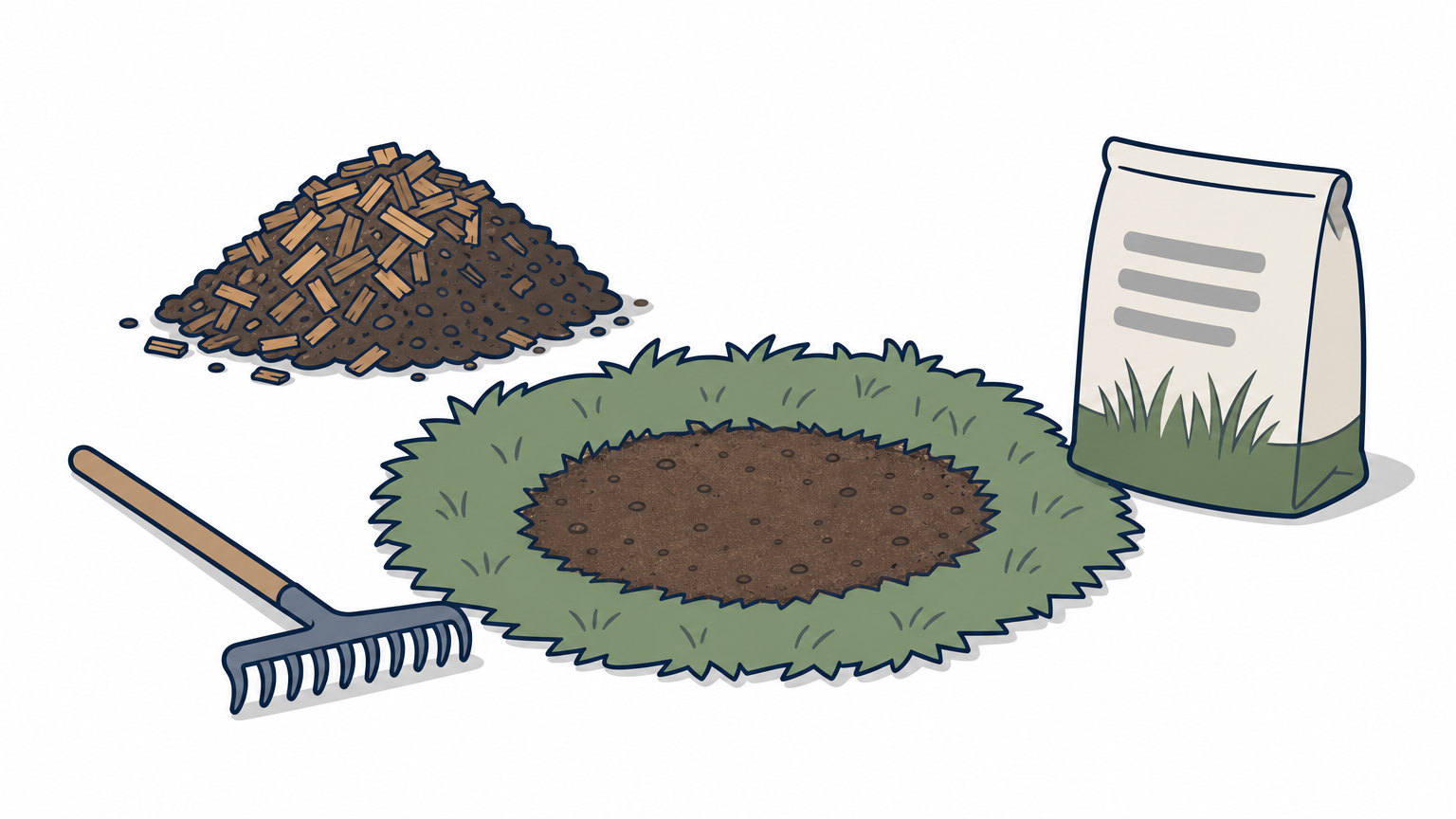
A stump grinder's job ends where your job begins: filling, leveling, and reseeding.
Fill, level, and reseed
Work the soil-and-chip mix into the cavity in layers, tamping each one down before adding the next. This prevents the classic dip that shows up after rain compacts loose fill.
- Backfill in 3 to 4 inch layers, tamping between each
- Mound the fill slightly above grade to account for settling
- Spread grass seed or sod over bare soil within a week
- Water daily for the first two weeks to establish roots
Watch for regrowth
Even a well-ground stump can send up shoots from leftover roots. Check the area monthly for the first growing season and clip any sprouts at the base as soon as they appear, before they develop their own root systems and turn into a second removal job.
Choosing the right path for your yard
A small, isolated stump in open soil is still a fair weekend project if you've got a rental grinder, safety gear, and a free afternoon. But once roots tangle near a septic line, foundation, or driveway, the math changes fast. A cracked pipe or a damaged blade costs far more than what a crew charges to grind a stump upfront. Tree removal stump work rewards honesty about your own limits more than it rewards effort.
If your stump checks any of the boxes on the professional side of that table, from root spread to proximity to structures, skip the rental counter and call someone who does this daily. Southwest Florida's soil, storms, and root systems don't leave much room for guesswork. To get it handled right the first time, tell ArboBella Tree Service about your stump and get an on-site quote for a straightforward evaluation of your yard.