Tree Stump Grinding near Me: What to Know before You Hire
That stump sitting in your yard isn't just an eyesore. It's a tripping hazard, a magnet for termites and fungus, and it keeps sending up root suckers that make your lawn look messy no matter how often you mow. So you search tree stump grinding near me , and now you're staring at a list of local companies with no idea who's actually qualified or what a fair price looks like.
Here's the direct answer: stump grinding typically runs $75 to $400 per stump depending on diameter and root spread, and you want a company that's licensed, insured, and knows Southwest Florida's soil and tree species. Grinding removes the visible stump and surface roots, but it's different from full stump removal, and knowing that distinction before you hire saves you from surprise costs or a job that doesn't solve your actual problem.
In this guide, we'll break down what stump grinding actually involves, how pricing works in North Port, Port Charlotte, and Venice, and the questions to ask before you sign a contract. Whether you're a homeowner dealing with one leftover stump or a property manager coordinating removal across multiple sites, you'll know exactly what to expect and how to spot a qualified local provider .
Why stump grinding matters for your property
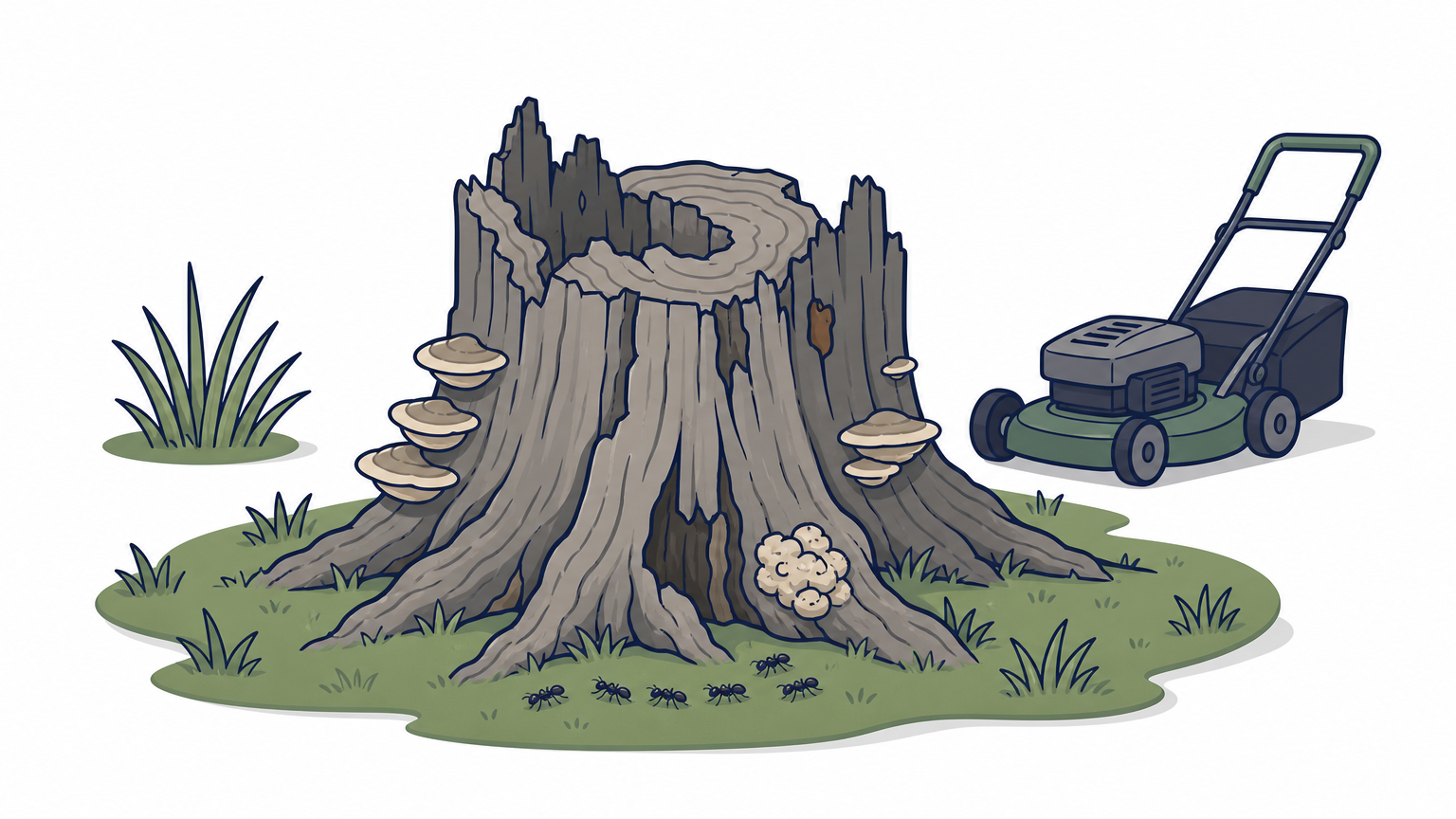
A stump left behind after a tree removal does more damage over time than most homeowners expect. In Southwest Florida's humid climate, a decaying stump becomes a breeding ground for wood-boring insects and fungal growth within months, not years. Left untreated, that same stump can attract termites that eventually migrate toward your home or outbuildings, turning a cosmetic issue into a structural one.
Safety and liability risks
Beyond pests, stumps are a genuine hazard. They trip up kids playing in the yard, damage lawn mower blades, and create uneven ground that's a liability if you're a property manager responsible for tenant or customer safety. Commercial properties in particular face real exposure here, since a slip-and-fall claim tied to a visible stump hazard is hard to defend, which is why clearing stumps across commercial sites and HOAs is usually handled on a schedule.
A stump you ignore today is a pest problem, a safety risk, and a landscaping headache all rolling into one.
Root suckers and regrowth
Many Florida species, including laurel oak and camphor, send up root suckers from a cut stump for years if the root system stays alive. That means more mowing, more trimming, and a yard that never quite looks finished no matter how much you invest in landscaping around it.
Property value and curb appeal
Finally, consider resale and curb appeal. A stump-free yard photographs better, mows easier, and signals to buyers or tenants that the property has been maintained. For HOAs and municipalities, removing stumps across common areas also prevents the appearance of neglect that draws resident complaints. Grinding solves the visible problem quickly, which is why it's usually the first call homeowners and property managers make once a tree comes down.
How professional stump grinding works
A stump grinder is a gas or diesel-powered machine with a rotating cutting wheel that chews through wood and root mass, turning the stump into loose mulch. Professional-grade grinders cut several inches below the soil line, which matters if you're planning to replant grass or install a garden bed over the spot. This isn't a rental-tool job for anything beyond a small, shallow stump, and there are good reasons a rented grinder rarely beats hiring a pro.
The typical process
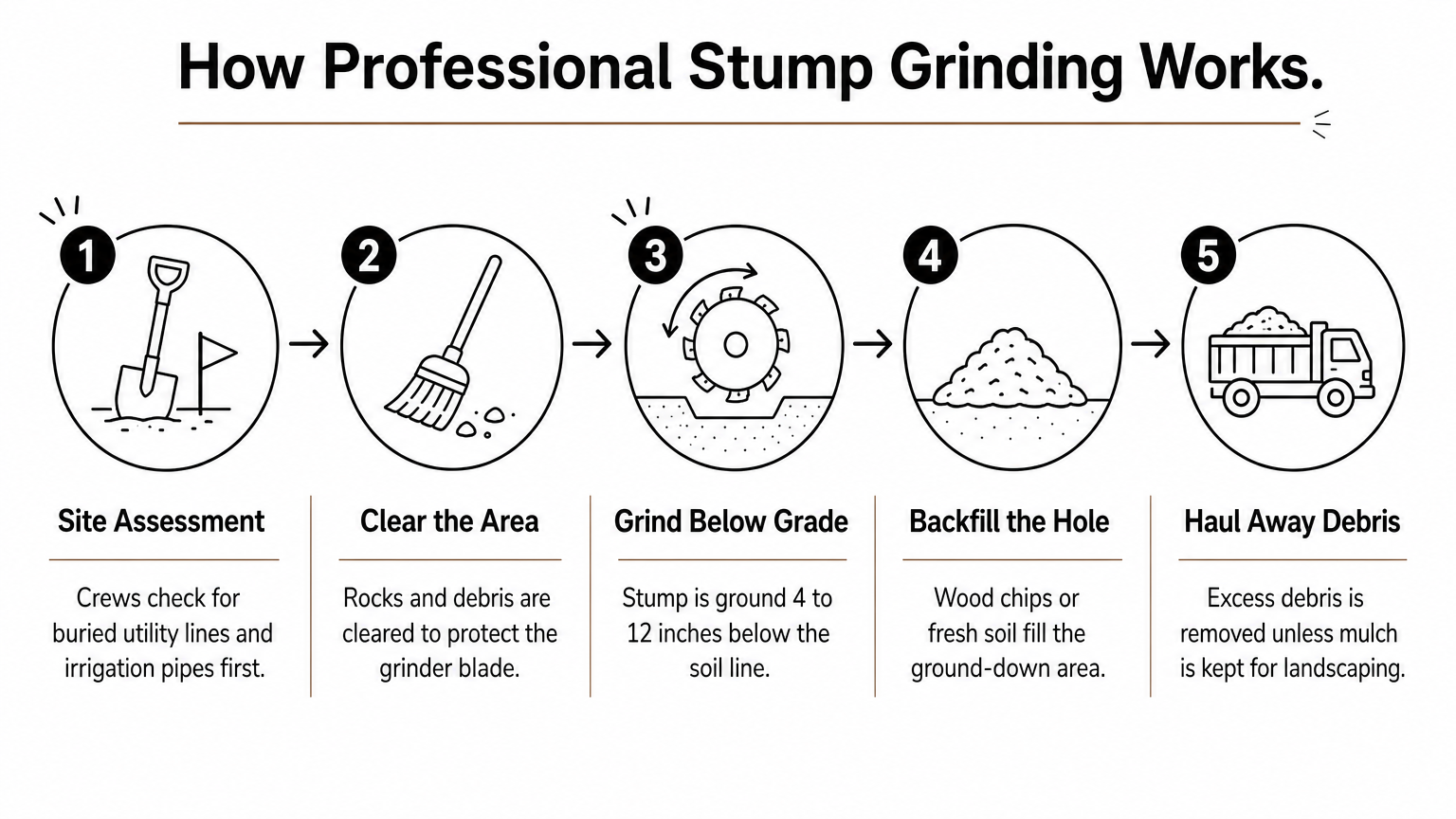
Most jobs follow the same sequence, and a step-by-step look at grinding a tree stump shows why each stage matters:
- Site assessment to check for buried utility lines, irrigation pipes, or septic components
- Positioning the grinder and clearing rocks or debris that could damage the blade
- Grinding the stump down 4 to 12 inches below grade, depending on your plans for the area
- Backfilling the hole with the ground-up wood chips or fresh soil
- Hauling away excess debris, unless you want the mulch left for landscaping
A five-minute grind can undo a problem that's been growing under your lawn for years.
Why utility checks come first
Skipping the utility check is the most common shortcut low-cost operators take, and it's how sprinkler lines and buried cables get sliced. A certified arborist or trained crew always calls for locates before the grinder ever touches the ground.
What affects the cost of stump grinding near you
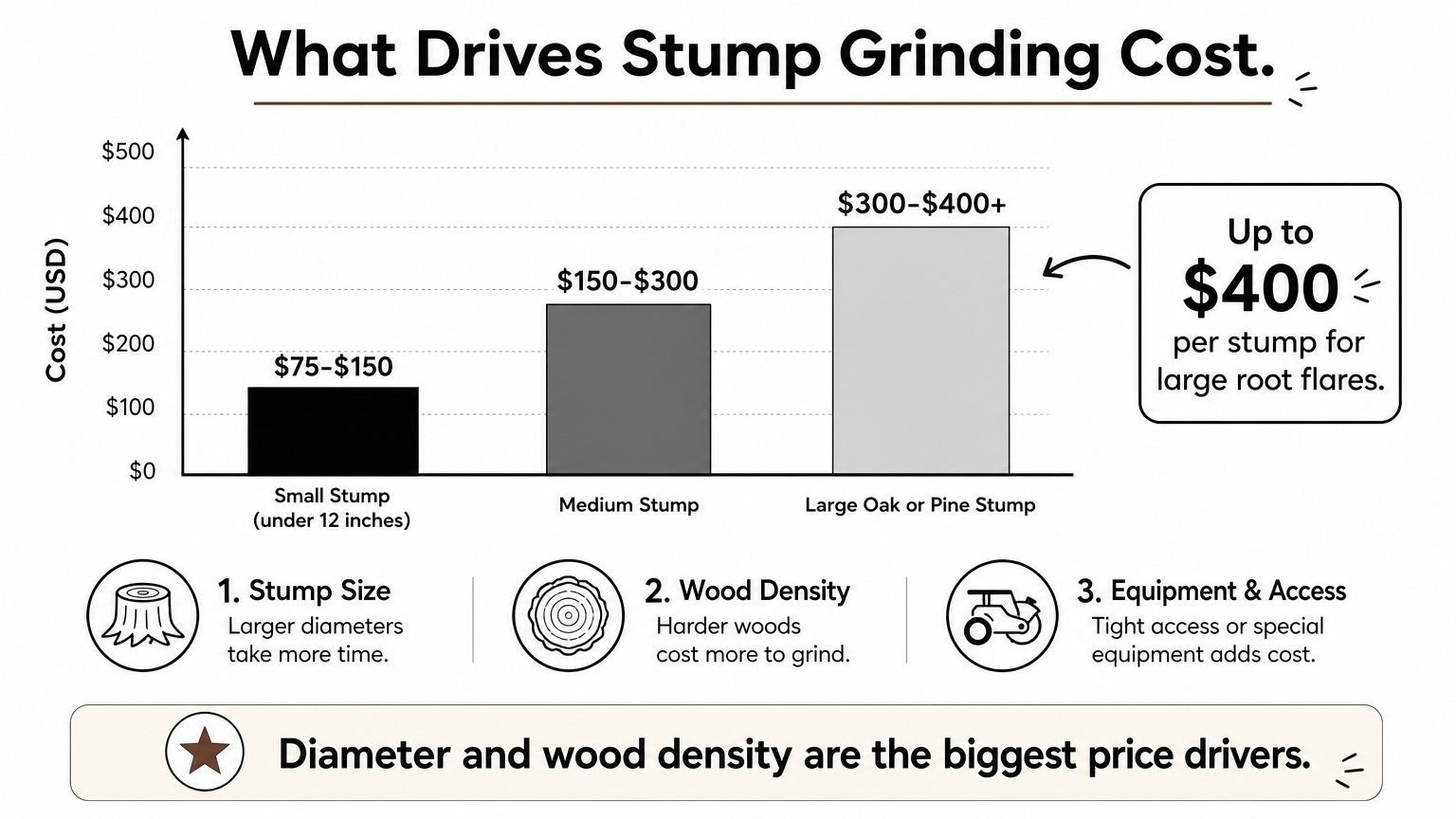
Price per stump swings widely because grinding is priced by size, not by a flat rate. A small stump under 12 inches in diameter might run $75 to $150, while a large oak or pine stump with a wide root flare can climb past $400. Stump diameter is the biggest driver, but it's not the only one.
The main cost factors
| Factor | Why it matters |
|---|---|
| Diameter and root spread | Bigger stumps need more grinding time and a larger machine |
| Wood density | Palm and pine grind faster than oak or camphor |
| Accessibility | Backyard stumps behind fences cost more than curbside ones |
| Number of stumps | Multi-stump jobs often get a per-stump discount |
| Grinding depth | Deeper grinding for replanting adds labor time |
Accessibility often surprises homeowners the most. If a crew has to hand-carry a smaller grinder through a gate because the machine can't fit, expect a higher quote.
The size of the stump sets the price, but what's around it decides how much extra you'll pay.
When you search for stump grinding cost near me , ask for a quote based on your specific stumps, not a generic average, and compare it against everything a stump grinding job should include in that price, since Southwest Florida's mix of oak, pine, and palm species varies enough to change the math.
What to ask before hiring a local stump grinding company
Before you hire anyone off a search results page, get answers to a handful of direct questions. A qualified provider won't hesitate to give you specifics, while a low-cost operator often dodges details that reveal shortcuts, so it helps to know the signs of a qualified stump grinding company before you call.
Questions worth asking every quote
- Are you licensed and insured for tree work in Florida?
- Will you call for utility locates before grinding?
- How deep will you grind, and does that match my replanting plans?
- Do you haul away debris, or is that an extra charge?
- Can I see proof of liability coverage and workers' comp?
Ask the right five questions, and the wrong contractors weed themselves out fast.
Why credentials matter more than price
Certified arborists understand root systems, soil conditions, and how species like laurel oak or Florida pine respond to grinding versus full removal. That knowledge protects your irrigation lines, septic system, and nearby landscaping from accidental damage. A cheap quote from an unlicensed crew can turn into an expensive repair bill if something underground gets sliced.
Get it in writing
Insist on a written estimate that lists stump count, grinding depth, and debris hauling before work starts. Verbal quotes leave room for scope creep once the crew arrives on site.
Stump grinding vs. stump removal: which do you need
Grinding and removal solve different problems, and mixing them up leads to the wrong service call. Stump grinding chews the visible stump and surface roots down below grade, leaving the deeper root system in the ground to decompose naturally over years. Stump removal , by contrast, pulls the entire root ball out of the soil, which means more digging, a bigger hole, and a higher price tag.
When grinding is enough
Grinding works for most homeowners who just want the eyesore and tripping hazard gone so they can mow, mulch, or landscape over the spot. It's faster, cheaper, and leaves the surrounding soil undisturbed.
If you're planting grass or mulch on top, grinding gets you there. If you're pouring concrete or building a foundation, you need full removal.
When removal makes more sense
Full removal matters when you're installing a pool, driveway, or structure where roots underground would interfere with construction. It's also the better call if the tree died from root rot or invasive fungus you don't want spreading to new plantings. When you're looking for the best stump removal near you instead of grinding, tell the contractor your end goal for the space so they can quote the right service.
Getting your property stump-free
Stumps don't fix themselves, and waiting only invites termites, root suckers, and tripping hazards deeper into your yard. You now know what fair pricing looks like, what separates grinding from full removal, and which questions expose a shortcut-taking crew before they touch your property. That's the groundwork you need to hire with confidence instead of guessing.
What matters most is working with a licensed, insured provider who treats your stump as part of a bigger picture, your soil, your irrigation lines, and the trees you're keeping. A rushed job that nicks a sprinkler line or leaves roots too shallow for replanting costs you more than the grinding ever would.
If you're in North Port, Port Charlotte, or Venice and ready to get that stump out of your yard for good, ask ArboBella Tree Service for a stump grinding quote from a certified arborist who knows Southwest Florida trees.